What Is An Insert Card? How Inserts Differ From Base Cards And Parallels
Learn the insert card meaning, how insert cards work, and how they differ from base cards, parallels, and other trading card types.

An insert card is a special trading card included inside a trading card release that sits outside the main base checklist. It usually has its own theme, design, name, and numbering system.
That sounds simple, but inserts can confuse beginners because they are often mixed into the same packs as base cards, parallels, rookie cards, autos, and patch cards. You open a pack, see a card that looks different from the others, and suddenly you are wondering what it actually is.
Is it rare? Is it part of the base set? Is it a parallel? Is it valuable?
Sometimes yes. Sometimes no.
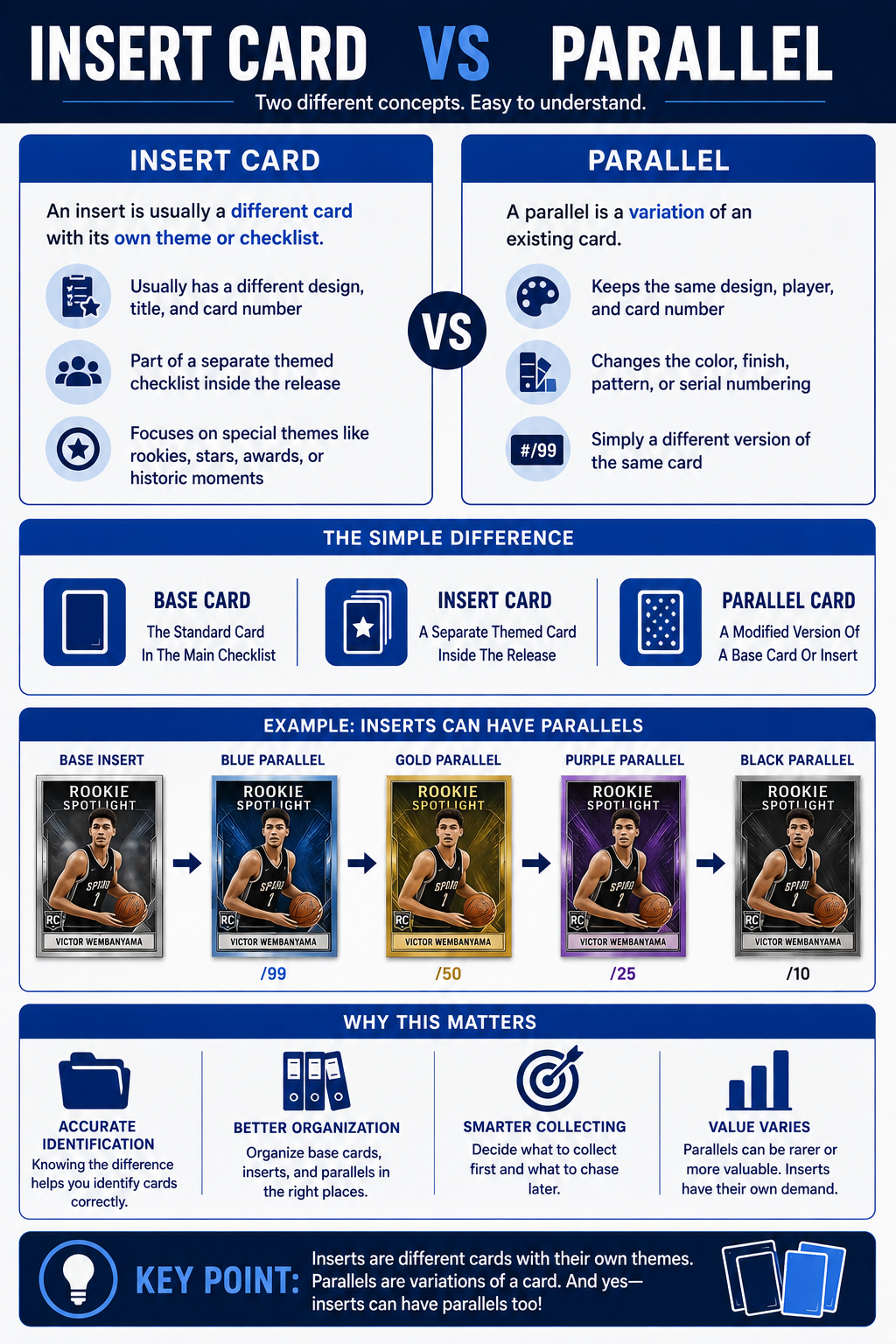
The easiest way to understand insert cards is this: a base card is part of the main set, a parallel is a variation of another card, and an insert is usually a separate themed card within the release.
Once that clicks, modern trading cards become much easier to sort, track, and understand.
What Is An Insert Card?
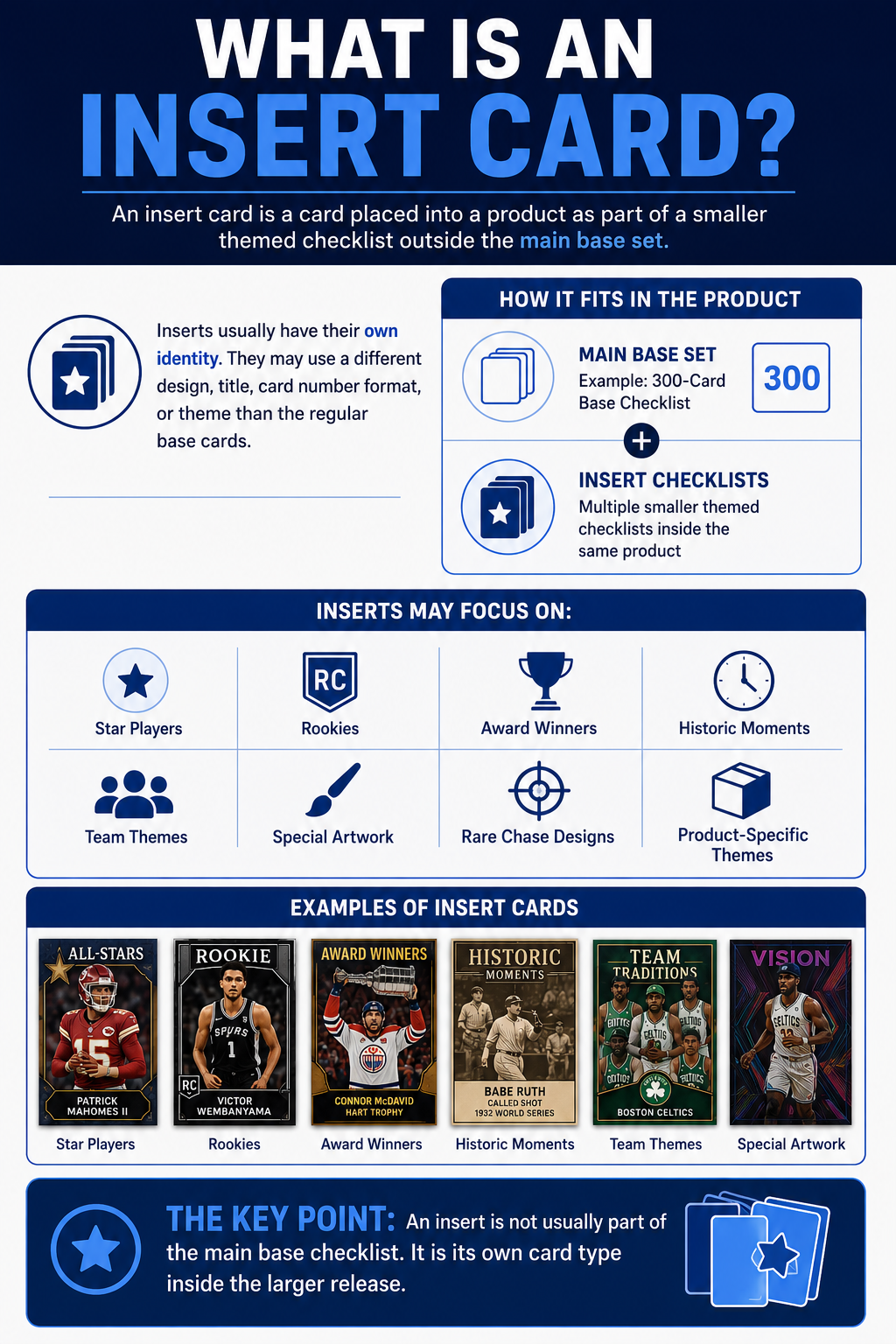
An insert card is a card placed into a product as part of a smaller themed checklist outside the main base set.
Inserts usually have their own identity. They may use a different design, title, card number format, or theme than the regular base cards. A product might have a 300-card base checklist plus several insert checklists built around rookies, stars, award winners, historic moments, case hits, or special designs.
An insert card may focus on:
- Star Players
- Rookies
- Award Winners
- Historic Moments
- Team Themes
- Special Artwork
- Rare Chase Designs
- Product-Specific Themes
The key point is that an insert is not usually part of the main base checklist. It is its own card type inside the larger release.
Base Card Vs Insert Card
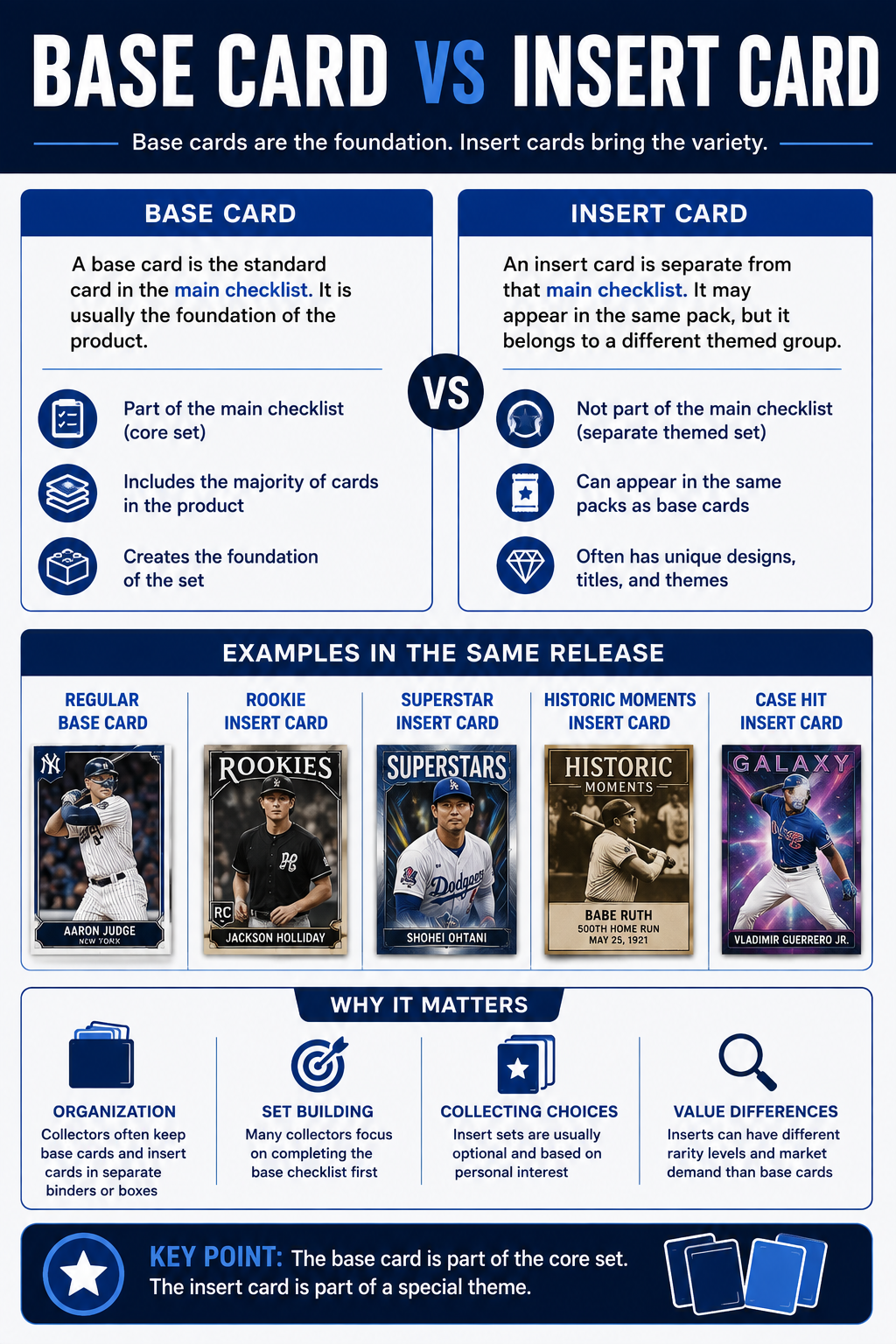
A base card is the standard card in the main checklist. It is usually the foundation of the product.
An insert card is separate from that main checklist. It may appear in the same pack, but it belongs to a different themed group.
For example, a release might include:
- A Regular Base Card
- A Rookie Insert Card
- A Superstar Insert Card
- A Historic Moments Insert Card
- A Case Hit Insert Card
The base card is part of the core set. The insert card is part of a special theme.
This matters because collectors often organize them differently. A set builder may try to complete the base checklist first, then decide whether to chase insert sets later.
Insert Card Vs Parallel
This is where many beginners get mixed up.
A parallel is a variation of an existing card. It usually keeps the same basic design, player, and card number, but changes the color, finish, pattern, or serial numbering.
An insert is usually a different card with its own theme or checklist.
Here is the simple difference:
- Base Card: The Standard Card In The Main Checklist
- Parallel Card: A Modified Version Of A Base Card Or Insert
- Insert Card: A Separate Themed Card Inside The Release
That last point is important. Inserts can also have parallels. That means you might have a base insert and then a blue parallel of that same insert. Modern products love layers like this, which is why card identity matters so much.
How To Tell If A Card Is An Insert
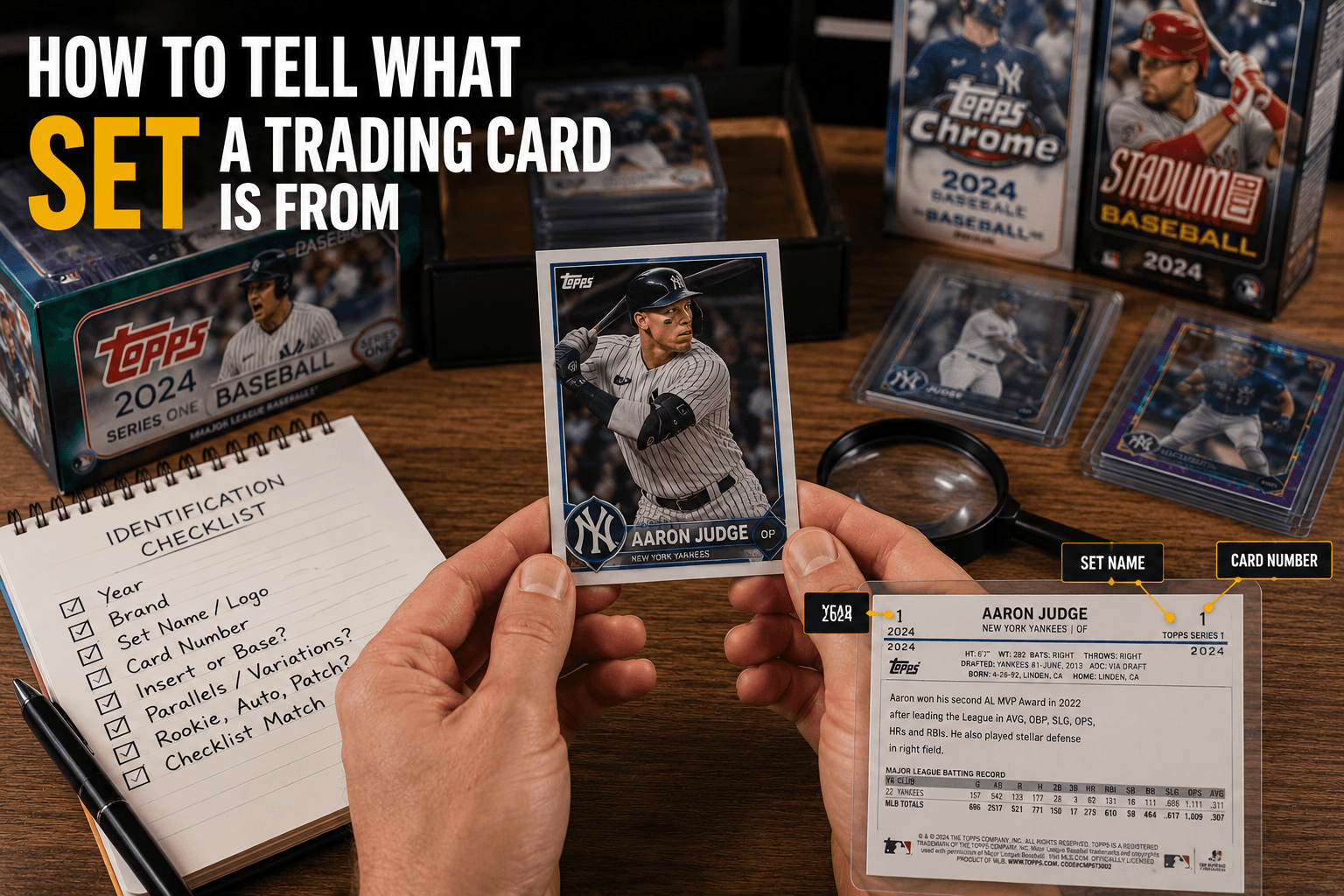
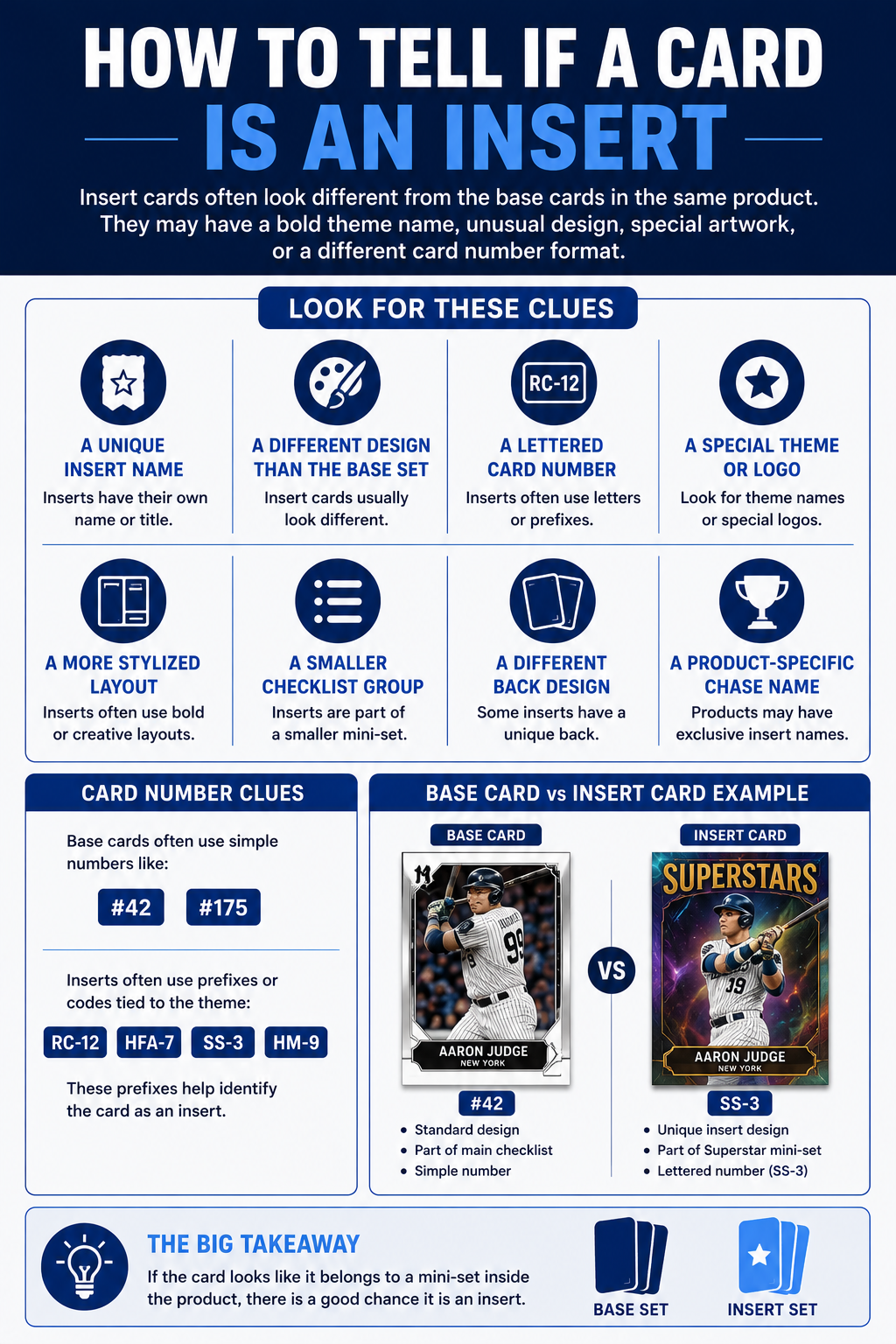
Insert cards often look different from the base cards in the same product. They may have a bold theme name, unusual design, special artwork, or a different card number format.
Look for clues like:
- A Unique Insert Name
- A Different Design Than The Base Set
- A Lettered Card Number
- A Special Theme Or Logo
- A More Stylized Layout
- A Smaller Checklist Group
- A Different Back Design
- A Product-Specific Chase Name
Card numbers are a big clue. Base cards often use simple numbers like #42 or #175. Inserts often use prefixes like RC-12, HFA-7, SS-3, or another code tied to the insert theme.
If the card looks like it belongs to a mini-set inside the product, there is a good chance it is an insert.
Are Insert Cards Rare?
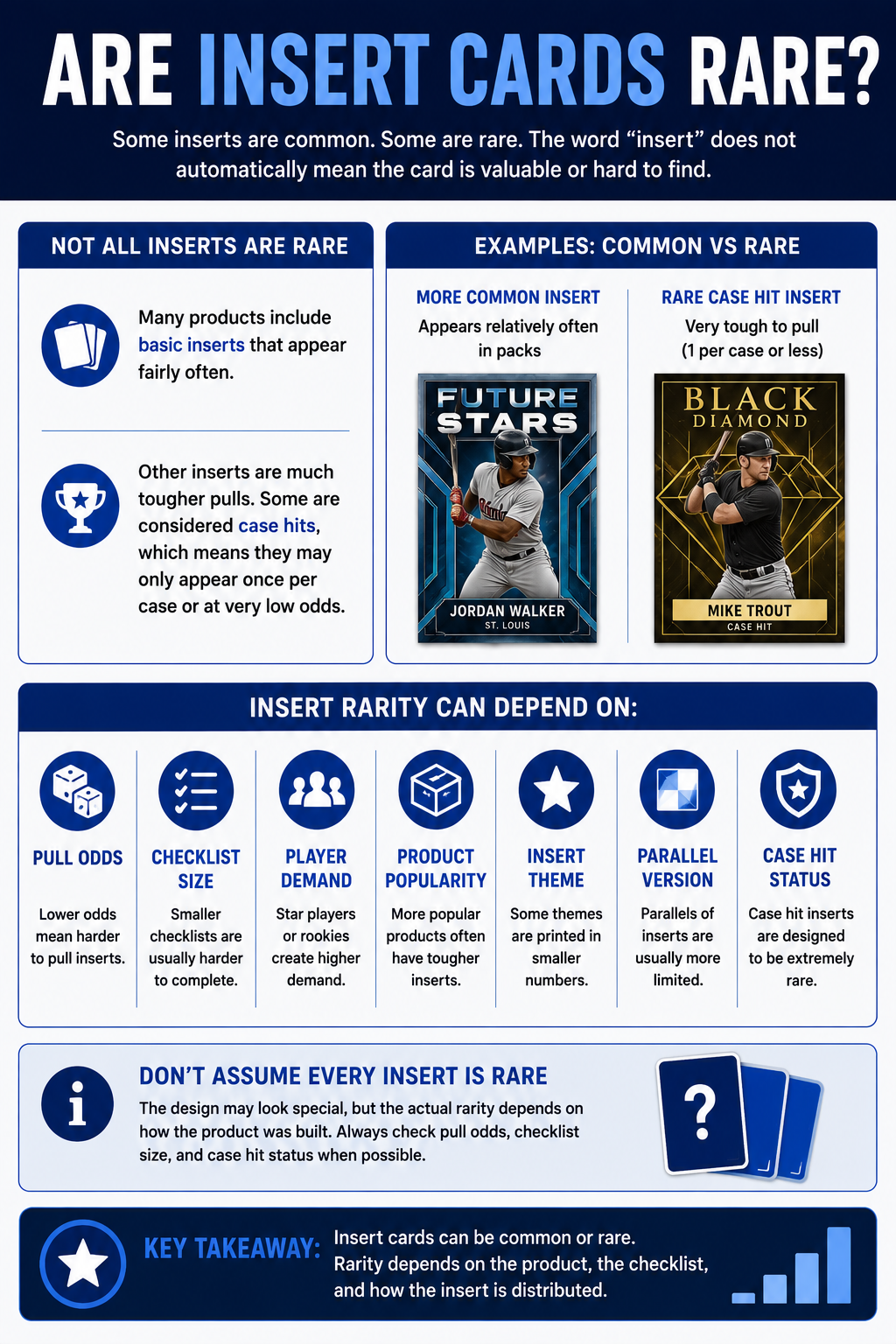
Some inserts are common. Some are rare. The word “insert” does not automatically mean the card is valuable or hard to find.
Many products include basic inserts that appear fairly often. Other inserts are much tougher pulls. Some are considered case hits, which means they may only appear once per case or at very low odds.
Insert rarity can depend on:
- Pull Odds
- Checklist Size
- Player Demand
- Product Popularity
- Insert Theme
- Parallel Version
- Whether It Is A Case Hit
This is why collectors should avoid assuming every insert is rare. The design may look special, but the actual rarity depends on how the product was built.
What Is A Case Hit Insert?
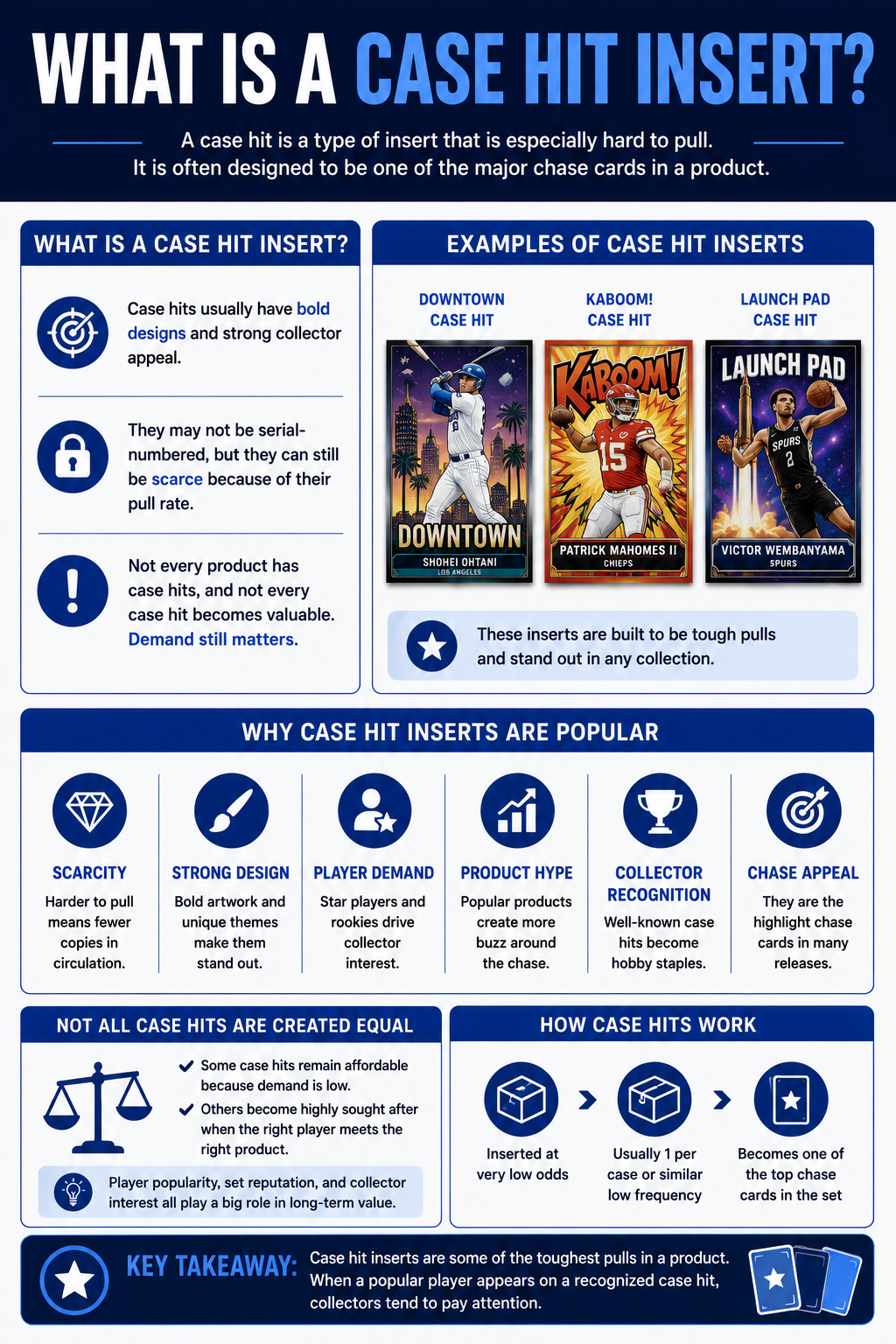
A case hit is a type of insert that is especially hard to pull. It is often designed to be one of the major chase cards in a product.
Case hits usually have bold designs and strong collector appeal. They may not be serial-numbered, but they can still be scarce because of their pull rate.
A case hit insert may be popular because of:
- Scarcity
- Strong Design
- Player Demand
- Product Hype
- Collector Recognition
- Chase Appeal
Not every product has case hits, and not every case hit becomes valuable. Demand still matters. But when a popular player appears on a recognized case hit, collectors tend to pay attention.
Why Collectors Like Insert Cards
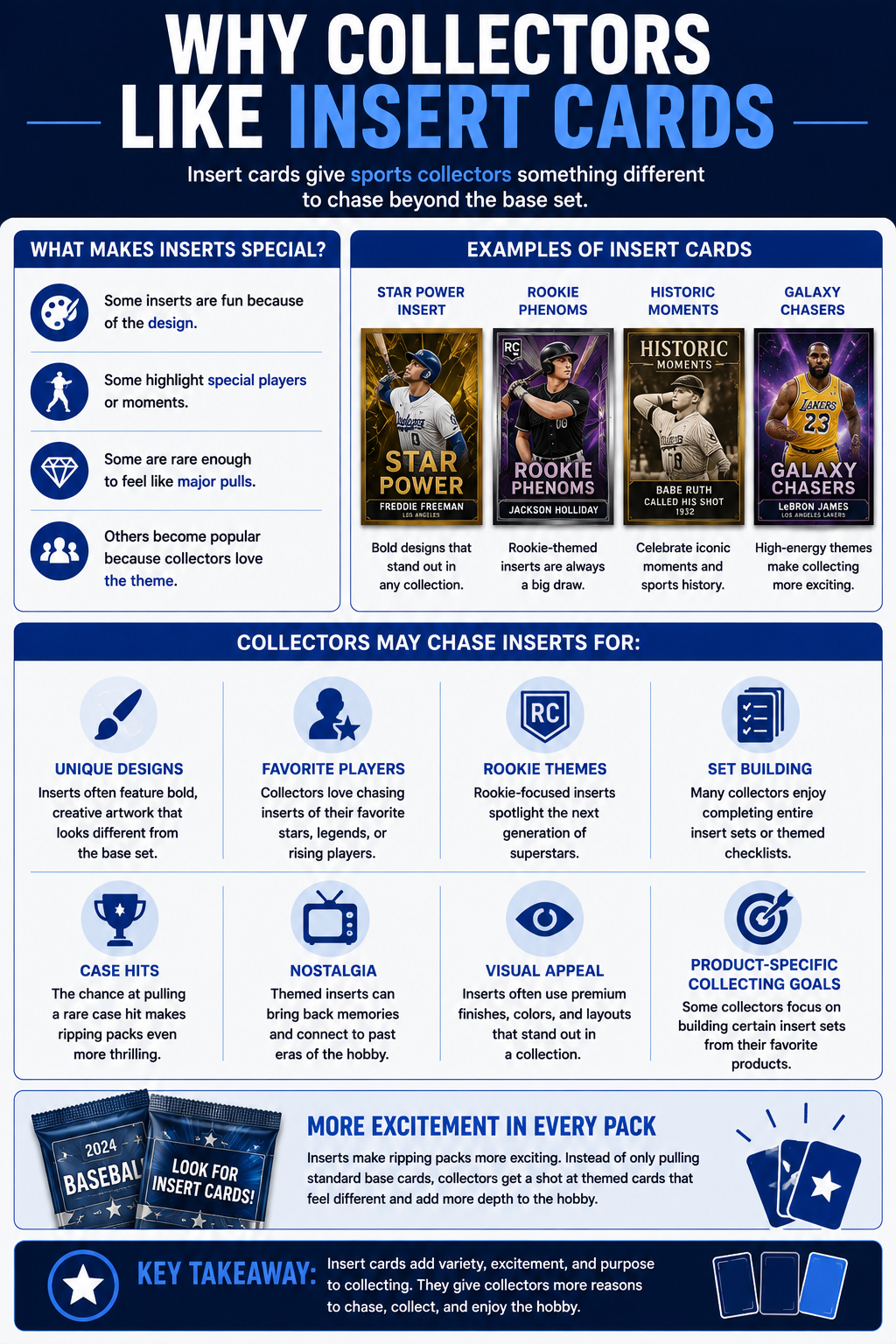
Insert cards give sports collectors something different to chase beyond the base set.
Some inserts are fun because of the design. Some highlight special players or moments. Some are rare enough to feel like major pulls. Others become popular because collectors love the theme.
Collectors may chase inserts for:
- Unique Designs
- Favorite Players
- Rookie Themes
- Set Building
- Case Hits
- Nostalgia
- Visual Appeal
- Product-Specific Collecting Goals
Inserts can also make ripping packs more exciting. Instead of only pulling standard base cards, collectors get a shot at themed cards that feel different from the rest of the checklist.
Why Insert Cards Can Be Valuable
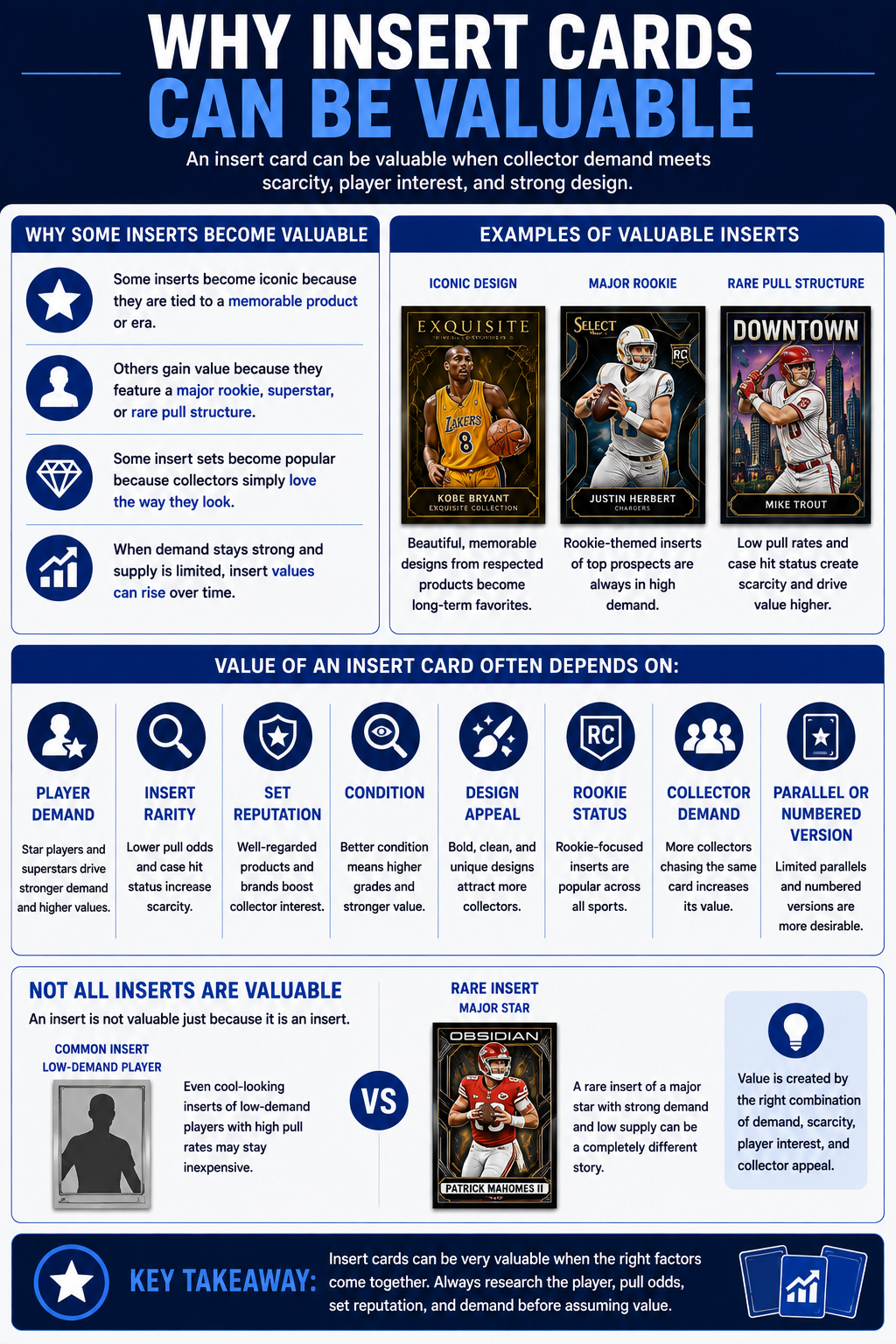
An insert card can be valuable when collector demand meets scarcity, player interest, and strong design.
Some inserts become iconic because they are tied to a memorable product or era. Others gain value because they feature a major rookie, superstar, or rare pull structure. Some insert sets become popular because collectors simply love the way they look.
Value often depends on:
- Player Demand
- Insert Rarity
- Set Reputation
- Condition
- Design Appeal
- Rookie Status
- Collector Demand
- Parallel Or Numbered Version
Still, an insert card is not valuable just because it is an insert. A common insert of a low-demand player may stay inexpensive. A rare insert of a major star may be a completely different story.
Can Insert Cards Have Parallels?
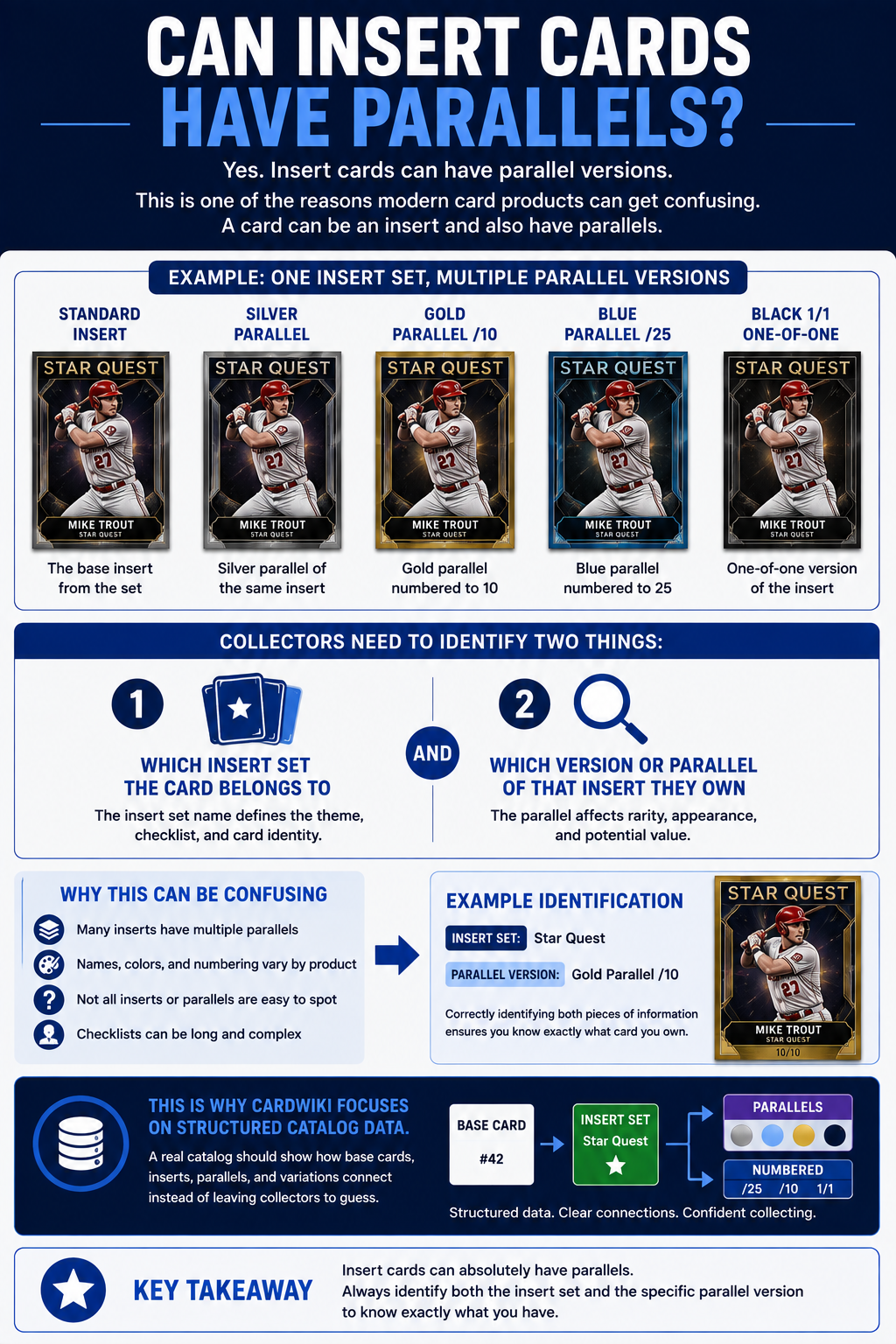
Yes. Insert cards can have parallel versions.
This is one of the reasons modern card products can get confusing. A card can be an insert and also have parallels. For example, a product might include a standard insert, a silver parallel of that insert, a gold parallel numbered to 10, and a one-of-one version.
That means collectors may need to identify two things:
- Which Insert Set The Card Belongs To
- Which Version Or Parallel Of That Insert They Own
This is why CardWiki focuses on structured catalog data. A real catalog should show how base cards, inserts, parallels, and variations connect instead of leaving collectors to guess.
How Insert Checklists Work
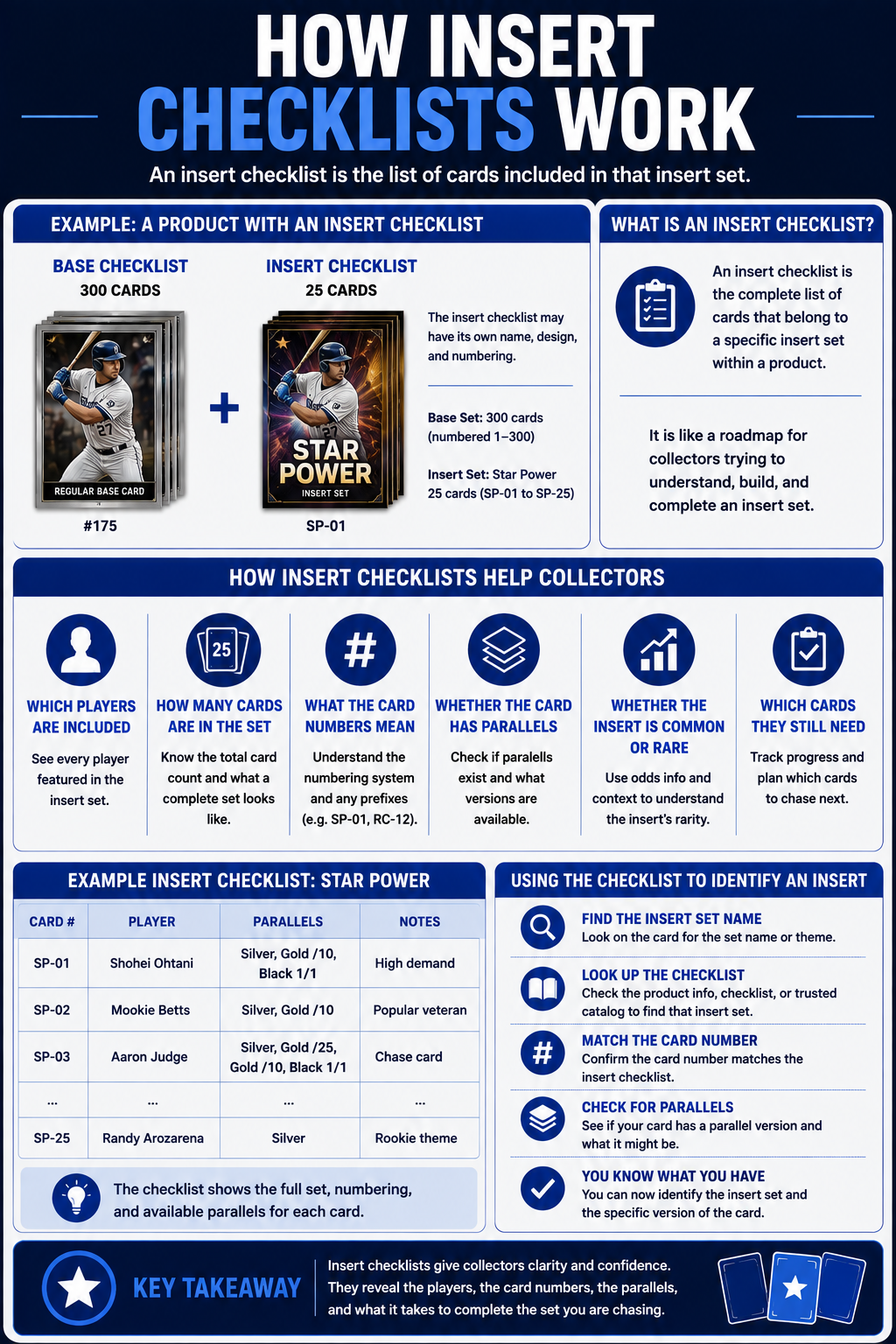
An insert checklist is the list of cards included in that insert set.
For example, a product might have a base checklist of 300 cards and an insert checklist of 25 cards. That insert checklist may have its own name, design, and numbering.
Insert checklists can help collectors figure out:
- Which Players Are Included
- How Many Cards Are In The Insert Set
- What The Card Numbers Mean
- Whether The Card Has Parallels
- Whether The Insert Is Common Or Rare
- Which Cards They Still Need
If you are trying to identify an insert, the checklist is one of the best tools you can use.
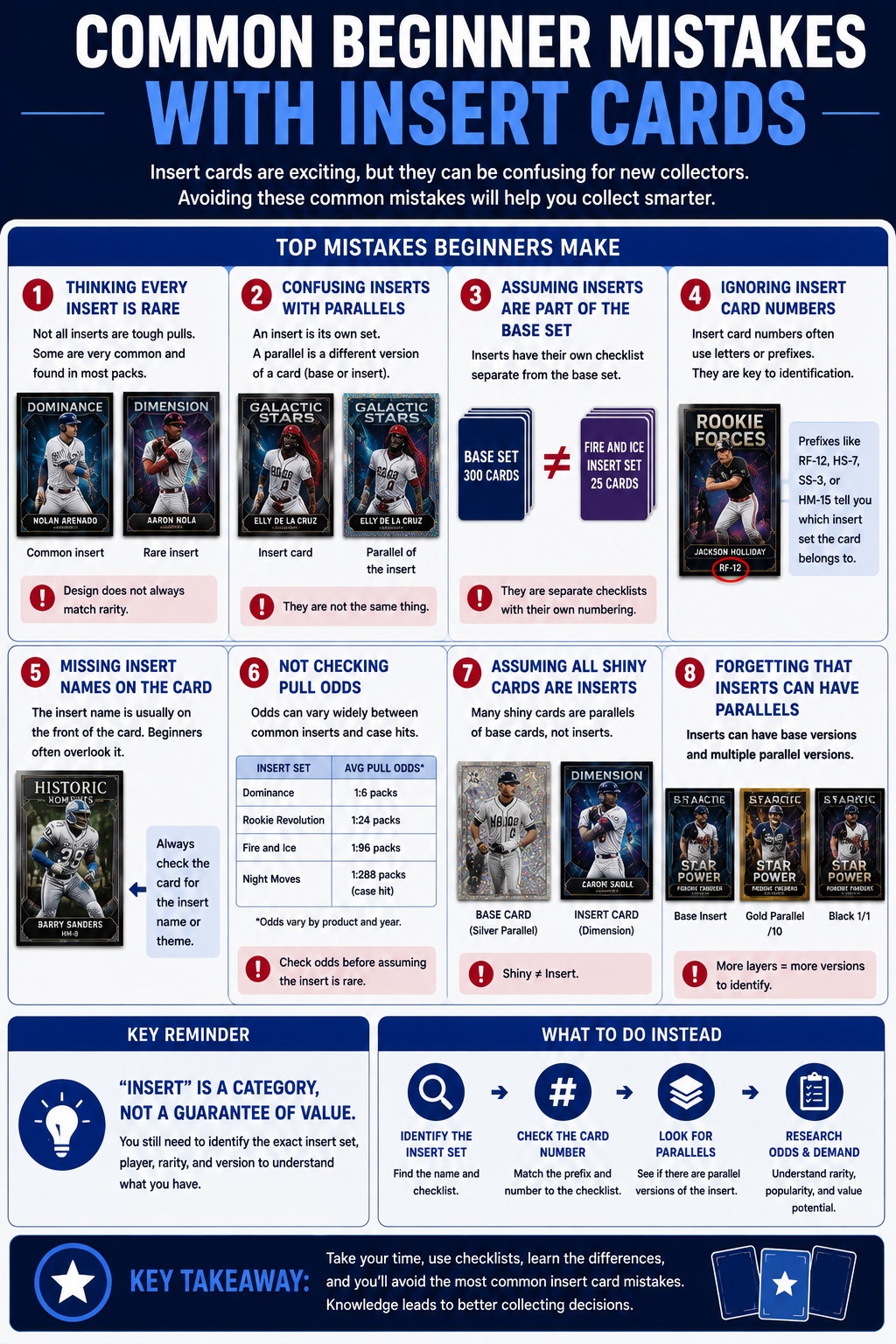
Common Beginner Mistakes With Insert Cards
Insert cards are easy to misunderstand at first. That is normal.
Common beginner mistakes include:
- Thinking Every Insert Is Rare
- Confusing Inserts With Parallels
- Assuming Inserts Are Part Of The Base Set
- Ignoring Insert Card Numbers
- Missing Insert Names On The Card
- Not Checking Pull Odds
- Assuming All Shiny Cards Are Inserts
- Forgetting That Inserts Can Have Parallels
The biggest thing to remember is that insert is a category, not a guarantee of value. You still need to identify the exact insert set, player, rarity, and version.
How To Organize Insert Cards
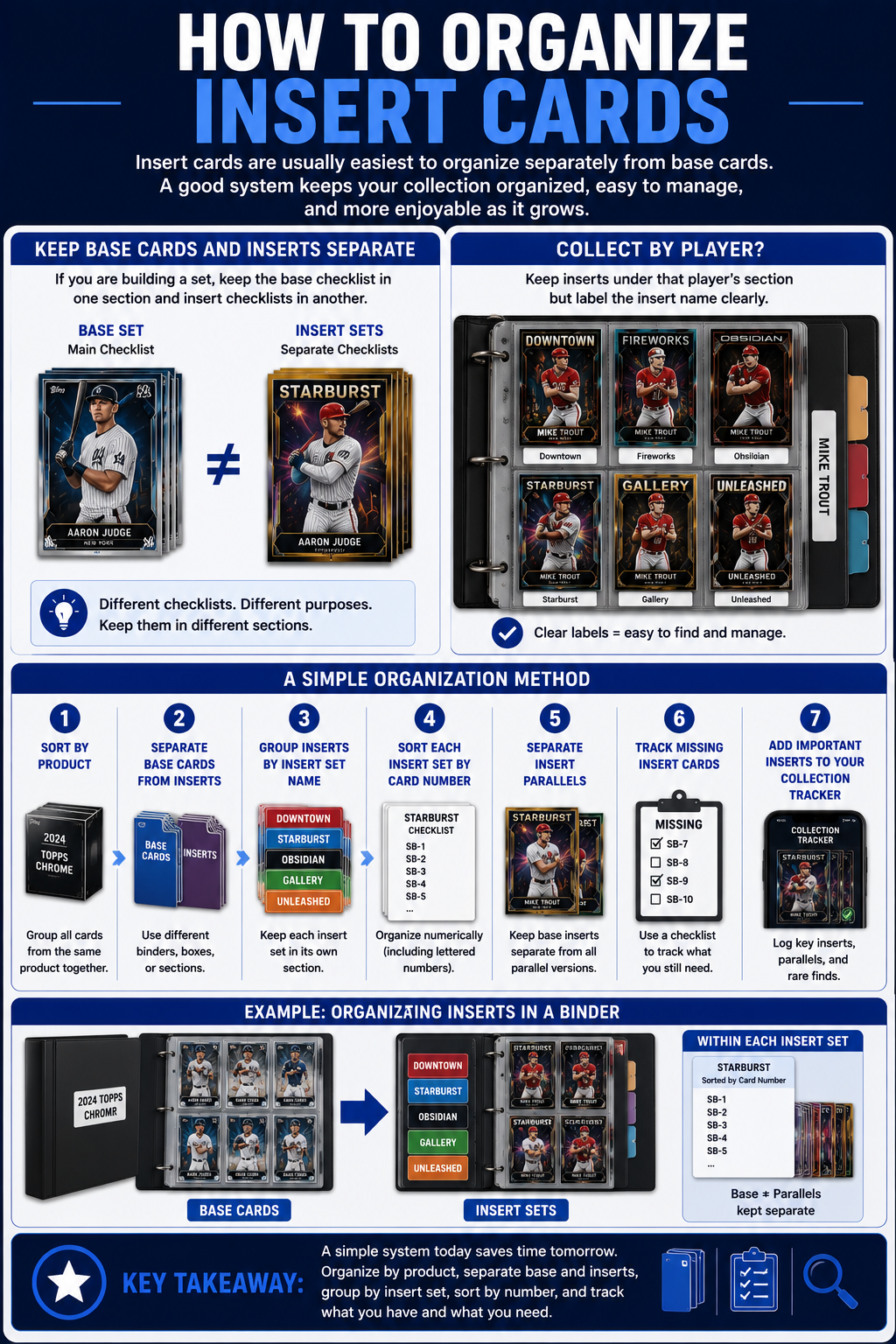
Insert cards are usually easiest to organize separately from base cards.
If you are building a set, keep the base checklist in one section and insert checklists in another. If you collect by player, keep inserts under that player’s section but label the insert name clearly.
A simple organization method could be:
- Sort By Product
- Separate Base Cards From Inserts
- Group Inserts By Insert Set Name
- Sort Each Insert Set By Card Number
- Separate Insert Parallels
- Track Missing Insert Cards
- Add Important Inserts To Your Collection Tracker
This keeps your collection easier to understand, especially as it grows.
Why Insert Cards Matter To CardWiki
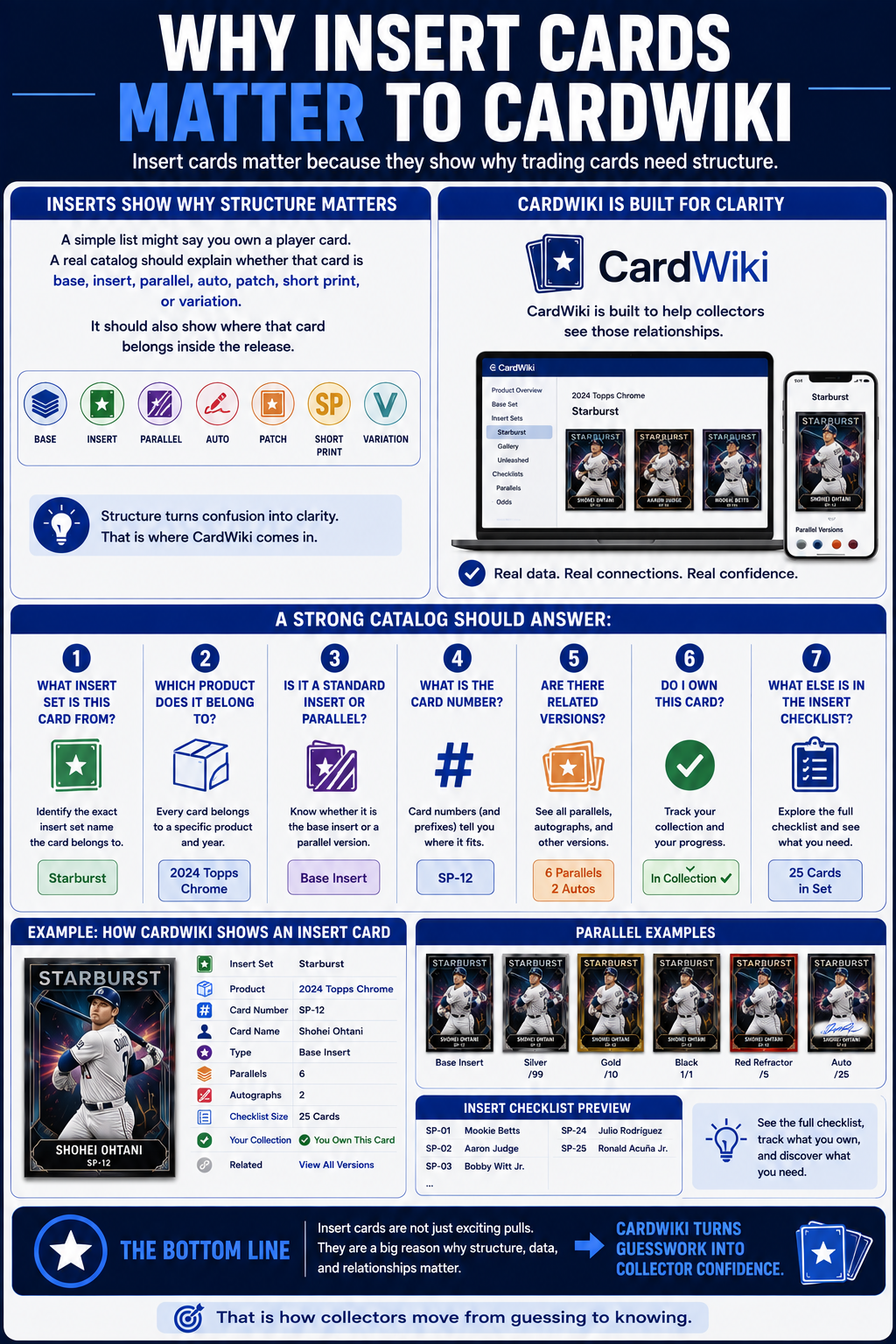
Insert cards matter because they show why trading cards need structure.
A simple list might say you own a player card. A real catalog should explain whether that card is base, insert, parallel, auto, patch, short print, or variation. It should also show where that card belongs inside the release.
CardWiki is built to help collectors see those relationships.
A strong catalog should answer:
- What Insert Set Is This Card From?
- Which Product Does It Belong To?
- Is It A Standard Insert Or Parallel?
- What Is The Card Number?
- Are There Related Versions?
- Do I Own This Card?
- What Else Is In The Insert Checklist?
That is how collectors move from guessing to knowing.
Final Thoughts
So, what is an insert card?
An insert card is a special themed card included in a trading card release outside the main base checklist. It may have its own design, name, number, and checklist.
Inserts are not the same as base cards. They are not the same as parallels either, although inserts can have parallel versions. Some inserts are common. Some are rare. Some become major chase cards. Others are just fun additions to a set.
Once you understand the difference, it becomes much easier to identify, organize, and track your cards with confidence.
If you are trying to understand how inserts fit into your collection, CardWiki can help you explore structured catalog records, compare versions, and track your cards with more confidence.
FAQs
What Is An Insert Card?
An insert card is a special card included in a trading card release outside the main base checklist, usually with its own theme, design, or numbering.
What Does Insert Card Meaning Refer To?
Insert card meaning refers to a card that is inserted into a product as part of a separate themed checklist, not the main base set.
Is An Insert Card The Same As A Base Card?
No. A base card belongs to the main checklist, while an insert card belongs to a separate themed checklist inside the product.
Is An Insert Card The Same As A Parallel?
No. A parallel is a variation of another card. An insert is usually a separate themed card, though inserts can also have parallels.
Are Insert Cards Valuable?
Some insert cards are valuable, but not all. Value depends on rarity, player demand, condition, design, and collector interest.
How Can I Tell If My Card Is An Insert?
Look for a unique theme name, different design, special logo, lettered card number, or checklist prefix that separates it from the base set.
What Is A Case Hit Insert?
A case hit insert is a harder-to-pull insert that may appear at very low odds, often around one per case depending on the product.
Can Insert Cards Have Parallels?
Yes. Many insert cards have parallel versions with different colors, finishes, numbering, or scarcity levels.