What Is A Rookie Card? And Why It Matters
What is a rookie card? Learn what rookie cards are, why collectors care about them, and what makes some rookie cards more important than others.

If you are new to trading cards, “rookie card” is one of the first phrases you will hear over and over again. It comes up in conversations about value, hype, collecting strategy, and long-term hobby importance. It also gets used so often that beginners can end up thinking every early card of a player is automatically a rookie card, or that every rookie card must be worth big money.
That is not really how it works. Keep reading to learn more about rookie cards; they're a big part of we're building at CardWiki.
A rookie card does matter, and in many cases it matters a lot. For many collectors, it represents the beginning of a player’s story in the hobby. It can carry extra weight because it connects to a player’s first recognized season of cards, which gives it a sense of importance that later cards do not always have.
At the same time, the term can get confusing fast. Not every early card is treated the same. Not every rookie card has equal hobby weight. Not every rookie card becomes valuable. The player matters, but the specific card matters too.
Once you understand what a rookie card actually is and why collectors care so much, the hobby starts to make a lot more sense.
What Is A Rookie Card?
A rookie card is generally one of the earliest official cards of a player released during the beginning of that player’s recognized hobby career. In plain English, it is one of the main first-year cards collectors associate with a player’s arrival in the hobby.
That sounds simple, but there is a reason people still get confused. A player can have several cards released around the same early window. Some may be seen as key rookie cards. Others may be treated as lesser rookie-year cards. Some may be early appearances that collectors do not rank the same way as the most accepted rookie cards.
That is why the phrase “rookie card” is really about more than just early timing. It is also about hobby recognition. Collectors do not only care that a card came early. They care whether it is viewed as a true, important, recognized rookie card inside the larger market and collecting culture.
So the easiest way to think about it is this: a rookie card is one of the key official first-year cards that collectors connect to the start of a player’s cardboard story.
Why Rookie Cards Matter
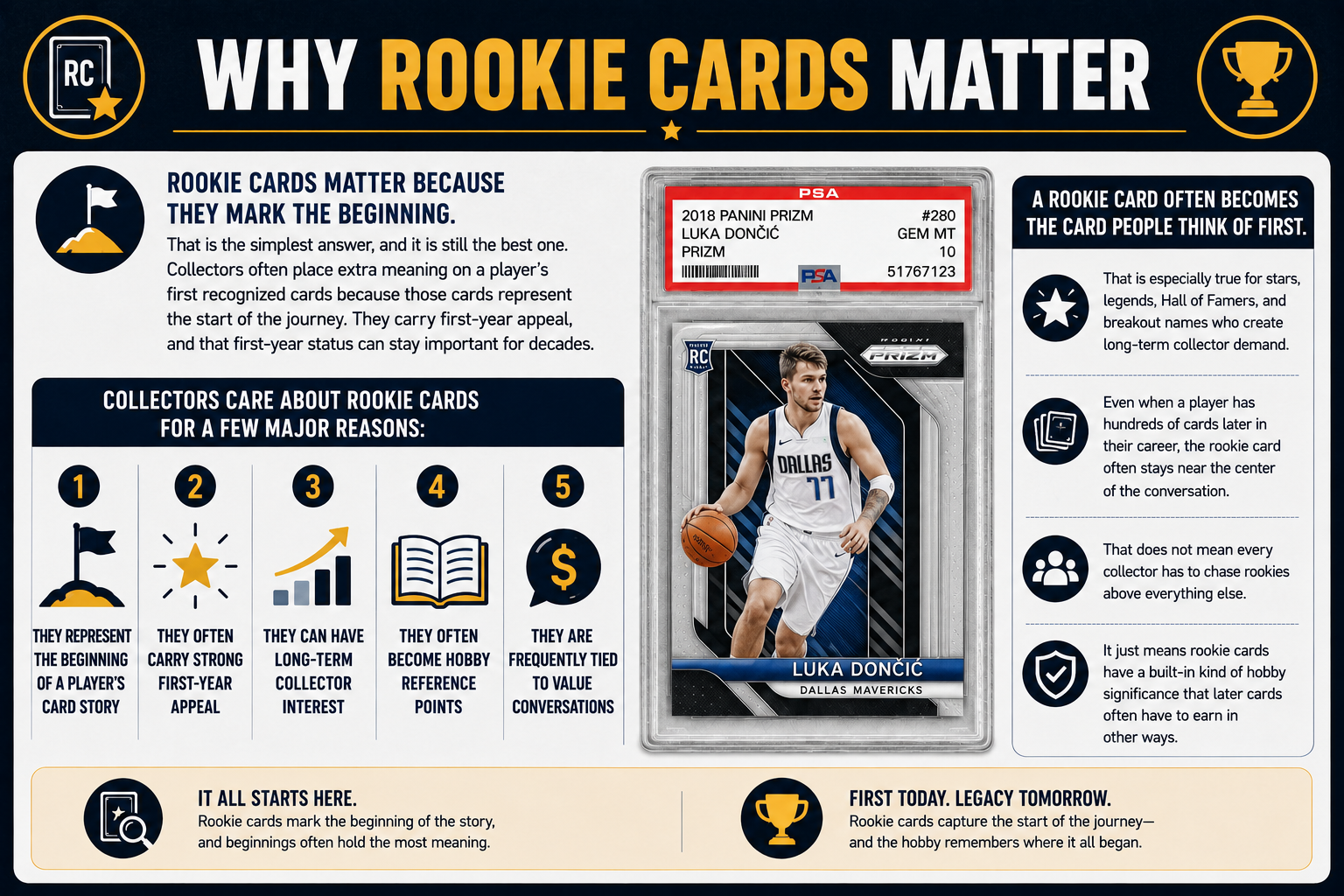
Rookie cards matter because they mark the beginning.
That is the simplest answer, and it is still the best one. Collectors often place extra meaning on a player’s first recognized cards because those cards represent the start of the journey. They carry first-year appeal, and that first-year status can stay important for decades.
Collectors care about rookie cards for a few major reasons:
- They Represent The Beginning Of A Player’s Card Story.
- They Often Carry Strong First-Year Appeal.
- They Can Have Long-Term Collector Interest.
- They Often Become Hobby Reference Points.
- They Are Frequently Tied To Value Conversations.
A rookie card can become the card people think of first when they think about a player. That is especially true for stars, legends, Hall of Famers, and breakout names who create long-term collector demand. Even when a player has hundreds of cards later in their career, the rookie card often stays near the center of the conversation.
That does not mean every collector has to chase rookies above everything else. It just means rookie cards have a built-in kind of hobby significance that later cards often have to earn in other ways.
What Makes A Card A Rookie Card?
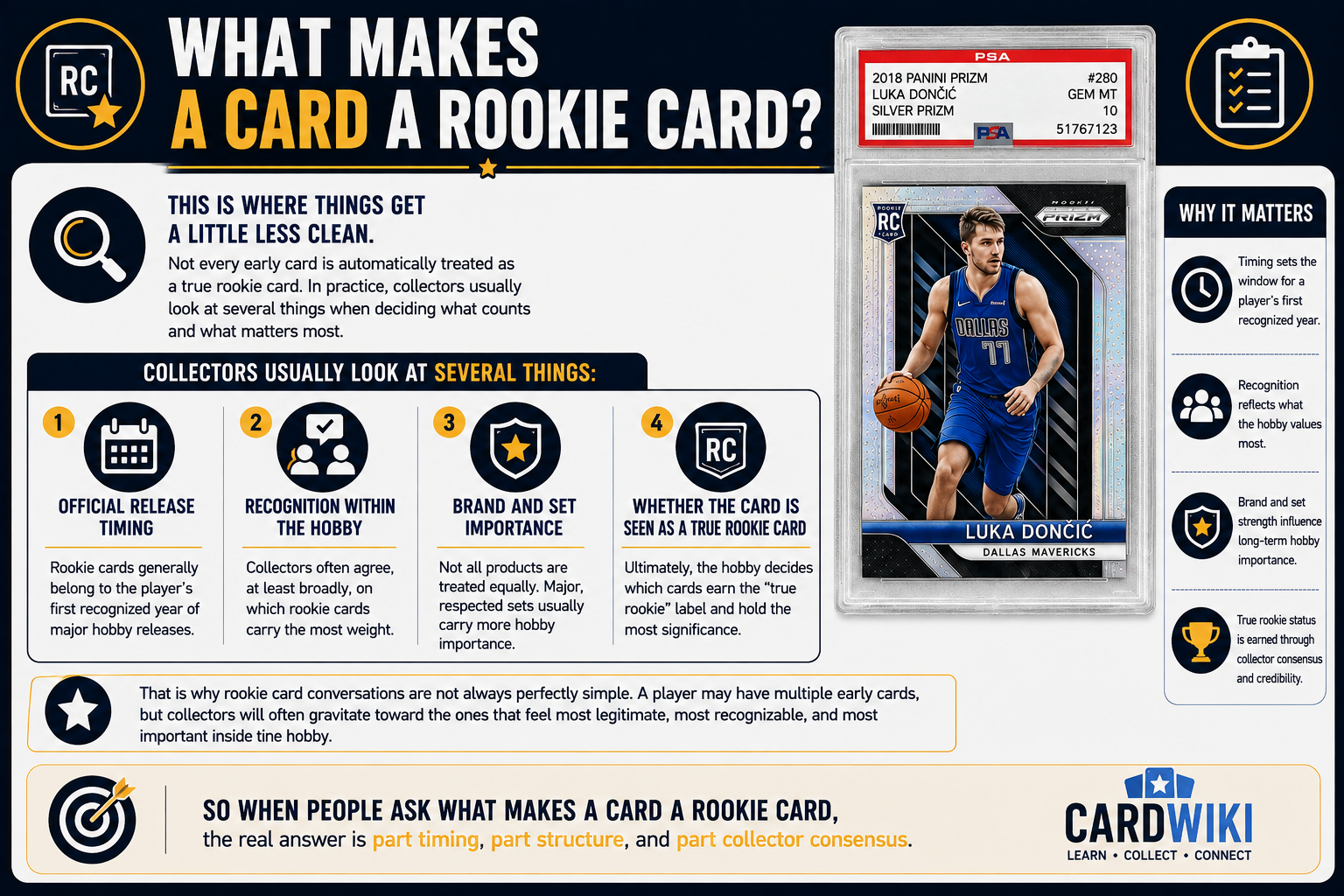
This is where things get a little less clean.
Not every early card is automatically treated as a true rookie card. In practice, collectors usually look at several things when deciding what counts and what matters most.
Those things often include:
- Official Release Timing
- Recognition Within The Hobby
- Brand And Set Importance
- Whether The Card Is Seen As A True Rookie Card
Timing matters because rookie cards generally belong to the player’s first recognized year of major hobby releases. Recognition matters because collectors often agree, at least broadly, on which rookie cards carry the most weight. Brand and set matter because not all products are treated equally. A rookie card from a major, respected set will usually carry more hobby importance than a more obscure or less significant early issue.
That is why rookie card conversations are not always perfectly simple. A player may have multiple early cards, but collectors will often gravitate toward the ones that feel most legitimate, most recognizable, and most important inside the hobby.
So when people ask what makes a card a rookie card, the real answer is part timing, part structure, and part collector consensus.
Why Not Every Rookie Card Is Equal
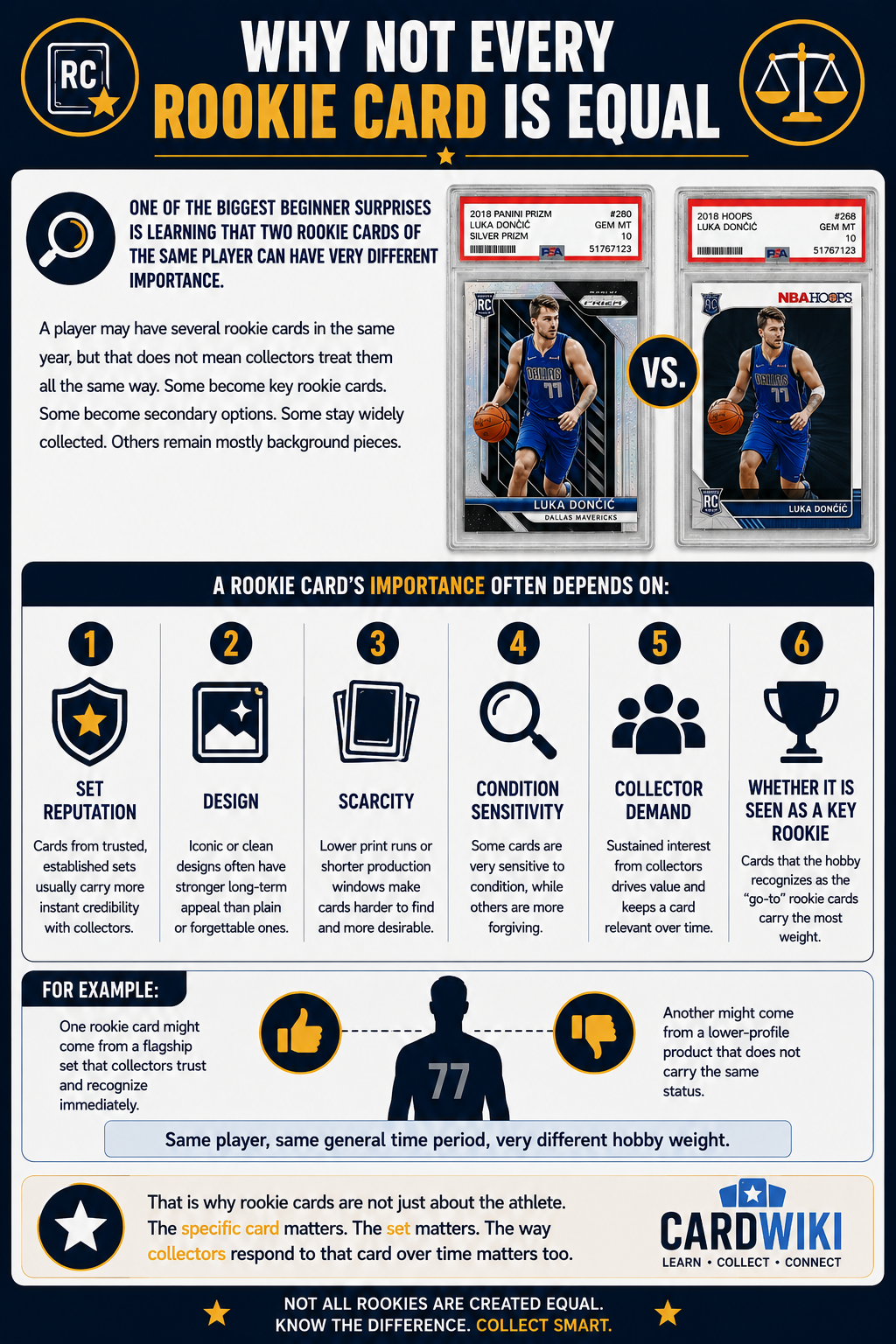
One of the biggest beginner surprises is learning that two rookie cards of the same player can have very different importance.
A player may have several rookie cards in the same year, but that does not mean collectors treat them all the same way. Some become key rookie cards. Some become secondary options. Some stay widely collected. Others remain mostly background pieces.
A rookie card’s importance often depends on:
- Set Reputation
- Design
- Scarcity
- Condition Sensitivity
- Collector Demand
- Whether It Is Seen As A Key Rookie
For example, one rookie card might come from a flagship set that collectors trust and recognize immediately. Another might come from a lower-profile product that does not carry the same status. Same player, same general time period, very different hobby weight.
That is why rookie cards are not just about the athlete. The specific card matters. The set matters. The way collectors respond to that card over time matters too.
Types Of Rookie Cards Collectors Talk About
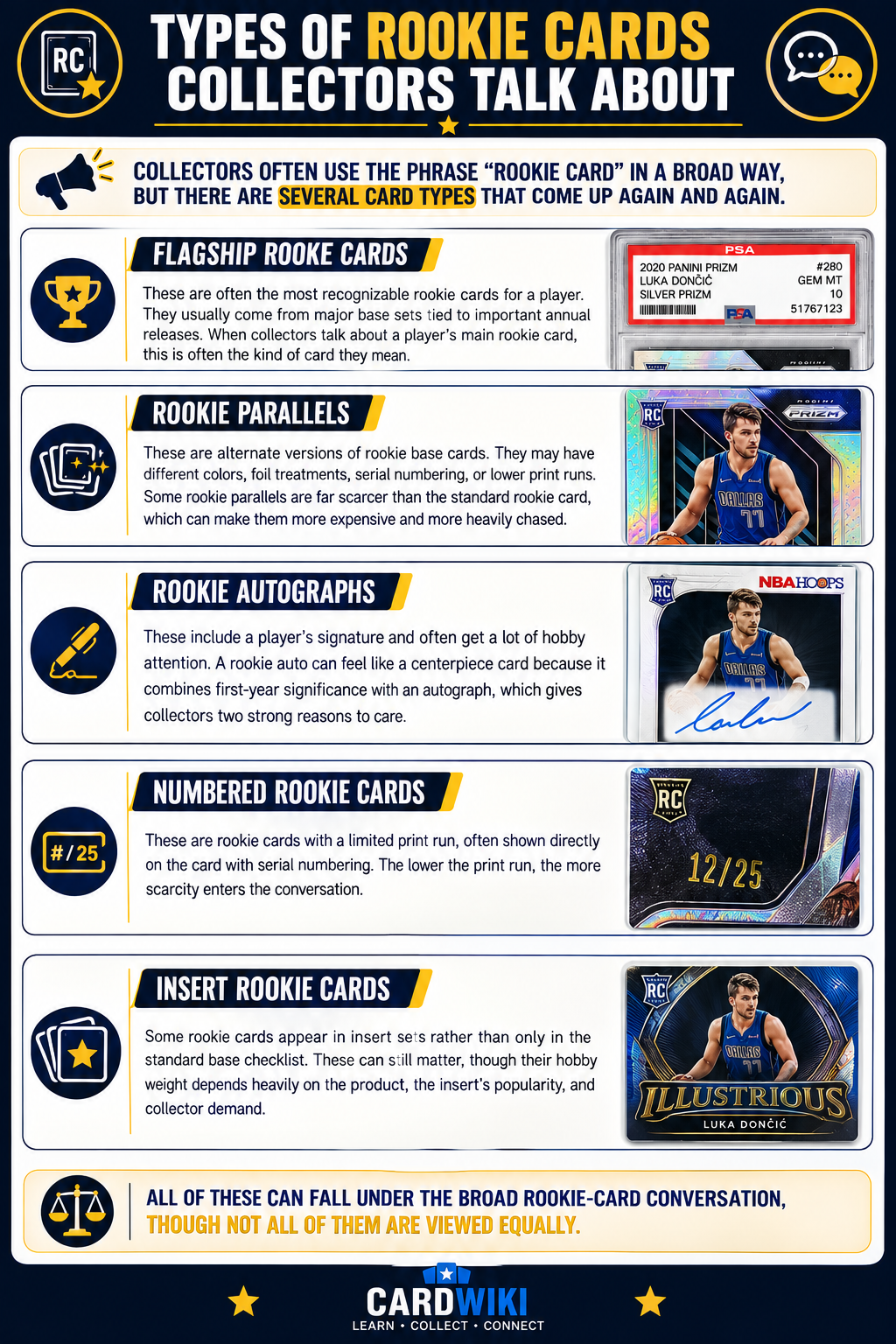
Collectors often use the phrase “rookie card” in a broad way, but there are several card types that come up again and again.
Flagship Rookie Cards
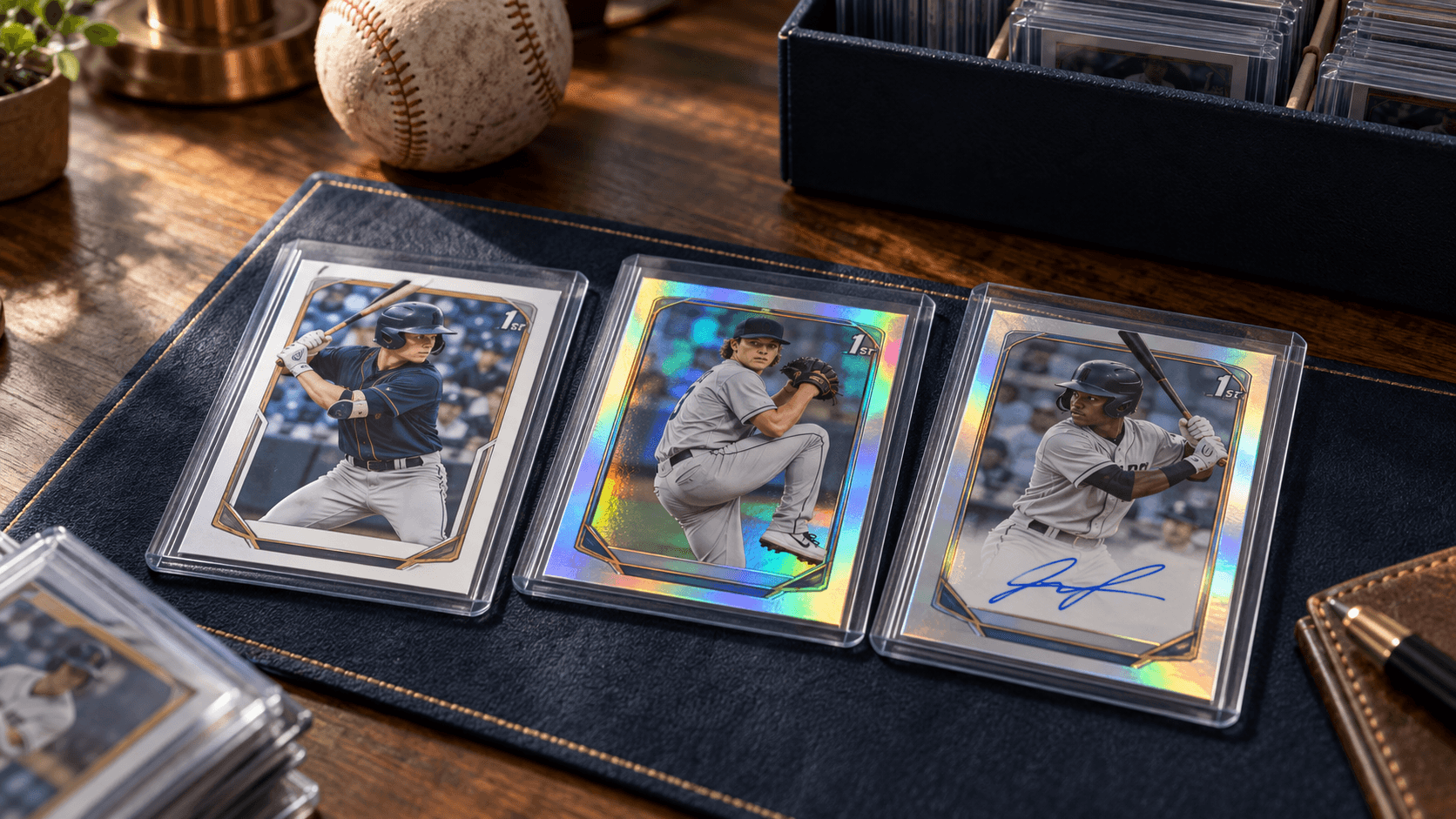
These are often the most recognizable rookie cards for a player. They usually come from major base sets tied to important annual releases. When collectors talk about a player’s main rookie card, this is often the kind of card they mean.
Rookie Parallels
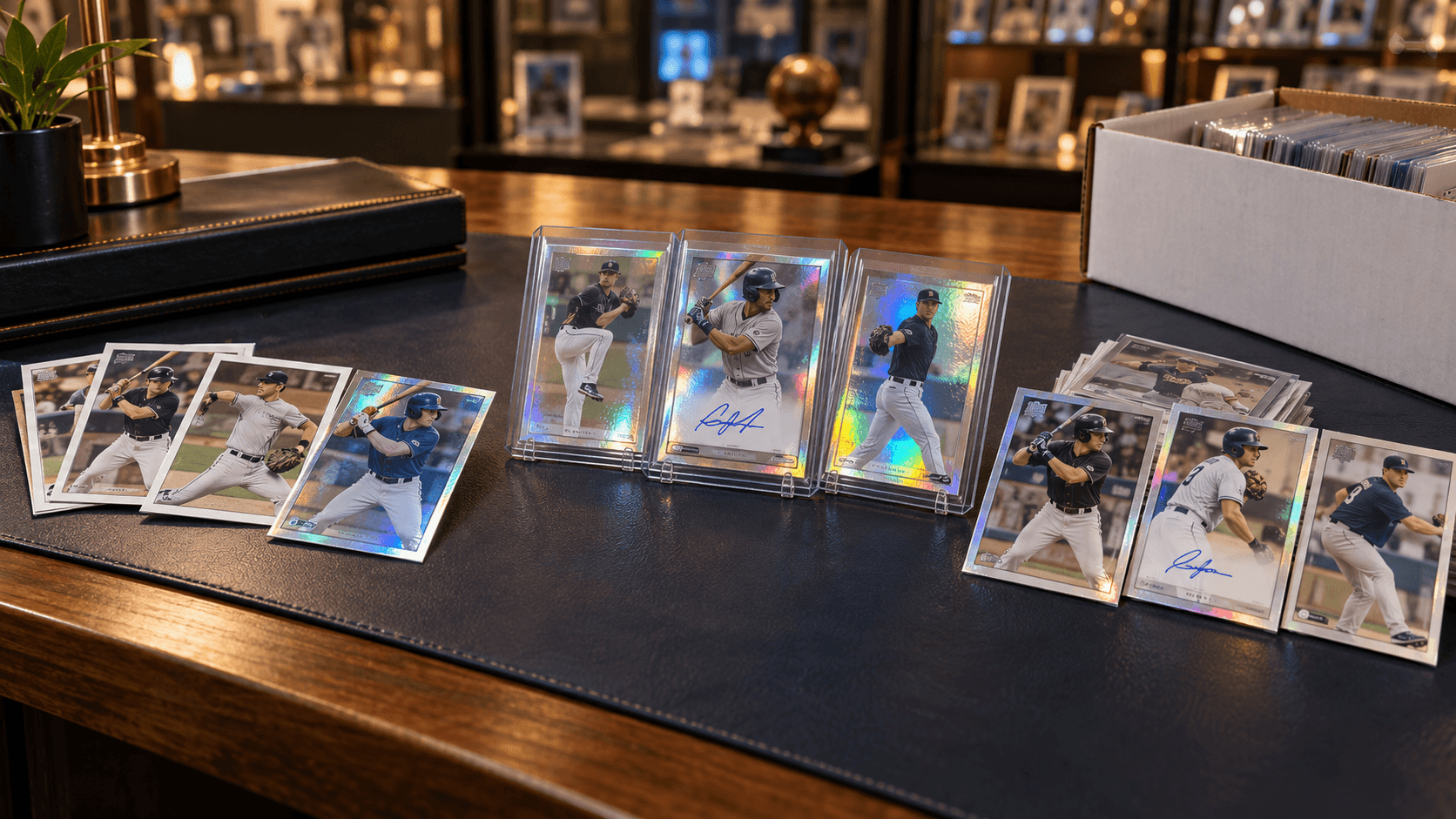
These are alternate versions of rookie base cards. They may have different colors, foil treatments, serial numbering, or lower print runs. Some rookie parallels are far scarcer than the standard rookie card, which can make them more expensive and more heavily chased.
Rookie Autographs
These include a player’s signature and often get a lot of hobby attention. A rookie auto can feel like a centerpiece card because it combines first-year significance with an autograph, which gives collectors two strong reasons to care.
Numbered Rookie Cards
These are rookie cards with a limited print run, often shown directly on the card with serial numbering. The lower the print run, the more scarcity enters the conversation.
Insert Rookie Cards
Some rookie cards appear in insert sets rather than only in the standard base checklist. These can still matter, though their hobby weight depends heavily on the product, the insert’s popularity, and collector demand.
All of these can fall under the broad rookie-card conversation, though not all of them are viewed equally.
Why Rookie Cards Are Often More Valuable
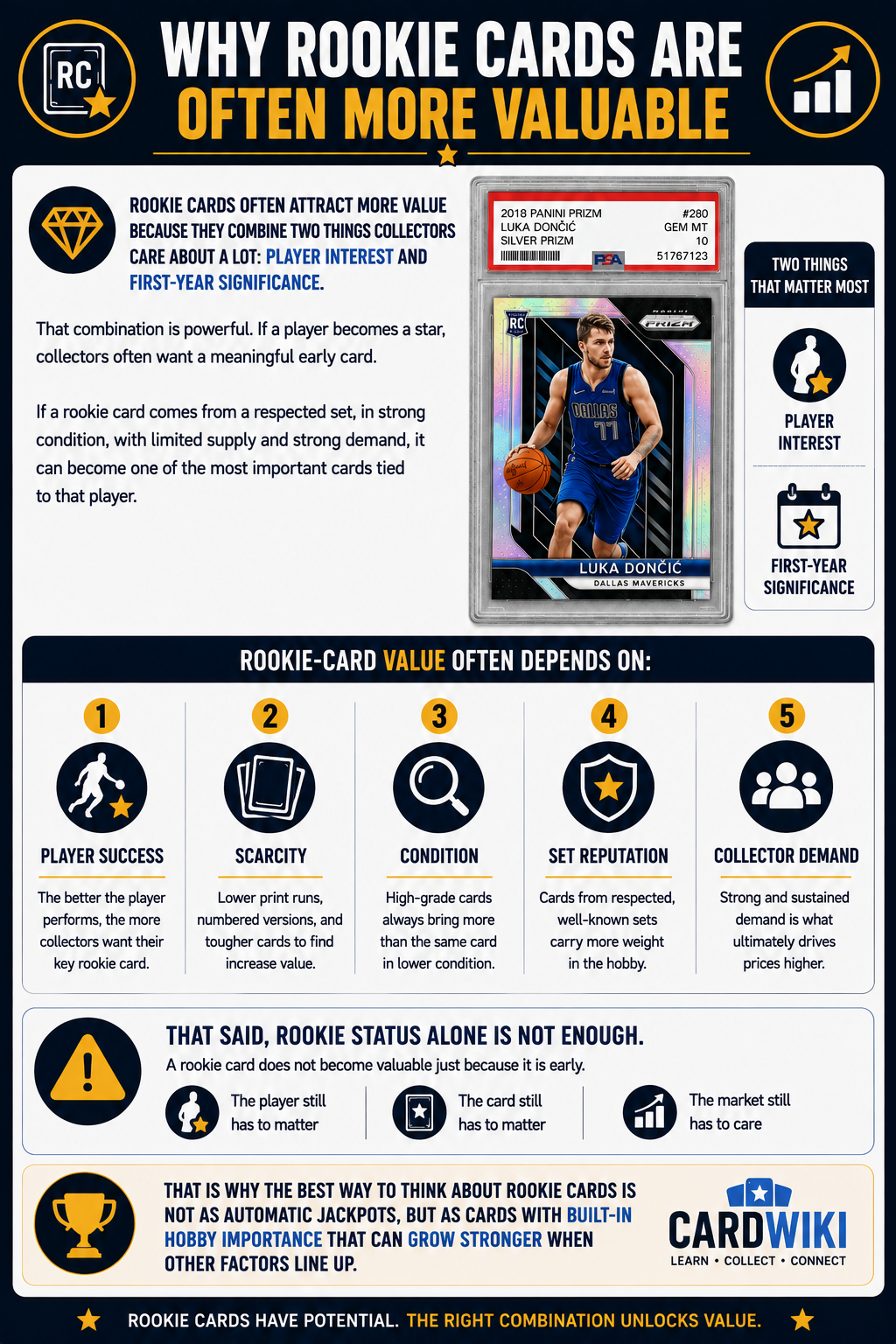
Rookie cards often attract more value because they combine two things collectors care about a lot: player interest and first-year significance.
That combination is powerful. If a player becomes a star, collectors often want a meaningful early card. If a rookie card comes from a respected set, in strong condition, with limited supply and strong demand, it can become one of the most important cards tied to that player.
Rookie-card value often depends on:
- Player Success
- Scarcity
- Condition
- Set Reputation
- Collector Demand
That said, rookie status alone is not enough. A rookie card does not become valuable just because it is early. The player still has to matter. The card still has to matter. The market still has to care.
That is why the best way to think about rookie cards is not as automatic jackpots, but as cards with built-in hobby importance that can grow stronger when other factors line up.
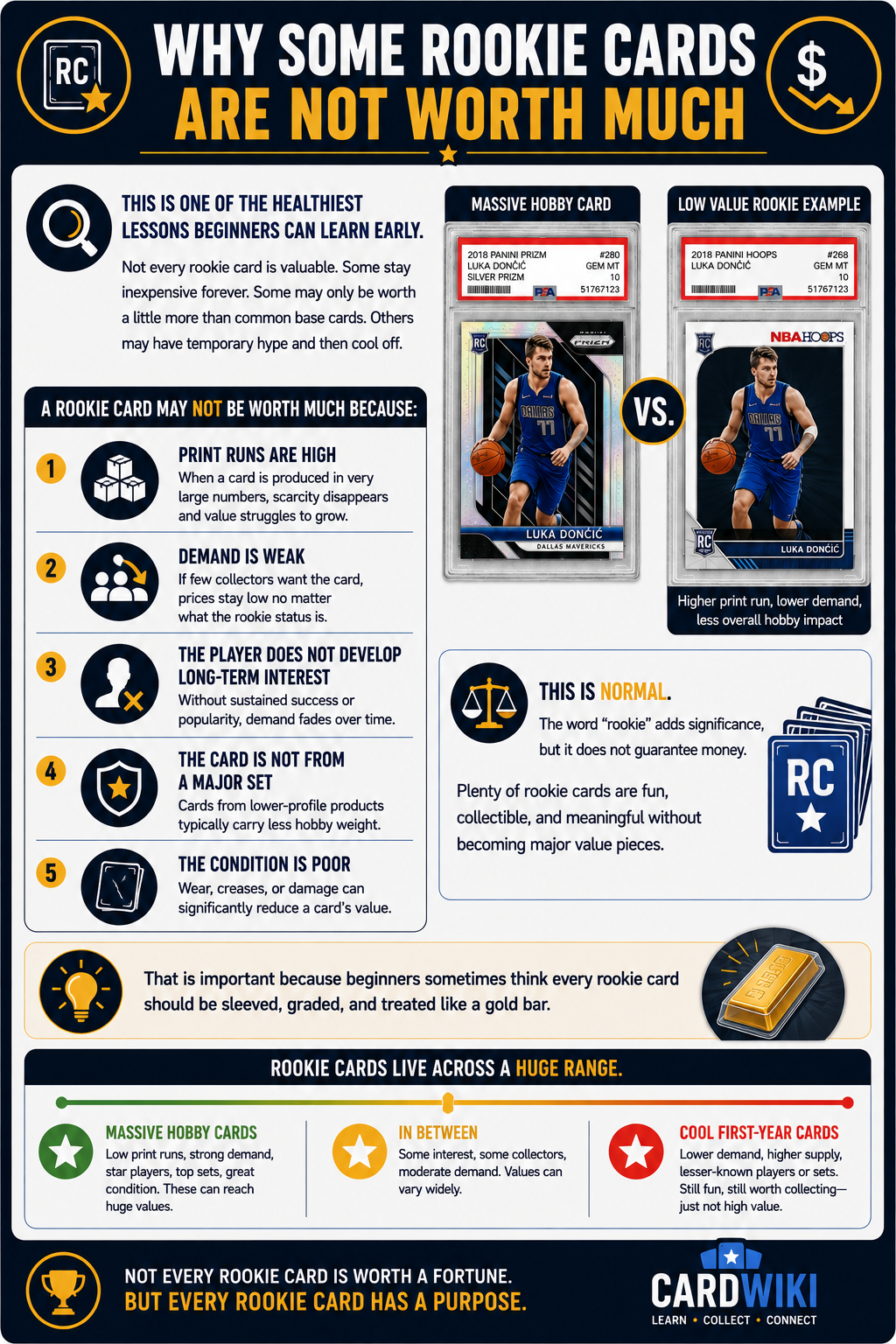
Why Some Rookie Cards Are Not Worth Much
This is one of the healthiest lessons beginners can learn early.
Not every rookie card is valuable. Some stay inexpensive forever. Some may only be worth a little more than common base cards. Others may have temporary hype and then cool off.
A rookie card may not be worth much because:
- Print Runs Are High
- Demand Is Weak
- The Player Does Not Develop Long-Term Interest
- The Card Is Not From A Major Set
- The Condition Is Poor
This is normal. The word “rookie” adds significance, but it does not guarantee money. Plenty of rookie cards are fun, collectible, and meaningful without becoming major value pieces.
That is important because beginners sometimes think every rookie card should be sleeved, graded, and treated like a gold bar. In reality, rookie cards live across a huge range. Some are massive hobby cards. Some are just cool first-year cards of players you like.
Rookie Card Vs. Prospect Card
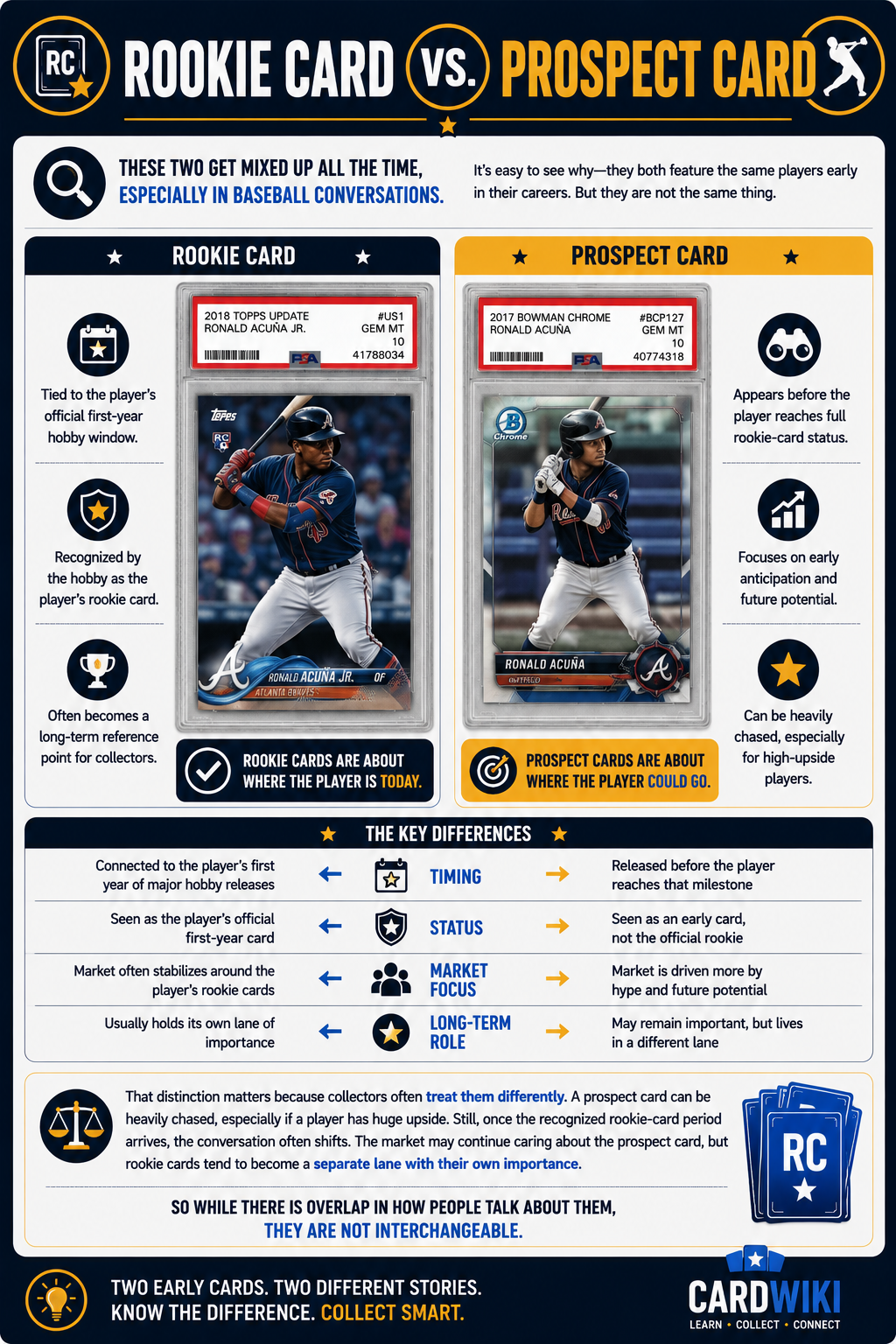
These two get mixed up all the time, especially in baseball conversations.
A prospect card usually appears before a player reaches the point where collectors treat them as having full rookie-card status. It is still an early card, and sometimes a very important one, but it is not always the same thing as a recognized rookie card.
A rookie card is usually tied more directly to the player’s official first-year hobby window. A prospect card is more about early anticipation and future potential.
That distinction matters because collectors often treat them differently. A prospect card can be heavily chased, especially if a player has huge upside. Still, once the recognized rookie-card period arrives, the conversation often shifts. The market may continue caring about the prospect card, but rookie cards tend to become a separate lane with their own importance.
So while there is overlap in how people talk about them, they are not interchangeable.
Rookie Card Vs. First Card Ever Made
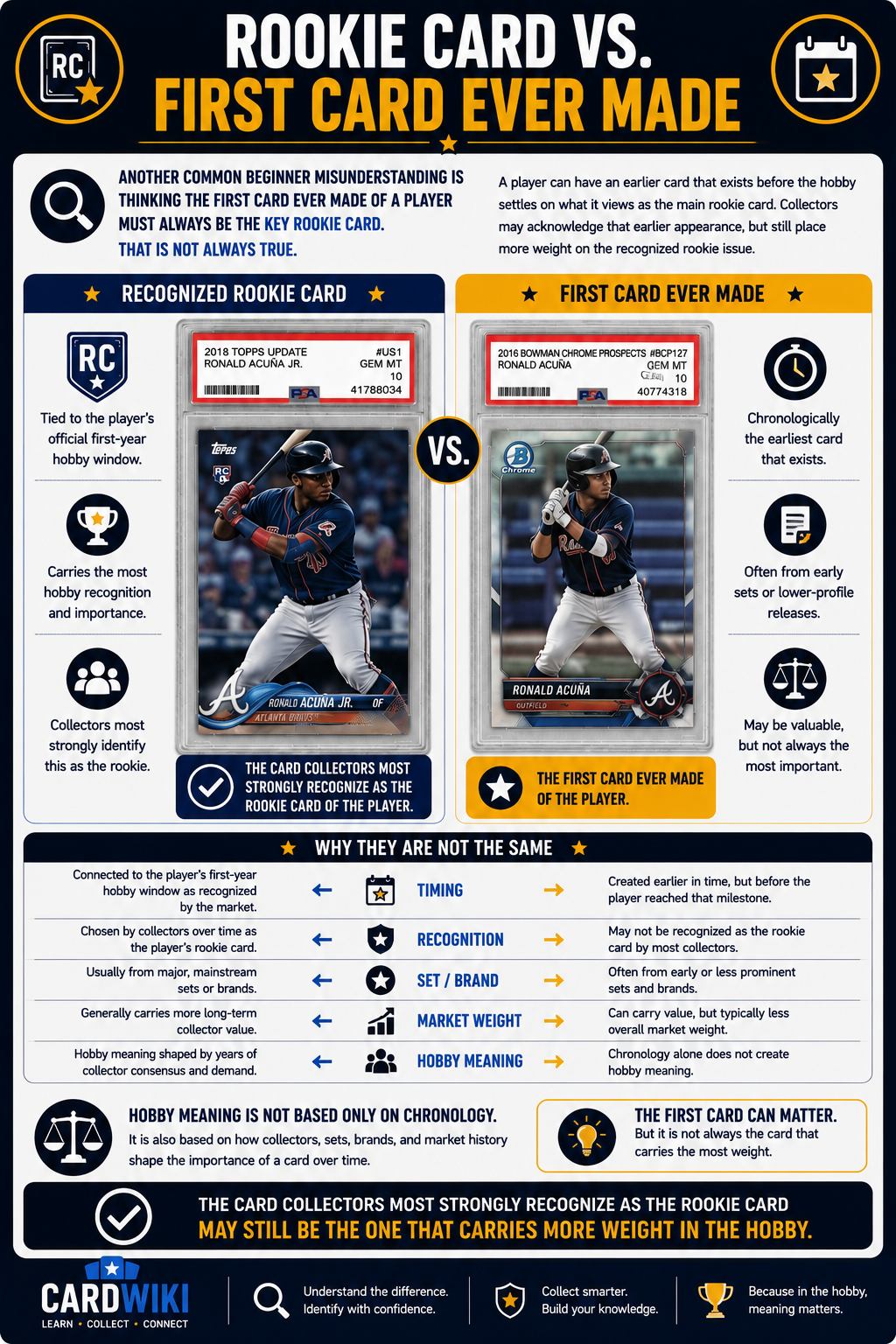
Another common beginner misunderstanding is thinking the first card ever made of a player must always be the key rookie card.
That is not always true.
A player can have an earlier card that exists before the hobby settles on what it views as the main rookie card. Collectors may acknowledge that earlier appearance, but still place more weight on the recognized rookie issue.
Why? Because hobby meaning is not based only on chronology. It is also based on how collectors, sets, brands, and market history shape the importance of a card over time.
So yes, the first card ever made of a player can matter. But the card collectors most strongly recognize as the rookie card may still be the one that carries more weight in the hobby.
Why Set Structure Matters When Understanding Rookie Cards
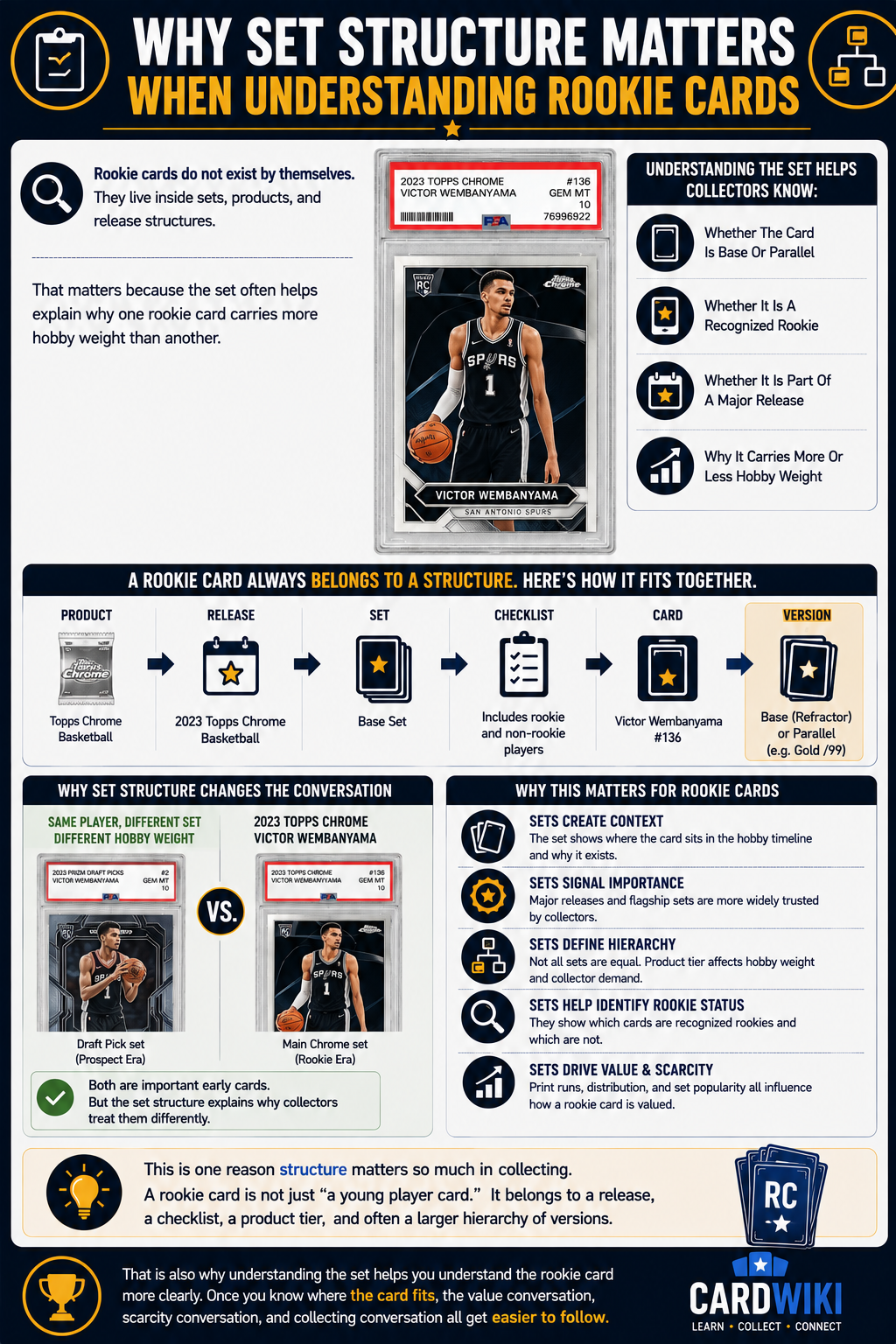
Rookie cards do not exist by themselves. They live inside sets, products, and release structures.
That matters because the set often helps explain why one rookie card carries more hobby weight than another. Understanding the set helps collectors know:
- Whether The Card Is Base Or Parallel
- Whether It Is A Recognized Rookie
- Whether It Is Part Of A Major Release
- Why It Carries More Or Less Hobby Weight
This is one reason structure matters so much in collecting. A rookie card is not just “a young player card.” It belongs to a release, a checklist, a product tier, and often a larger hierarchy of versions.
That is also why understanding the set helps you understand the rookie card more clearly. Once you know where the card fits, the value conversation, scarcity conversation, and collecting conversation all get easier to follow.
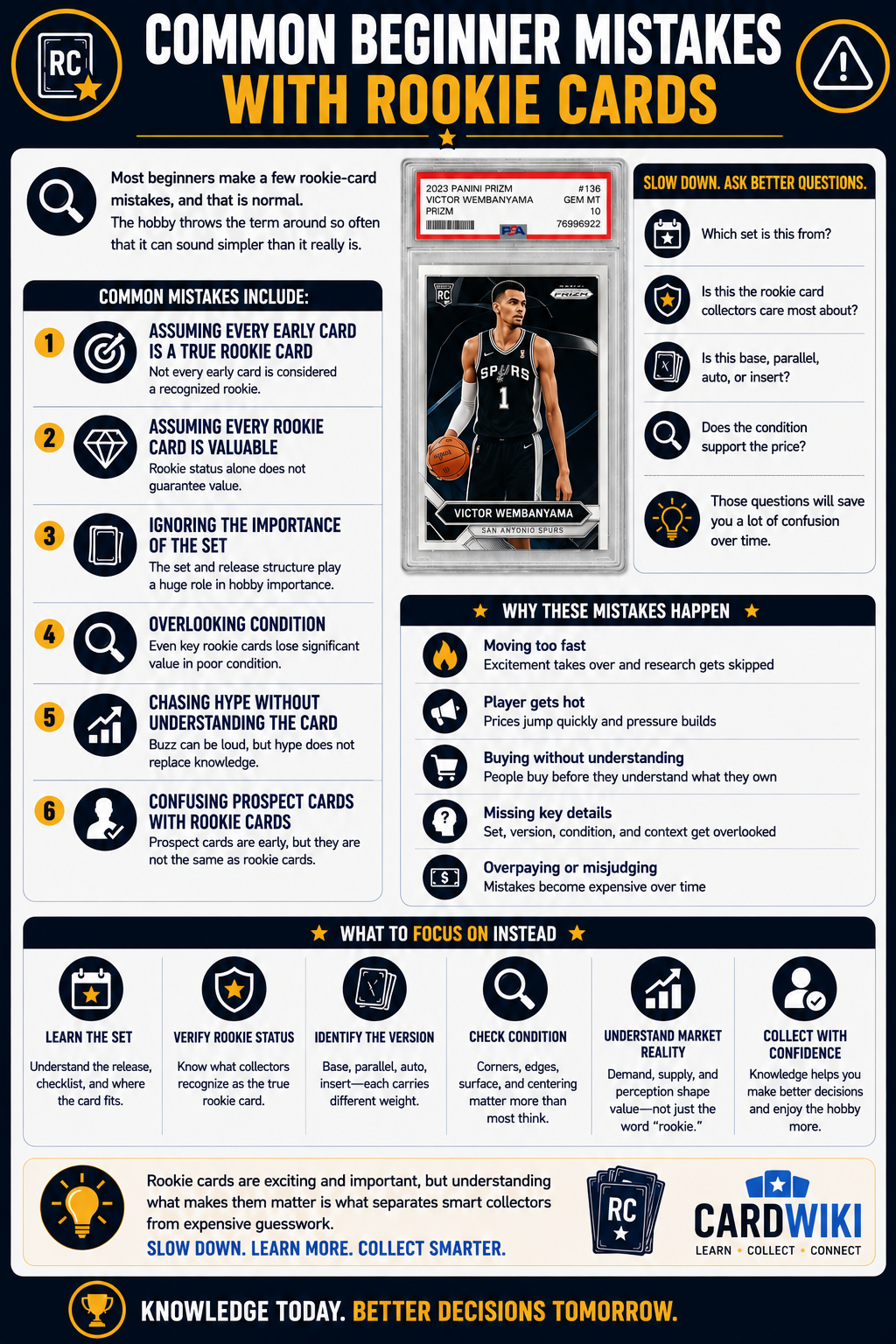
Common Beginner Mistakes With Rookie Cards
Most beginners make a few rookie-card mistakes, and that is normal. The hobby throws the term around so often that it can sound simpler than it really is.
Common mistakes include:
- Assuming Every Early Card Is A True Rookie Card
- Assuming Every Rookie Card Is Valuable
- Ignoring The Importance Of The Set
- Overlooking Condition
- Chasing Hype Without Understanding The Card
- Confusing Prospect Cards With Rookie Cards
A lot of these mistakes come from moving too fast. A player gets hot, a card starts buzzing, and suddenly people are buying without really understanding what they are buying.
That is why it helps to slow down and ask better questions. Which set is this from? Is this the rookie card collectors care most about? Is this base, parallel, auto, or insert? Does the condition support the price? Those questions will save you a lot of confusion over time.
How Beginners Should Approach Rookie Cards
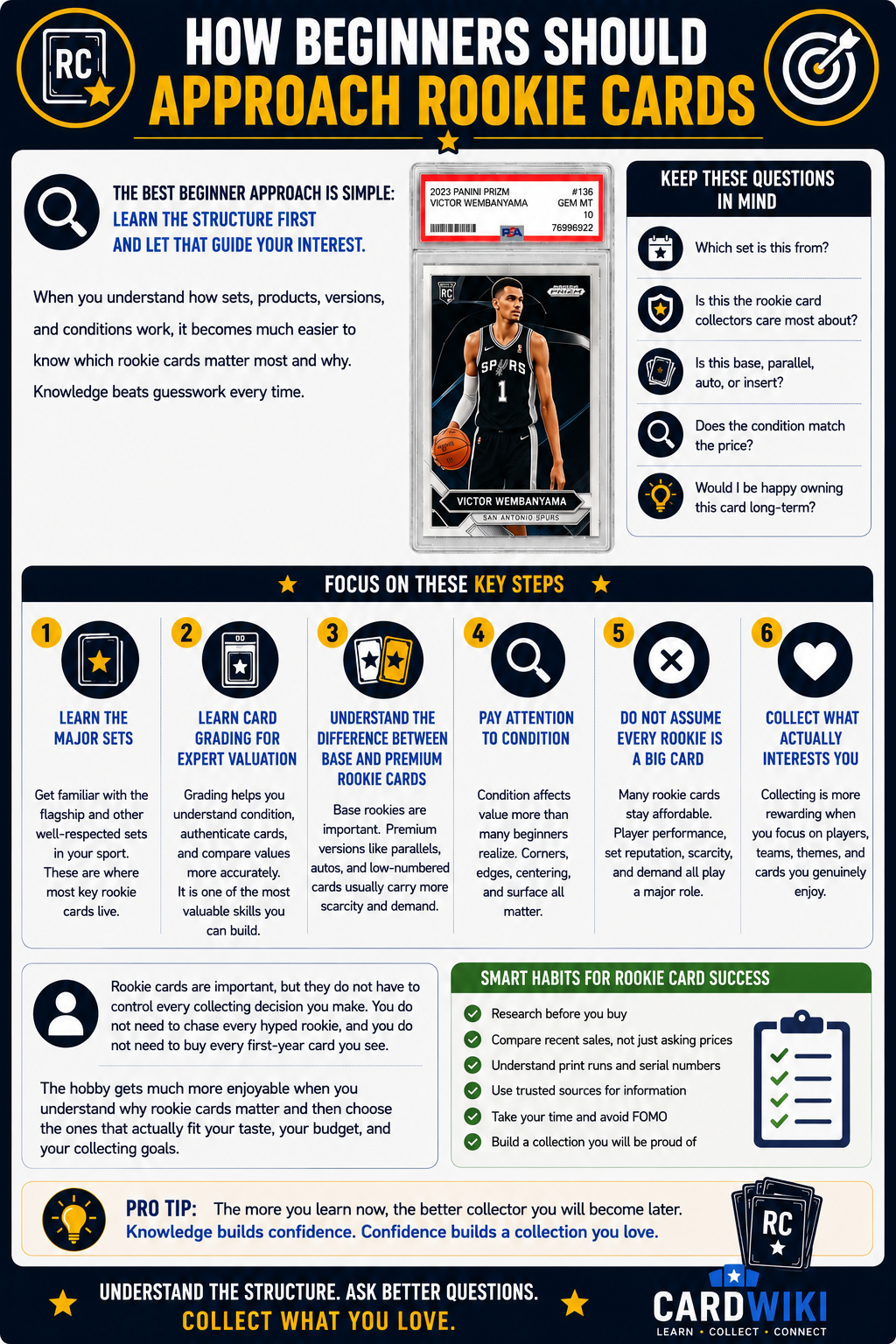
The best beginner approach is simple: learn the structure first and let that guide your interest.
Try to focus on:
- Learn The Major Sets
- Lean to Card Grading for Expert Valuation
- Understand The Difference Between Base And Premium Rookie Cards
- Pay Attention To Condition
- Do Not Assume Every Rookie Is A Big Card
- Collect What Actually Interests You
That last part matters a lot. Rookie cards are important, but they do not have to control every collecting decision you make. You do not need to chase every hyped rookie, and you do not need to buy every first-year card you see.
The hobby gets much more enjoyable when you understand why rookie cards matter and then choose the ones that actually fit your taste, your budget, and your collecting goals.
Final Thoughts
So, what is a rookie card?
It is one of the key early official cards tied to the beginning of a player’s recognized hobby career. It matters because collectors attach real first-year significance to those cards, and that significance often follows the player for the rest of their cardboard story.
That is why rookie cards keep coming up in conversations about value, collecting, and long-term importance. They are often the cards collectors return to first when they think about a player.
Still, not all rookie cards are equal. The player matters, but the set, the condition, the scarcity, and the hobby’s view of that specific card matter too.
Once you understand that, rookie cards stop feeling like a buzzword and start feeling like one of the clearest windows into how the hobby actually works.
If you’re learning how rookie cards fit into the hobby, CardWiki can help you track your collection, understand card structure, and make better sense of what you own.
FAQs
What Is A Rookie Card?
A rookie card is one of the main early official cards released during the beginning of a player’s recognized hobby career.
Why Do Rookie Cards Matter?
Rookie cards matter because they represent a player’s first major year of cards, which gives them extra hobby significance and long-term collector interest.
Are All Rookie Cards Valuable?
No. Some rookie cards become very desirable, while others stay common and inexpensive.
What Makes A Card A True Rookie Card?
Collectors usually look at release timing, hobby recognition, and the importance of the set when deciding what counts as a true rookie card.
What Is The Difference Between A Rookie Card And A Prospect Card?
A prospect card usually comes earlier and is tied to future upside, while a rookie card is more closely tied to the recognized first-year window collectors care about most.
What Is A Flagship Rookie Card?
A flagship rookie card is usually a major base rookie from a widely recognized annual set.
Why Are Some Rookie Cards Worth More Than Others?
Value often depends on player success, scarcity, condition, set reputation, and collector demand.
Is A Rookie Card Always The First Card Of A Player?
No. A player’s first card ever made is not always the one collectors treat as the key rookie card.
Should Beginners Collect Rookie Cards?
Yes, if they enjoy them. Rookie cards are a major part of the hobby, but beginners should learn the structure and collect with intention instead of chasing hype blindly.