Licensed Vs Unlicensed Trading Cards: Why Logos, Leagues, And Player Rights Matter
Learn the difference between licensed and unlicensed trading cards, how league and player rights work, and why licensing matters to collectors.

If you've spent any time collecting trading cards, you've probably heard someone describe a product as "licensed" or "unlicensed."
At first, that sounds simple.
Either a company has permission to make the cards or it doesn't.
In reality, licensing is much more complicated than that.
A manufacturer may have permission to use league logos but not player names. Another company may have player rights but not team logos. A third may have rights for one sport but not another.
Understanding those differences helps explain why some cards show official uniforms while others remove logos, airbrush jerseys, or use generic team names.
More importantly, licensing is part of a product's identity.
A modern trading card catalog should not simply label a product as licensed or unlicensed. It should understand exactly which rights exist and which do not.
What Does Licensed Mean In Trading Cards?
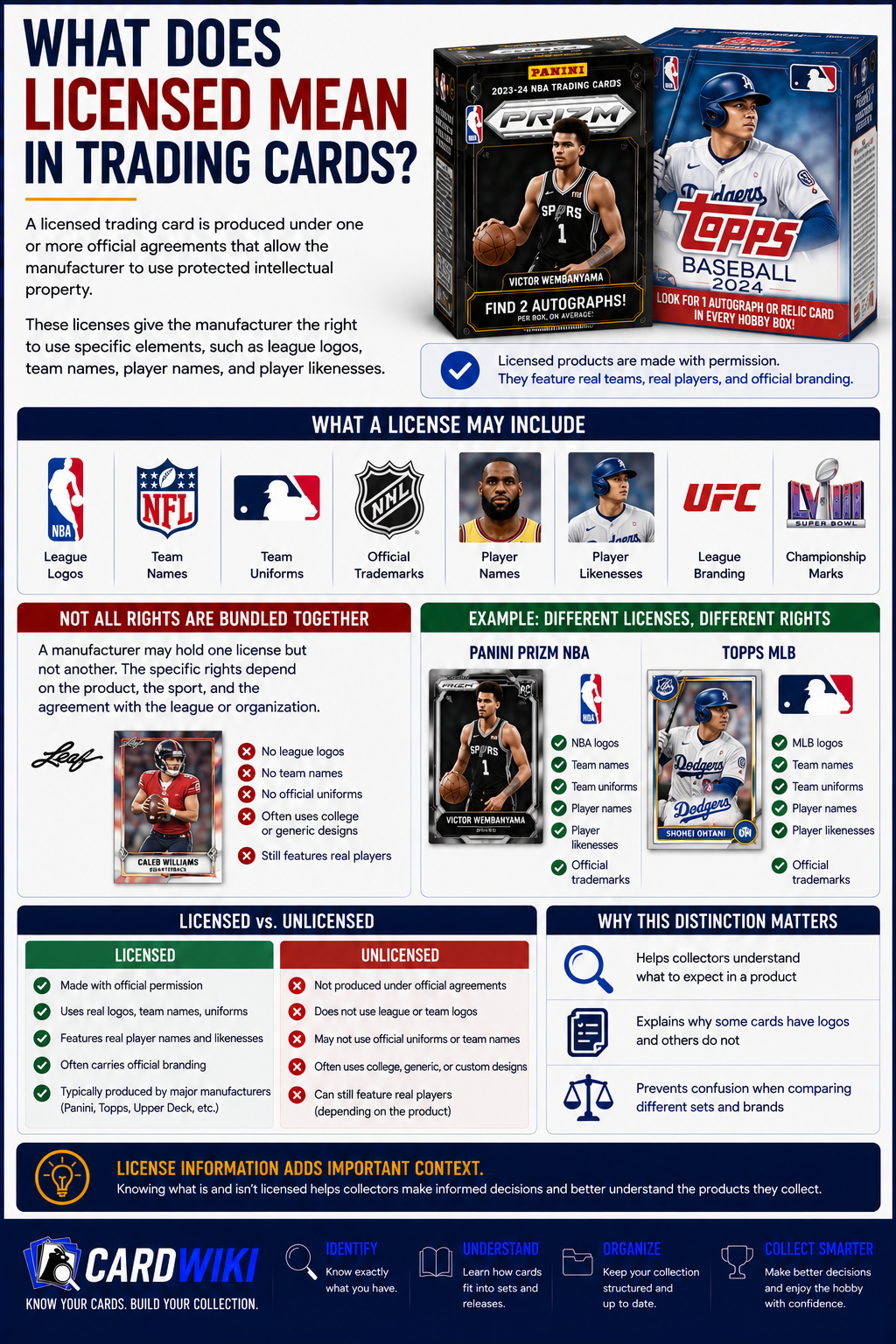
A licensed trading card is produced under one or more official agreements that allow the manufacturer to use protected intellectual property.
Depending on the product, that may include:
- League Logos
- Team Names
- Team Uniforms
- Official Trademarks
- Player Names
- Player Likenesses
- League Branding
- Championship Marks
Those rights are not always bundled together.
A manufacturer may hold one license but not another.
That distinction is important.
What Does Unlicensed Mean?
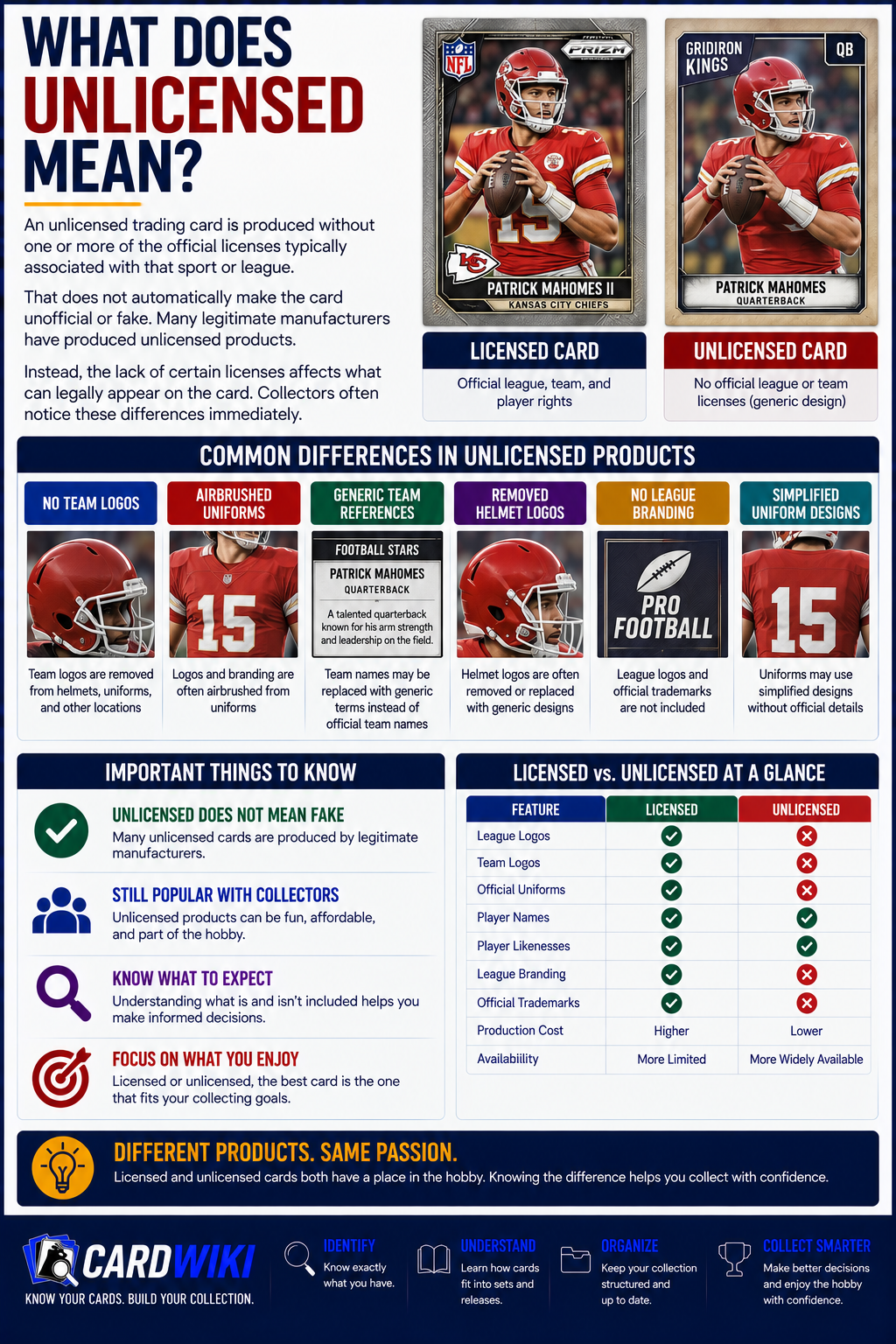
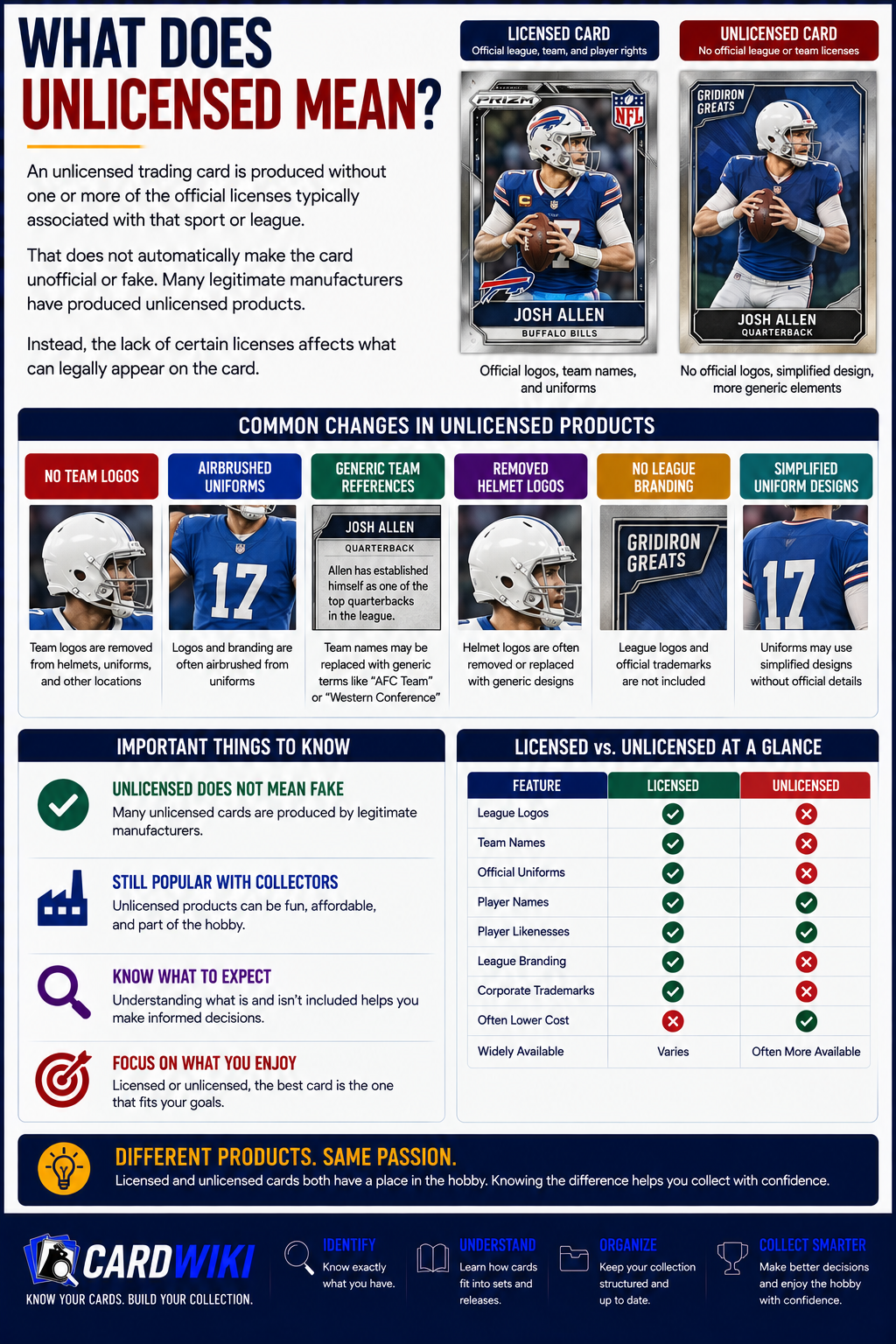
An unlicensed trading card is produced without one or more of the official licenses typically associated with that sport or league.
That does not automatically make the card unofficial or fake.
Many legitimate manufacturers have produced unlicensed products.
Instead, the lack of certain licenses affects what can legally appear on the card.
Examples may include:
- No Team Logos
- Airbrushed Uniforms
- Generic Team References
- Removed Helmet Logos
- No League Branding
- Simplified Uniform Designs
Collectors often notice these differences immediately.
Licensing Is Not Simply Yes Or No
One of the biggest misconceptions in the hobby is that licensing is binary.
It isn't.
Modern trading cards may involve several different rights holders.
Examples include:
- Professional League
- Players Association
- Individual Player
- Team
- Manufacturer
- Photography Rights
- Event Rights
Each agreement may be separate.
A manufacturer could have:
- League Rights But No Player Association Rights
- Player Rights But No League Rights
- Team Rights Without League Branding
- Rights For One Sport But Not Another
This is why CardWiki treats licensing as structured information rather than a simple yes-or-no field.
League Rights
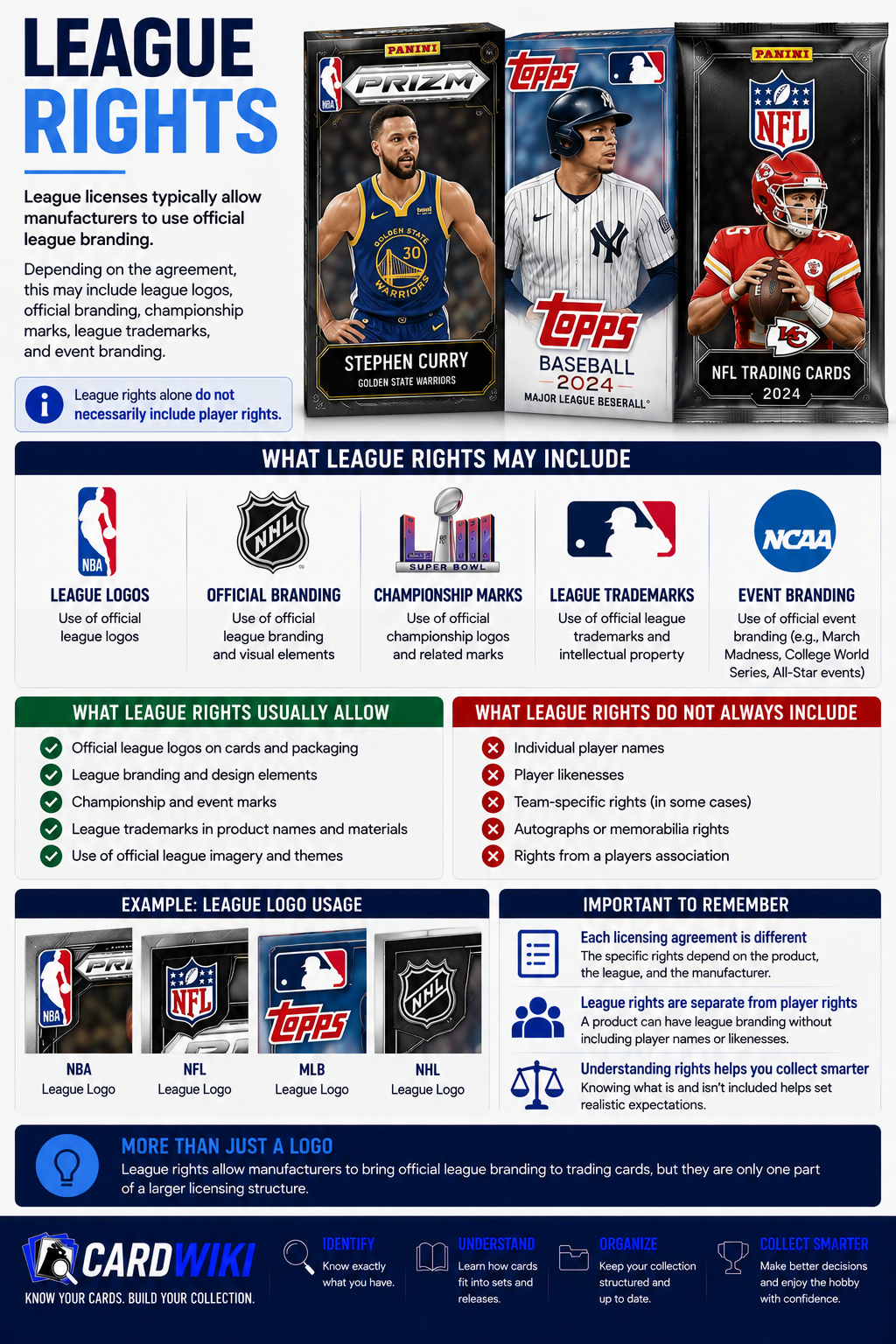
League licenses typically allow manufacturers to use official league branding.
Depending on the agreement, this may include:
- League Logos
- Official Branding
- Championship Marks
- League Trademarks
- Event Branding
League rights alone do not necessarily include player rights.
Team Rights
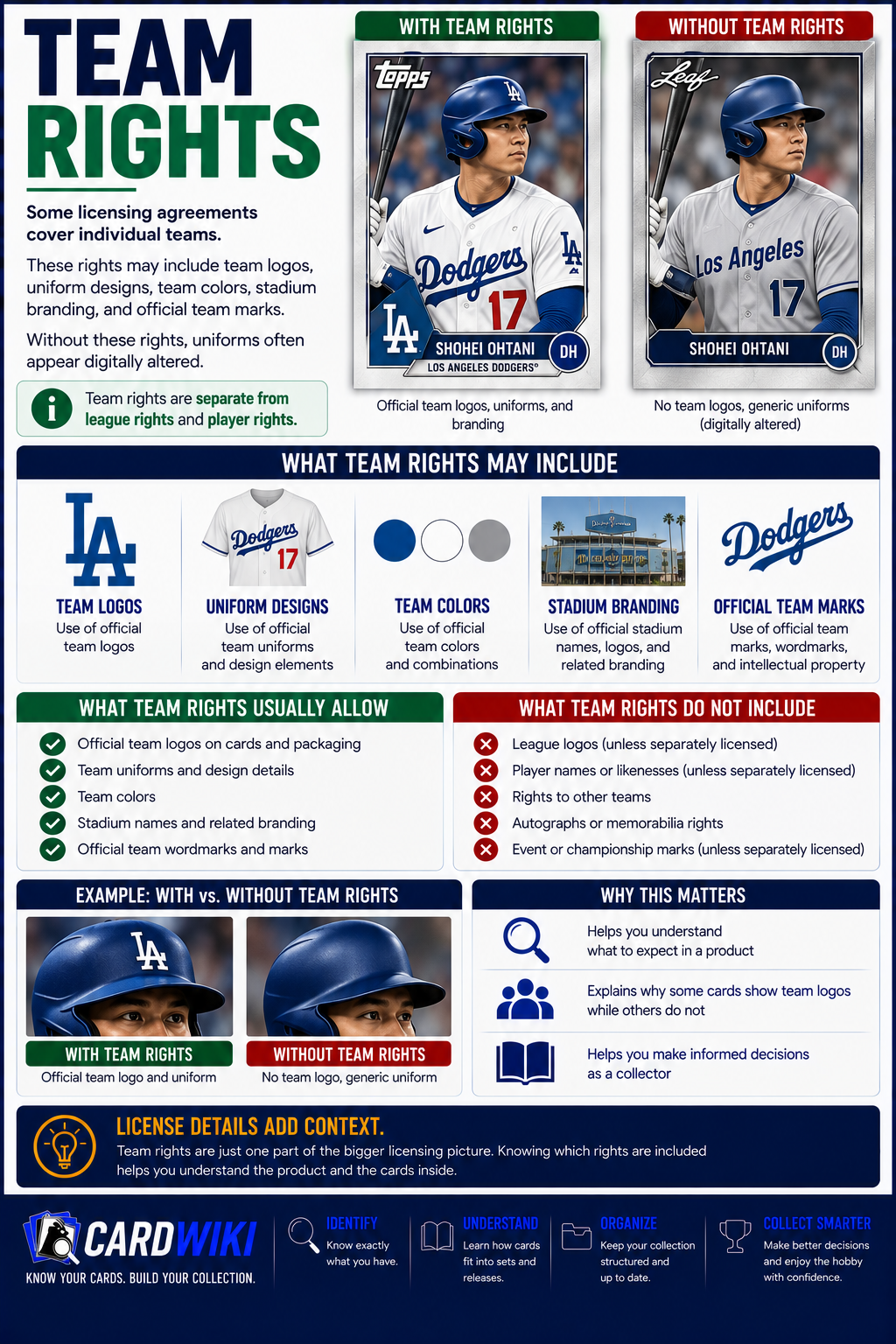
Some licensing agreements cover individual teams.
These rights may include:
- Team Logos
- Uniform Designs
- Team Colors
- Stadium Branding
- Official Team Marks
Without these rights, uniforms often appear digitally altered.
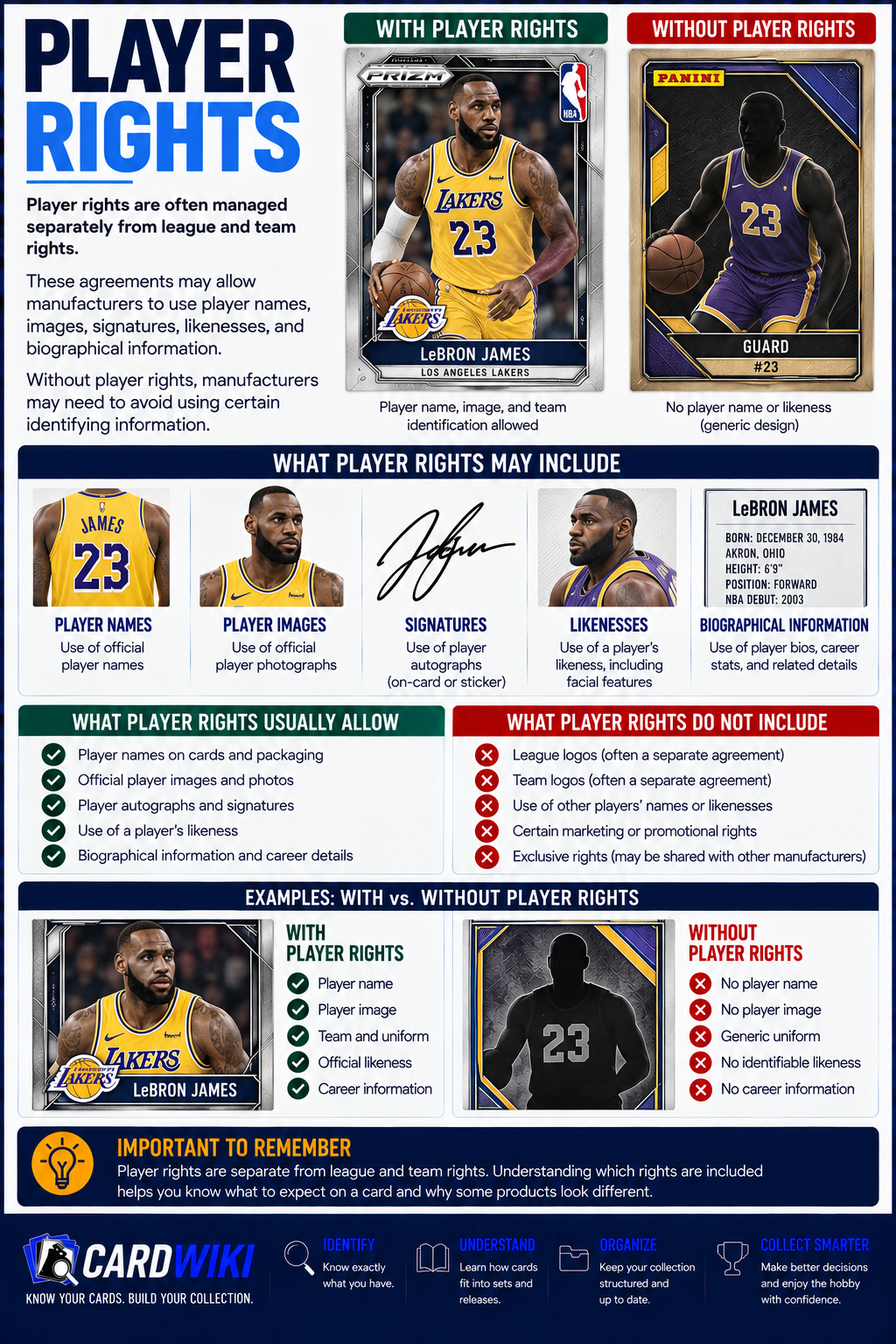
Player Rights
Player rights are often managed separately.
These agreements may allow manufacturers to use:
- Player Names
- Player Images
- Signatures
- Likenesses
- Biographical Information
Without player rights, manufacturers may need to avoid using certain identifying information.
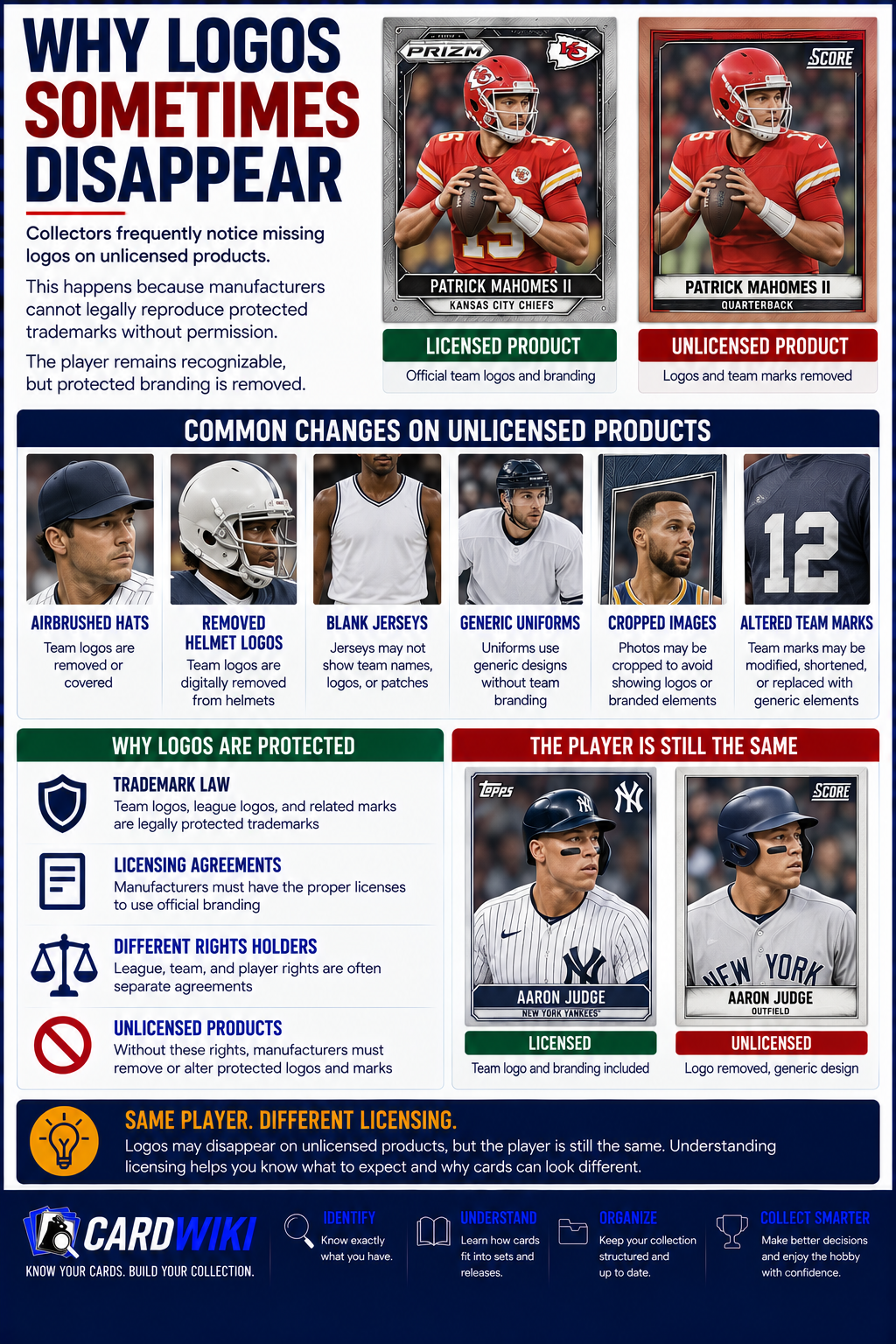
Why Logos Sometimes Disappear
Collectors frequently notice missing logos on unlicensed products.
This happens because manufacturers cannot legally reproduce protected trademarks without permission.
Common changes include:
- Airbrushed Hats
- Removed Helmet Logos
- Blank Jerseys
- Generic Uniforms
- Cropped Images
- Altered Team Marks
The player remains recognizable, but protected branding is removed.
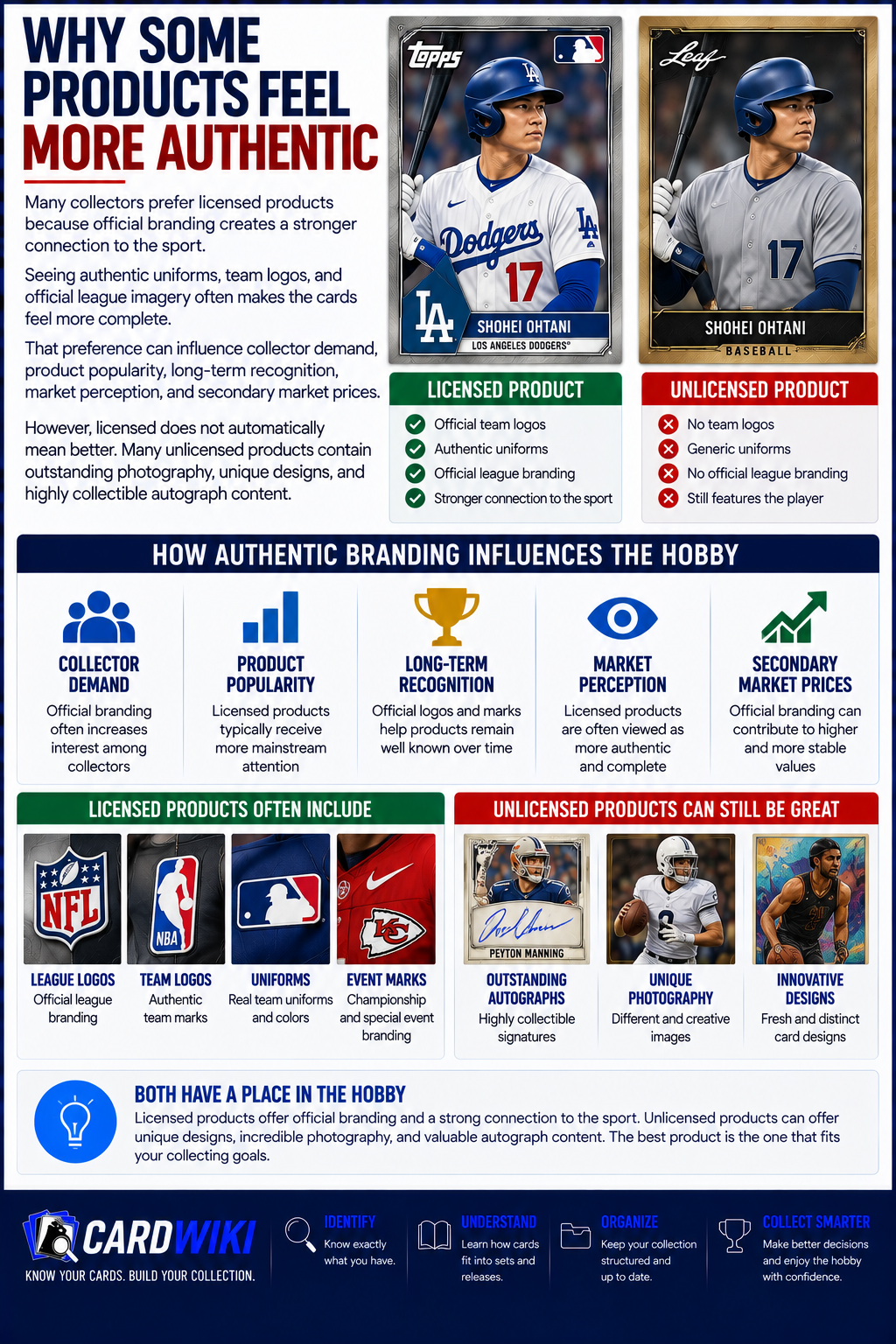
Why Some Products Feel More Authentic
Many collectors prefer licensed products because official branding creates a stronger connection to the sport.
Seeing authentic uniforms, team logos, and official league imagery often makes the cards feel more complete.
That preference can influence:
- Collector Demand
- Product Popularity
- Long-Term Recognition
- Market Perception
- Secondary Market Prices
However, licensed does not automatically mean better.
Many unlicensed products contain outstanding photography, unique designs, and highly collectible autograph content.
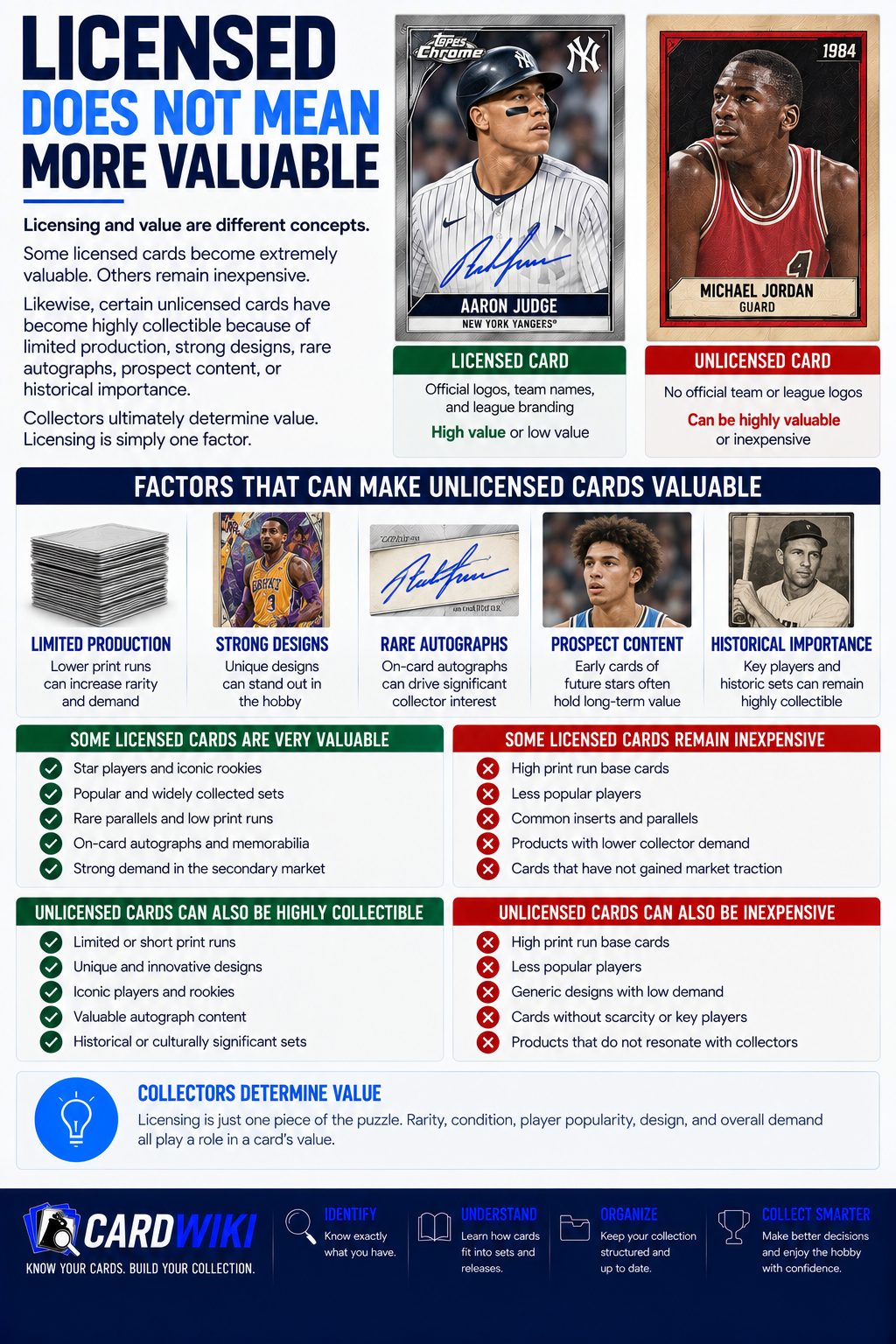
Licensed Does Not Mean More Valuable
Licensing and value are different concepts.
Some licensed cards become extremely valuable.
Others remain inexpensive.
Likewise, certain unlicensed cards have become highly collectible because of:
- Limited Production
- Strong Designs
- Rare Autographs
- Prospect Content
- Historical Importance
Collectors ultimately determine value.
Licensing is simply one factor.
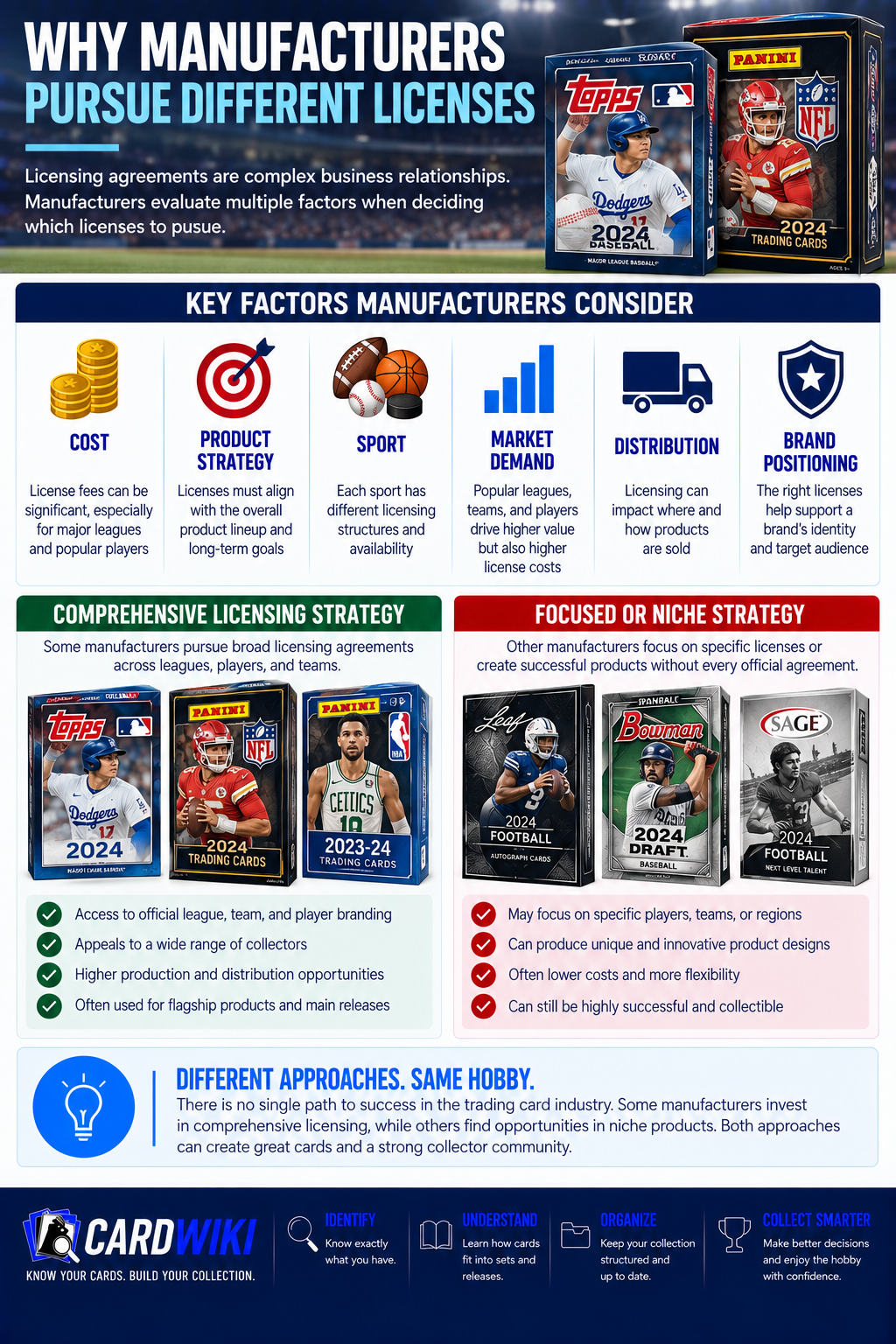
Why Manufacturers Pursue Different Licenses
Licensing agreements are complex business relationships.
Manufacturers evaluate:
- Cost
- Product Strategy
- Sport
- Market Demand
- Distribution
- Brand Positioning
Some companies pursue comprehensive licensing.
Others focus on niche products that succeed without every official agreement.
How Licensing Affects Product Design
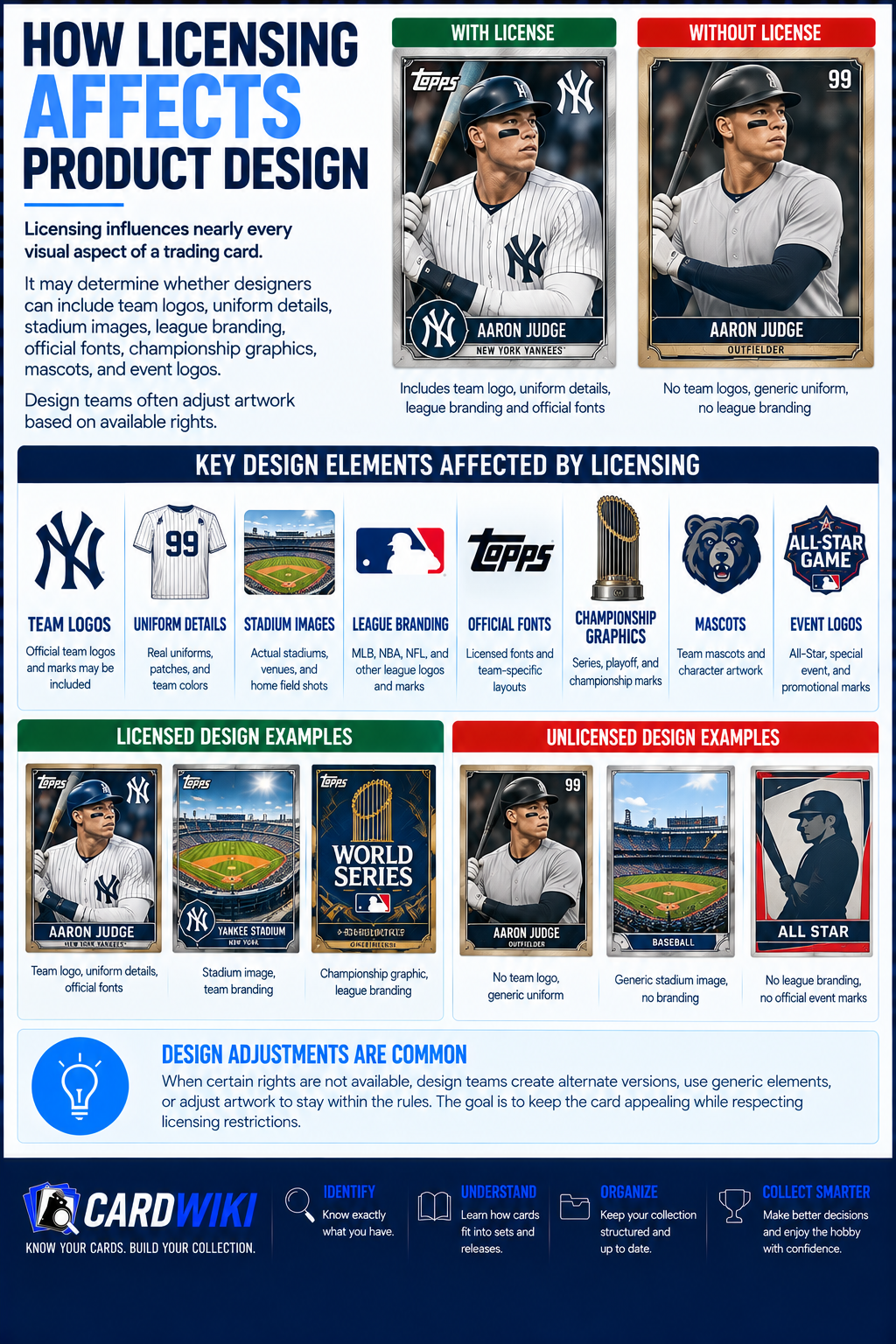
Licensing influences nearly every visual aspect of a trading card.
It may determine whether designers can include:
- Team Logos
- Uniform Details
- Stadium Images
- League Branding
- Official Fonts
- Championship Graphics
- Mascots
- Event Logos
Design teams often adjust artwork based on available rights.
Licensing And Card Identity
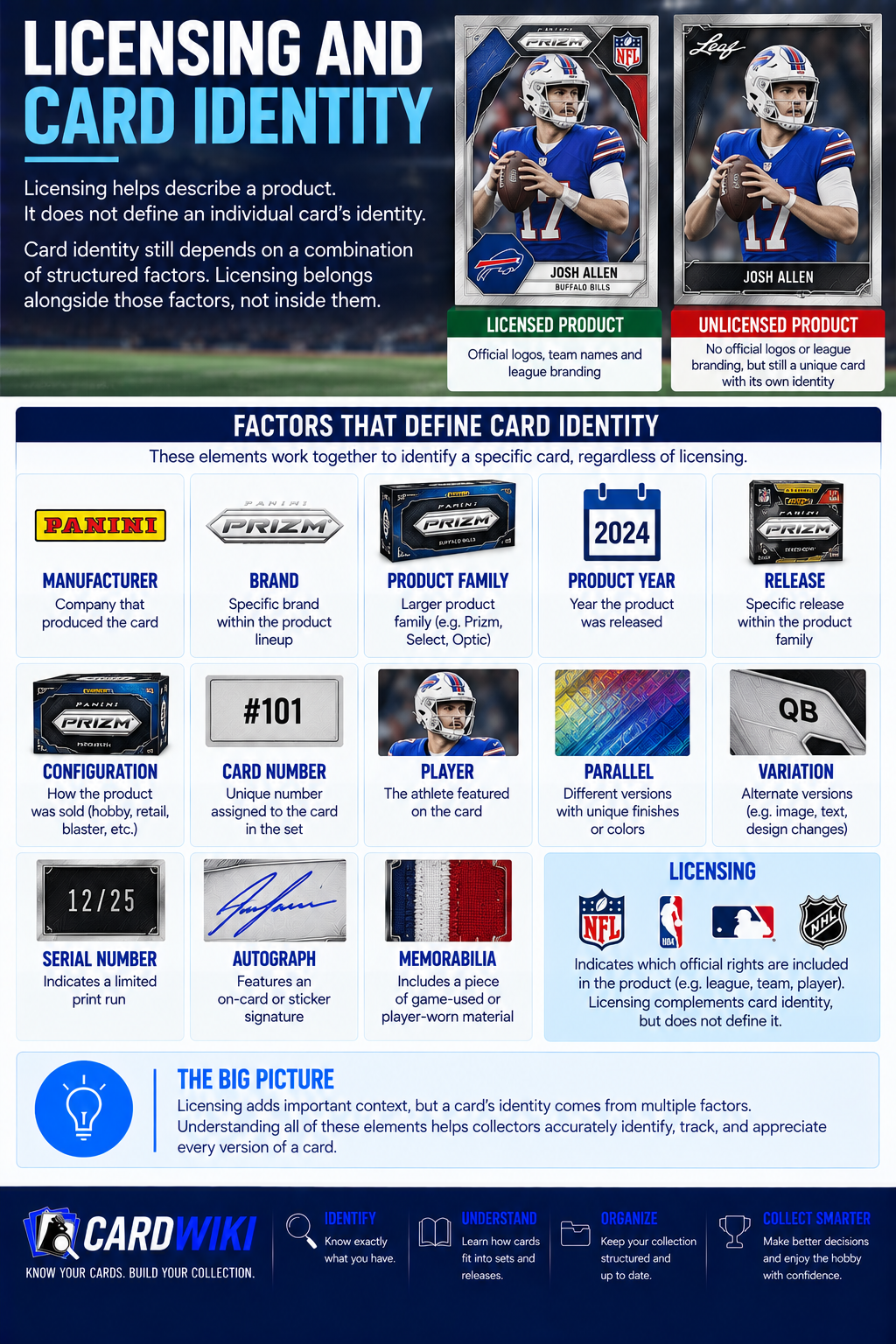
Licensing helps describe a product.
It does not define an individual card's identity.
Card identity still depends on structured factors such as:
- Manufacturer
- Brand
- Product Family
- Product Year
- Release
- Configuration
- Card Number
- Player
- Parallel
- Variation
- Serial Number
- Autograph
- Memorabilia
Licensing belongs alongside those factors, not inside them.
Why CardWiki Separates License Types
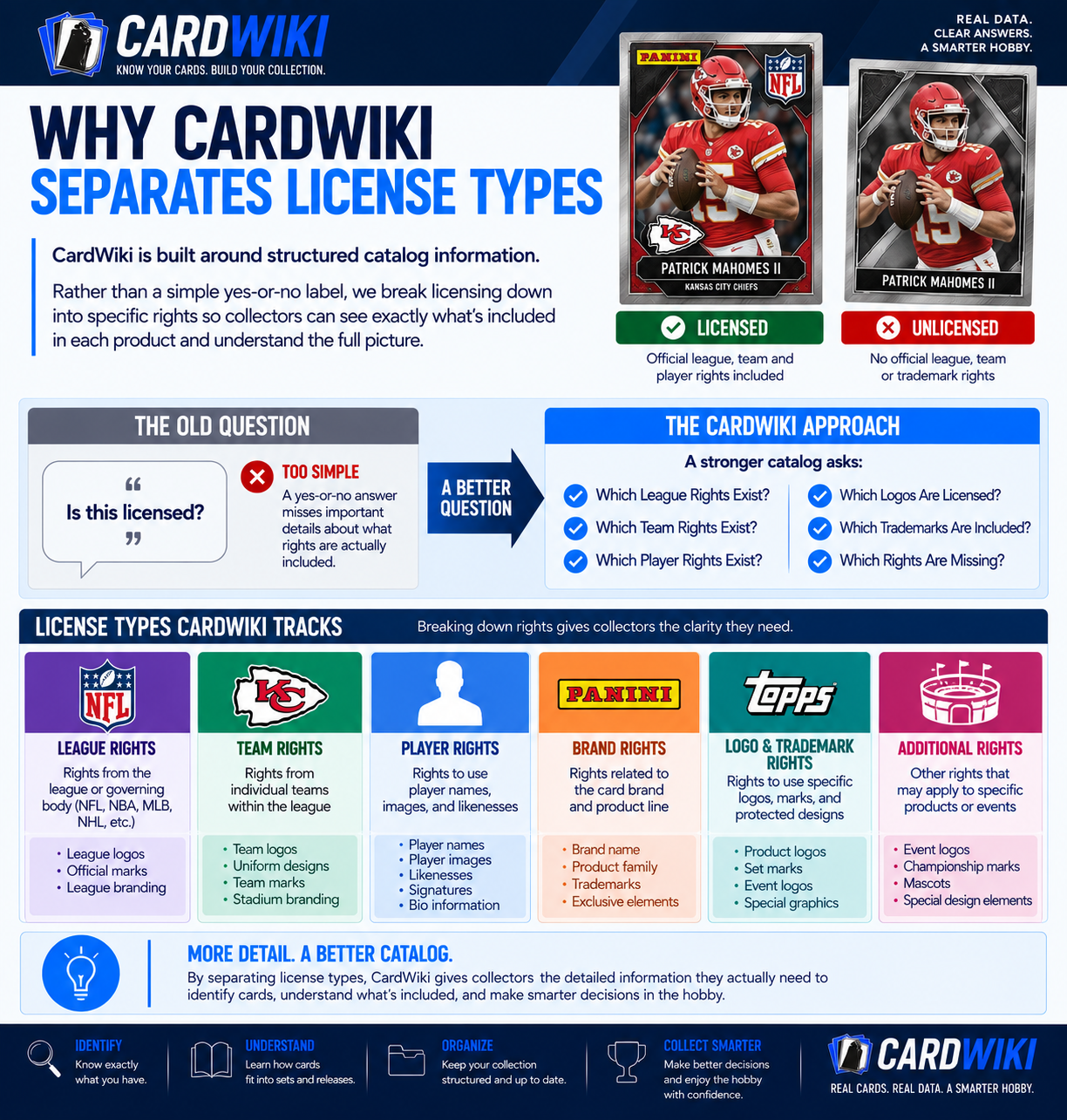
CardWiki is built around structured catalog information.
Rather than asking:
"Is this licensed?"
A stronger catalog asks:
- Which League Rights Exist?
- Which Team Rights Exist?
- Which Player Rights Exist?
- Which Logos Are Licensed?
- Which Trademarks Are Included?
- Which Rights Are Missing?
Those answers provide far more useful information than a single yes-or-no label.
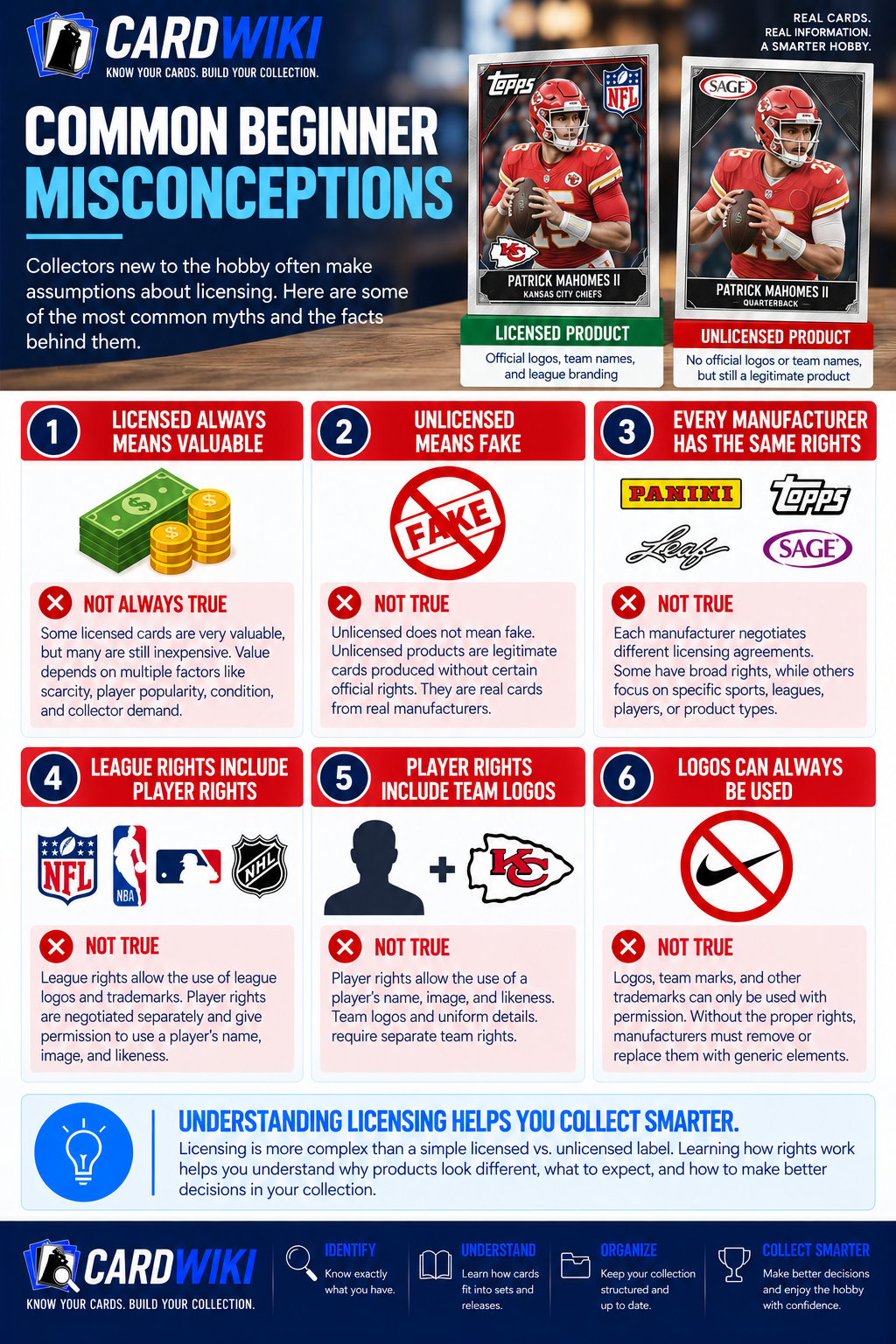
Common Beginner Misconceptions
Collectors new to the hobby often assume:
- Licensed Always Means Valuable
- Unlicensed Means Fake
- Every Manufacturer Has The Same Rights
- League Rights Include Player Rights
- Player Rights Include Team Logos
- Logos Can Always Be Used
None of those assumptions are universally true.
Understanding licensing helps collectors better understand why products differ.
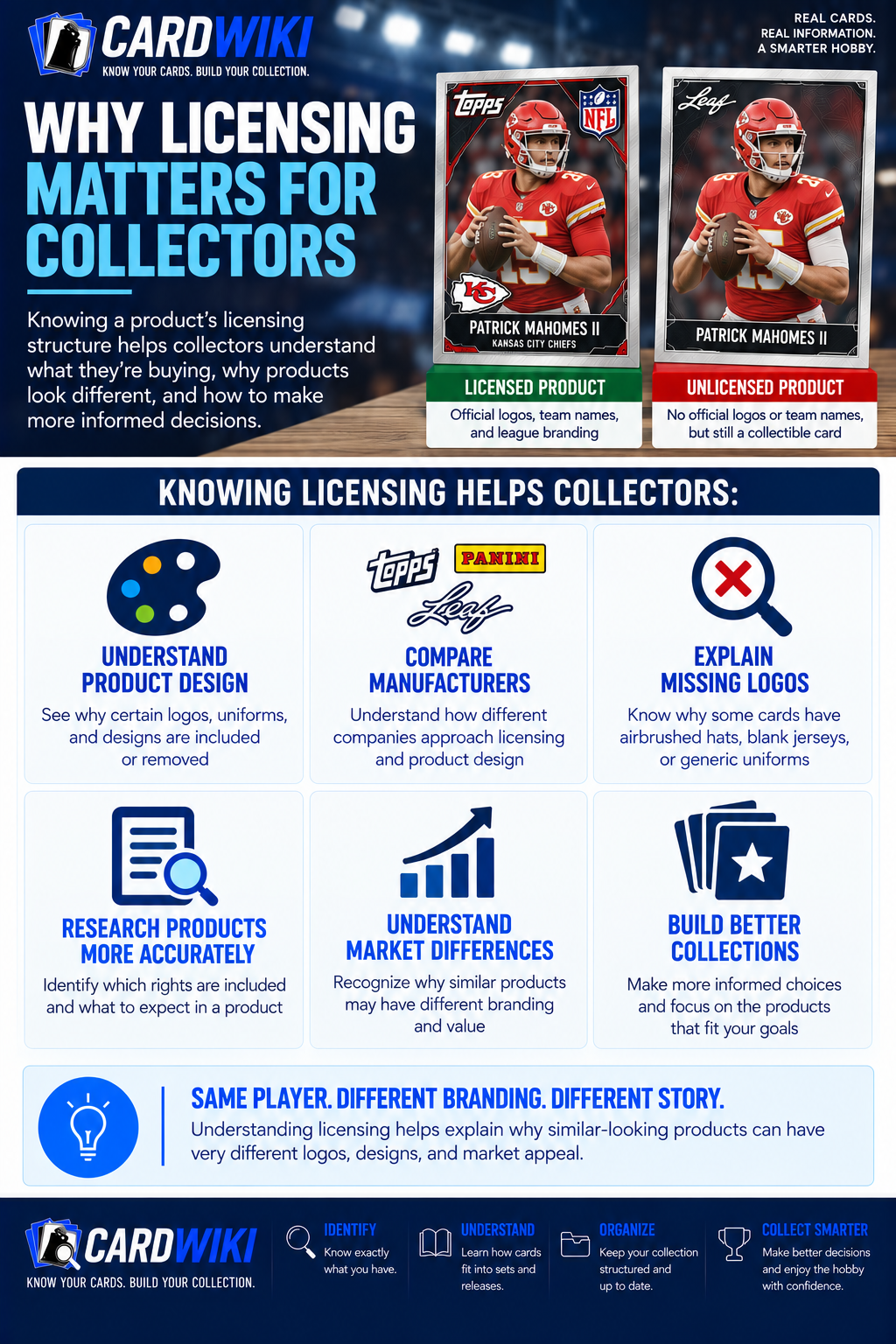
Why Licensing Matters For Collectors
Knowing a product's licensing structure helps collectors:
- Understand Product Design
- Compare Manufacturers
- Explain Missing Logos
- Research Products More Accurately
- Understand Market Differences
- Build Better Collections
It also helps explain why similar-looking products may have very different branding.
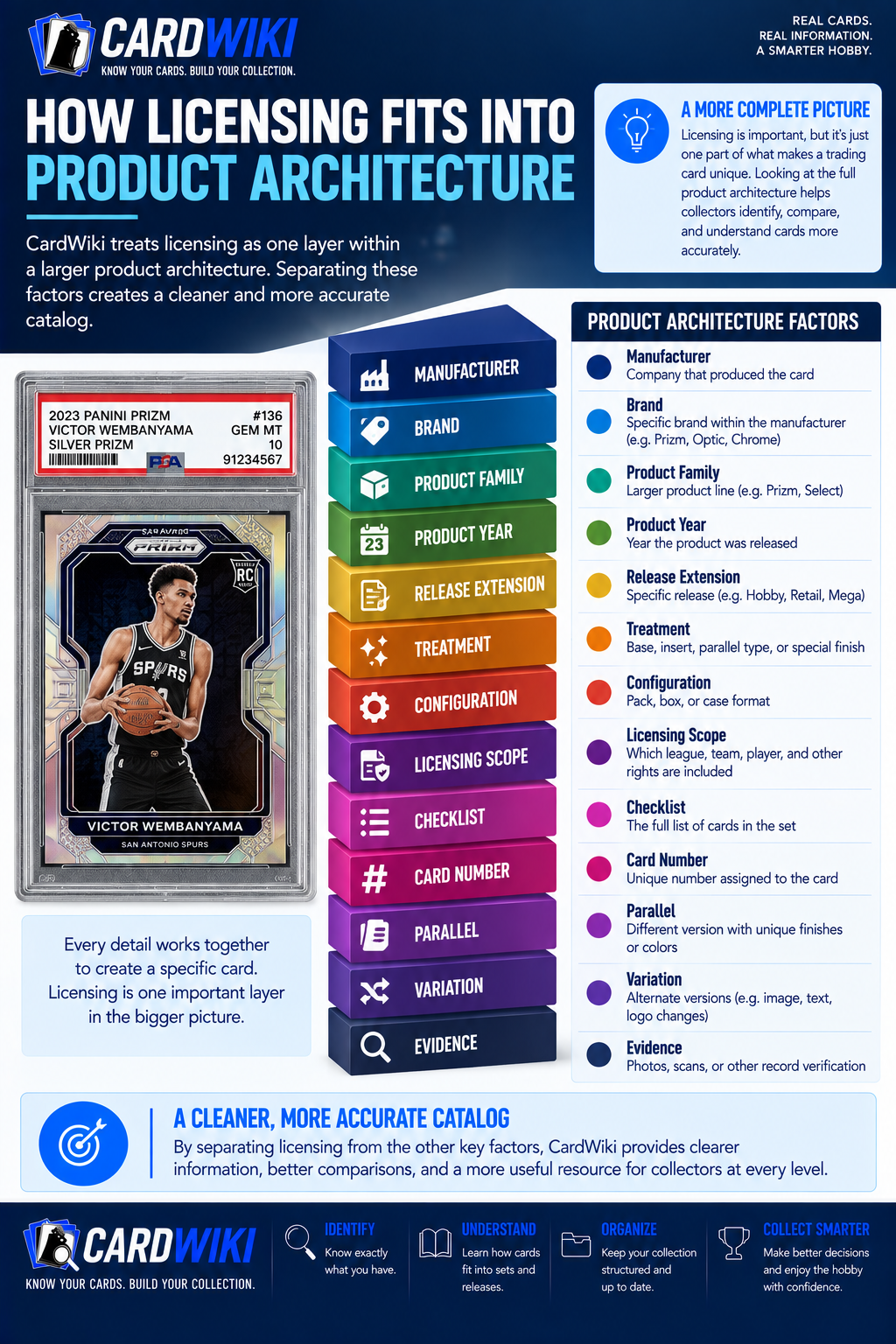
How Licensing Fits Into Product Architecture
CardWiki treats licensing as one layer within a larger product architecture.
That architecture may include:
- Manufacturer
- Brand
- Product Family
- Product Year
- Release Extension
- Treatment
- Configuration
- Licensing Scope
- Checklist
- Card Number
- Parallel
- Variation
- Evidence
Separating these factors creates a cleaner and more accurate catalog.
Final Thoughts
Licensed and unlicensed trading cards are often discussed as opposites, but the reality is much more nuanced.
League rights, player rights, team rights, and trademark agreements may all exist independently.
Understanding those differences helps collectors better identify products, understand why cards look the way they do, and appreciate how modern trading cards are produced.
CardWiki's structured approach recognizes that licensing is not simply a yes-or-no question. It is another important piece of product information that helps collectors understand exactly what they own.
Want to better understand the products in your collection? CardWiki helps collectors explore releases, licensing, configurations, parallels, variations, and card identities through a structured catalog built for modern collecting.
FAQs
What Does Licensed Mean In Trading Cards?
Licensed trading cards are produced under official agreements that allow manufacturers to use protected league, team, player, or trademark rights.
What Is An Unlicensed Trading Card?
An unlicensed trading card is produced without one or more official licenses, often resulting in removed logos or altered uniforms.
Are Unlicensed Cards Fake?
No. Many legitimate manufacturers have produced unlicensed trading cards. They simply do not include every official licensing agreement.
Why Do Some Cards Have Missing Logos?
Manufacturers without certain trademark rights cannot legally reproduce official team or league logos.
Do Licensed Cards Always Have More Value?
No. Value depends on collector demand, rarity, condition, player popularity, and many other factors beyond licensing.
Can A Company Have Player Rights But Not League Rights?
Yes. Licensing agreements can cover different rights independently, including player associations, leagues, teams, and trademarks.
Why Does CardWiki Separate Licensing From Card Identity?
Licensing describes product permissions, while card identity describes exactly what the card is. Keeping those separate creates a more accurate catalog.
Why Is Licensing Important For Collectors?
Licensing helps explain product design, branding differences, market perception, and how manufacturers produce different trading card products.