Trading Card Database App: What A Real Database Needs, Not Just A List
Learn what a real trading card database app needs, from card identity and set structure to parallels, scans, pricing, and collection tracking.

A simple card list can work for a little while. You type in a player name, maybe add the year, maybe add the set, and it feels organized enough. Then your collection grows. Suddenly you have base cards, parallels, rookie variations, autos, patch cards, graded slabs, raw copies, duplicates, scans, values, notes, and cards you still need to identify.
That is when a basic list starts falling apart.
A real trading card database app should do more than store names. It should understand how trading cards actually work. Cards live inside sets. Sets live inside releases. Releases include base checklists, inserts, parallels, short prints, autographs, memorabilia cards, and all kinds of product-specific details. If an app cannot handle that structure, collectors end up doing the hard work manually.
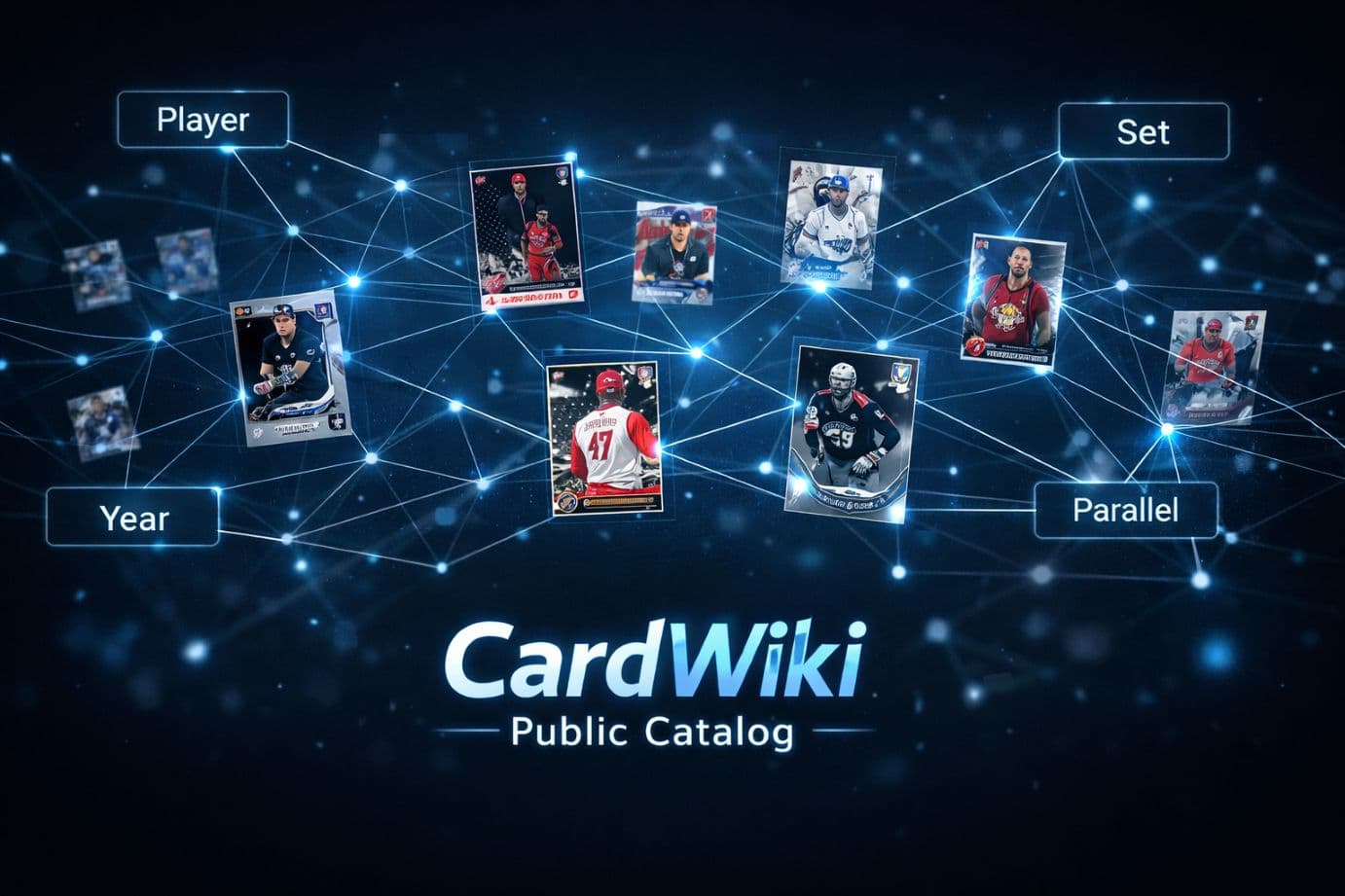
CardWiki is built around a different idea. A card database should help new and veteran card collectors understand what they own, not just count it. That means clear card identity, searchable catalog data, scan support, contribution tools, and private collection tracking layered on top of a public catalog.
What Is A Trading Card Database App?
A trading card database app is a tool that helps collectors search, identify, organize, and track trading cards inside a structured catalog. At the most basic level, it should help you find a card and record whether you own it. A stronger version goes much deeper.
A real database connects cards to the information that gives them meaning. That includes the player, year, sport, team, manufacturer, brand, set, card number, parallels, variation, autograph status, patch details, images, sales history, and more.
That is what separates a database from a simple list.
A list might say “2024 rookie card.” A database should help explain which 2024 rookie card, from which set, in which version, with which card number, and how it relates to the rest of the release.
That structure matters because trading cards are not flat. Modern cards have layers, and collectors need tools that understand those layers.
Why A Simple List Is Not Enough
A spreadsheet or notes app can be useful when your collection is small. It gives you somewhere to put information. The problem is that it usually does not understand the hobby.
A simple list can break down when:
- Similar Cards Get Mixed Together
- Parallels Are Hard To Separate
- Sets And Releases Become Confusing
- Duplicates Are Hard To Track
- Pricing Context Gets Messy
- Scans And Evidence Are Missing
The issue is not that lists are useless. The issue is that they rely on the collector to create all the structure manually. If you accidentally log a silver parallel as a base card, the list will not stop you. If two cards share the same player, image, and year, the list may not help you tell them apart.
That gets frustrating fast.
Collectors need more than rows of text. They need connected data that reflects how card products are actually built.
The First Requirement: Clear Card Identity
Clear card identity is the foundation of any real trading card database app.
A card is not fully identified just because you know the player and year. That might narrow it down, but it is not enough. A complete identity may include the set, release, card number, base or parallel status, variation, autograph, memorabilia piece, serial numbering, and other details.
For example, two cards might feature the same player and photo. One may be a base rookie. Another may be a numbered gold parallel. Another may be an image variation. Another may be a signed patch version. A weak database may treat these as confusing duplicates. A strong database knows they are related but different.
That difference matters for tracking, searching, pricing, buying, selling, and collecting.
Without clear identity, collectors cannot trust what they are logging. They may think they own one version when they actually own another. They may compare prices against the wrong card. They may miss a key variation entirely.
A real database starts by answering one question clearly: what card is this?
Sets And Releases Need Structure
Cards do not exist in random isolation. They belong to releases.
A good trading card database app should understand how products are structured. That means organizing cards through details like:
- Manufacturer
- Brand
- Year
- Product Name
- Base Checklist
- Inserts
- Parallels
- Autos
- Patch Cards
- Configuration Details
This matters because collectors do not only search for cards by player. They also search by set, year, product, card number, parallel, and release type. A collector building a base set needs different information than someone chasing a gold rookie parallel. A shop sorting inventory needs different tools than someone tracking a personal collection.
Modern releases can get complicated. One product might include a base checklist, multiple insert sets, retail exclusives, hobby exclusives, dozens of parallels, autographs, memorabilia cards, and short prints. If the database does not understand the release structure, the collector has to rebuild that structure themselves.
That should not be the collector’s burden.
Parallels, Variations, Autos, And Patches Must Be Connected Properly
A real database should show relationships between card versions.
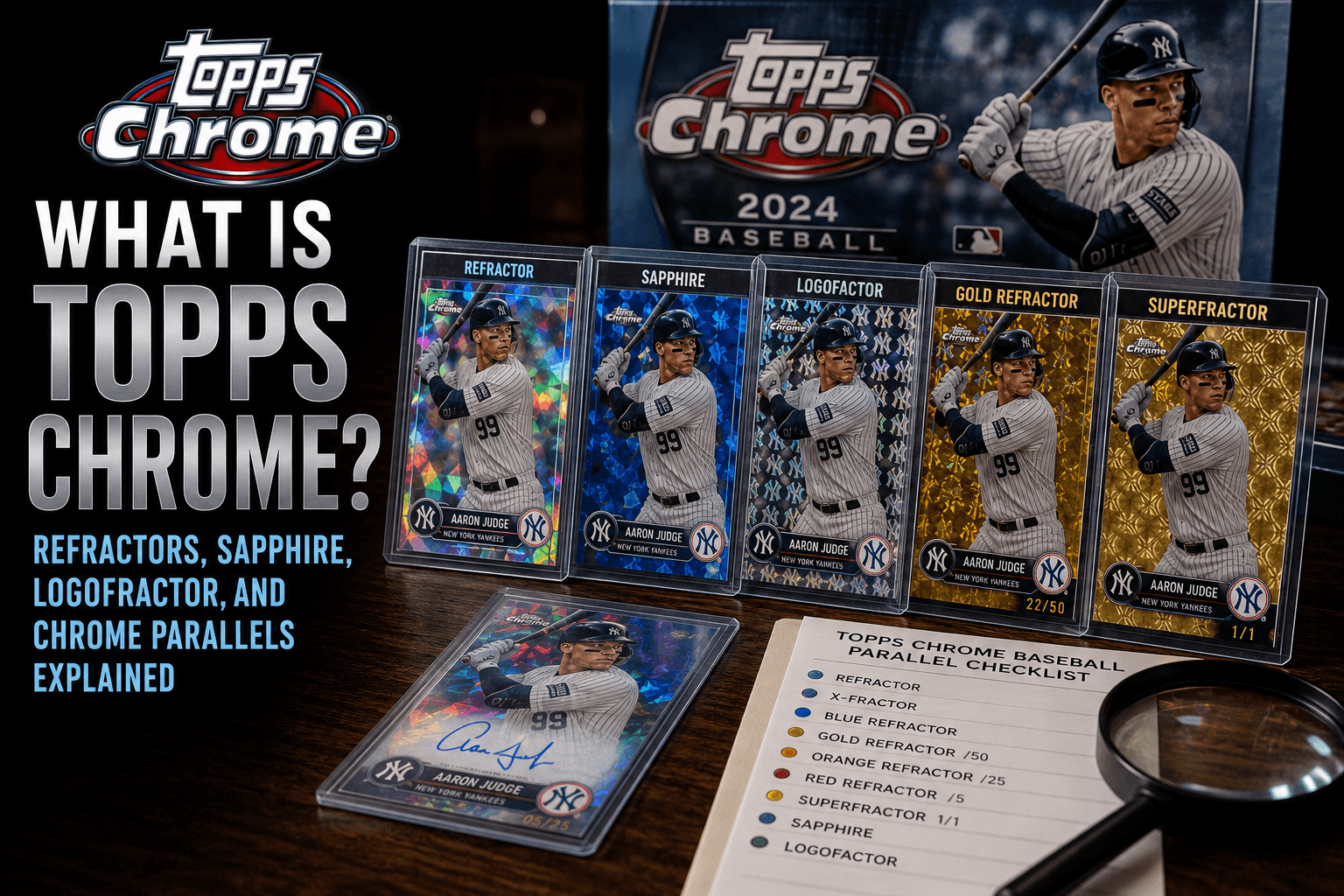
A base card, a blue parallel, a gold parallel, an image variation, an autograph version, and a patch version may all connect back to the same larger card identity. They should not feel like random unrelated records. They are part of the same family of cards inside a release.
A strong database should handle:
- Base Cards
- Parallel Cards
- Image Variations
- Short Prints
- Autographs
- Patch Cards
- Numbered Versions
- Retail Exclusives
Collectors need to see those relationships because those details change everything. They affect rarity, value, collectability, and how the card should be tracked.
This is especially important for modern cards. A beginner might see two cards with the same player and assume they are the same. An experienced collector knows the foil, color, numbering, or small image difference could completely change the card’s identity.
A real database makes those differences visible.
Search Has To Understand The Hobby
Search is one of the most important parts of a trading card database app, and it cannot be too rigid.
Collectors do not always know the exact checklist name. They may search by player, team, year, nickname, card number, parallel color, grading company, or product name. A good database should help users find the right card even when they do not phrase the search perfectly.
Strong search should understand:
- Player Names
- Teams
- Sports
- Years
- Sets
- Card Numbers
- Card Types
- Parallel Names
- Rookie Status
- Autographs
- Graded Cards
- Product Names
If search only works when the user types the exact official title, beginners will struggle. Even experienced collectors may miss records because card naming is not always consistent across the hobby.
The best search does not just match words. It helps collectors navigate the structure behind those words.
Scans And Images Are More Than Decoration
Images are not just there to make a card page look nice. They help collectors identify cards.
A front image can show the design, player photo, border, foil, color, and visible variation details. A back image can show card number, set information, copyright details, stats, and other clues. Together, images make the database more useful and more trustworthy.
A strong database should support:
- Front Images
- Back Images
- User-Submitted Scans
- Better Reference Photos
- Image-Based Identification
- Visual Comparison Between Versions
This matters because many card differences are visual. A parallel may be defined by a color. A variation may be defined by a different photo. A card back may confirm the number or release details.
Images also help the catalog improve over time. When collectors can submit better scans, the database becomes more useful for everyone.
Evidence And Confidence Matter
A real database should not just say, “This record is correct.” It should have ways to support why the record is trusted.
That support can come from scans, sales history, user submissions, checklist references, moderator review, and confidence signals. The point is not to make every card record feel complicated. The point is to make the database more reliable.
Collectors benefit when a database can show:
- What Information Is Confirmed
- What Details Need Review
- Which Scans Support The Record
- Whether A Card Has Sales History
- Whether A Submission Was Reviewed
- Where A Record May Need Improvement
That kind of transparency matters. Trading cards are full of small details, and small details can change identity and value. If a card record is incomplete or uncertain, collectors should know that.
Confidence signals help users trust the catalog without pretending every record is perfect on day one.
Private Collection Tracking Should Sit On Top Of The Public Catalog
The best structure has two layers: the public catalog and the private collection.
The public catalog defines what the card is. The private collection layer tracks whether you own it and what your copy means to you.
Those are different things.
The public catalog may include card identity, set information, images, known parallels, sales history, and related versions. Your private holdings may include:
- Quantity Owned
- Condition Notes
- Purchase Price
- Storage Location
- Grading Status
- Personal Notes
- Estimated Value
- Last Updated Date
This distinction is important. Your card should connect to a shared catalog record, but your personal copy should remain yours. You may own two copies in different conditions. You may have one raw and one graded. You may want notes that nobody else sees.
A real trading card database app should support both. It should give collectors shared structure without taking away personal control.
Market Data Should Add Context, Not Noise
Pricing data can be useful, but it should not overpower the database.
A collector wants to know what a card might be worth, but value only makes sense when the card identity is accurate. If a base card is compared against a numbered parallel, the price context becomes misleading. If raw cards are mixed with graded sales, the result can get messy.
A useful database should treat market data as context. It should help collectors understand:
- Sales History
- Comparable Versions
- Grade Differences
- Condition Context
- Last Updated Dates
- Pricing Confidence
This matters because pricing without structure creates noise. A card’s value depends on the exact version, condition, demand, and market history. A database should help clarify that, not turn every card page into a confusing price feed.
Good market data helps collectors make better decisions. Bad market data creates false confidence.
Contribution Tools Make The Database Better Over Time
No trading card database starts complete. The hobby is too big, too old, and too constantly changing for that.
New releases arrive. Old cards surface. Missing images need to be added. Errors need to be corrected. Sales data needs context. Variations need better documentation.
That is why contribution tools matter.
A strong database should let collectors submit:
- Missing Cards
- Better Scans
- Corrections
- Sales Data
- Metadata Improvements
- Variation Details
- Set Information
Community contribution is powerful because collectors notice details that centralized systems miss. One collector may have a rare parallel. Another may spot a checklist error. Another may upload a better back scan.
A community-built catalog gets stronger when those contributions are reviewed, attributed, and connected back to the right records.
Moderation And Data Quality Are Essential
Open contribution only works if data quality matters.
A real trading card database app needs moderation workflows so the catalog does not become messy or unreliable. Anyone can submit a correction, but that correction should be reviewed before it changes the trusted record.
Good moderation can include:
- Review Queues
- Conflict Resolution
- Contributor Attribution
- Correction History
- Confidence-Based Review
- Admin Approval
This protects the catalog while still letting collectors help improve it.
A database that accepts every submission without structure can become chaotic. A database that accepts no contributions can fall behind. The best approach sits between those two extremes: community-powered, but reviewed and organized.
What A Beginner Should Look For In A Trading Card Database App
A beginner does not need every advanced feature on day one, but the app should still be built on solid structure.
Look for a trading card database app with:
- Clear Card Records
- Strong Search
- Set And Release Structure
- Parallel And Variation Support
- Collection Tracking
- Image And Scan Support
- Pricing Context
- Contribution Options
- Easy Editing
- Privacy Controls
The app should make the hobby easier to understand, not harder. If a tool feels like a plain list with a price slapped on it, it may not support the way modern sports collecting actually works.
The best database should help you answer simple questions quickly. What is this card? Which version do I own? Where does it fit? Do I already have it? Is the record complete? What should I research next?
Common Mistakes Database Apps Make
Some apps look useful at first but break down once collectors need more detail.
Common mistakes include:
- Treating Cards Like Flat Rows
- Mixing Base And Parallel Versions
- Ignoring Set Structure
- Over-Focusing On Prices
- Making Search Too Rigid
- Offering No Way To Correct Data
- Hiding Or Missing Source Evidence
- Making Collection Tracking Too Complicated
A database should reduce confusion. If it creates more confusion, it is not doing its job.
Collectors need tools that understand the hobby’s structure. They need flexibility without chaos. They need data they can trust and correct when something is wrong.
That is the difference between a simple app and a real database.
Why CardWiki Is Built Around Database Structure
CardWiki is built as an open encyclopedia for trading cards, not just a card list.
That means the goal is not only to store cards. The goal is to help collectors understand how cards connect across sets, releases, parallels, variations, scans, prices, and personal holdings.
CardWiki is designed around:
- Structured Catalog Data
- Clear Card Identity
- Public Catalog Pages
- Private Collection Tracking
- Scan-To-Add Tools
- Market Scout Features
- Contributor Submissions
- Community-Built Improvements
- Public Beta Progress
We believe collectors deserve tools that match the complexity of the hobby without making the experience overwhelming. A real database should make modern cards easier to understand. It should help collectors organize what they own, find what they need, and improve the catalog for everyone.
That is the CardWiki direction: collector-first, community-built, and structured around real card identity.
Final Thoughts
A real trading card database app should do more than list cards.
It should help collectors understand them.
That means clear identity, set structure, search, scans, evidence, pricing context, contribution tools, moderation, and private collection tracking. Without those pieces, a database is just a list with extra steps.
Modern trading cards are layered. A useful database should reflect that. It should help collectors see how base cards, parallels, autos, patches, rookies, releases, values, and personal holdings all connect.
That is what makes a database worth using.
Join a Growing Trading Card Database!
If you want a cleaner way to understand and track your collection, CardWiki gives you a growing trading card database, free collection tracking, and tools built to make modern cards easier to organize.
FAQs
What Is A Trading Card Database App?
A trading card database app is a tool that helps collectors search, identify, organize, and track cards inside a structured catalog.
How Is A Trading Card Database Different From A Spreadsheet?
A spreadsheet stores information manually. A trading card database connects cards to sets, releases, players, versions, images, and collection tracking.
What Should A Trading Card Database Include?
It should include card identity, set structure, search, images, parallels, variations, pricing context, collection tracking, and contribution tools.
Why Is Card Identity Important In A Database?
Card identity helps collectors know exactly which version they own. This matters because base cards, parallels, autos, and variations can look similar but mean different things.
Can A Database Help Identify Parallels And Variations?
Yes. A strong database should connect base cards to related parallels, variations, numbered versions, autos, and patch cards.
Should A Trading Card Database Track My Personal Collection?
Yes. A good database should let you track your private holdings while connecting them to public catalog records.
Why Do Scans Matter In A Card Database?
Scans help collectors confirm details, compare versions, verify card identity, and improve the catalog over time.
Is Pricing Data Enough For A Good Card Database?
No. Pricing is useful, but it only works when card identity, condition, grade, and version details are accurate.
Can Collectors Contribute To A Trading Card Database?
Yes. Collectors can help improve a database by submitting missing cards, scans, corrections, sales data, and better metadata.