What Is Card Grading? PSA, BGS, And SGC Explained Simply
What is card grading? Learn how PSA, BGS, and SGC work, what card grades mean, and whether grading your trading cards is worth it.

If you are new to trading cards, grading is one of those terms you will hear almost immediately. And don't worry, we've been working hard to make a platform just for you! Back on track here... You will see cards sealed in plastic holders with numbers like 8, 9, or 10 on top, and it can feel like everyone else already understands what those numbers mean. A lot of beginners assume grading is only for high rollers or people chasing expensive cards. The truth is a lot simpler than that.
Card grading is just a way to have a third-party company evaluate a card’s condition and seal it in a protective holder. That is the basic idea. The part that makes it feel bigger is how much grading can affect trust, value, presentation, and buying decisions for releases inside the hobby.
You will also see three names come up again and again: PSA, BGS, and SGC. These are the grading companies most collectors are likely to run into early. Each one has its own style, reputation, and following, but the core goal stays the same. They inspect a card, assign a grade, and return it in a slab.
Once you understand what grading is actually doing, it stops feeling mysterious. It becomes another part of learning how the hobby works.
What Is Card Grading?
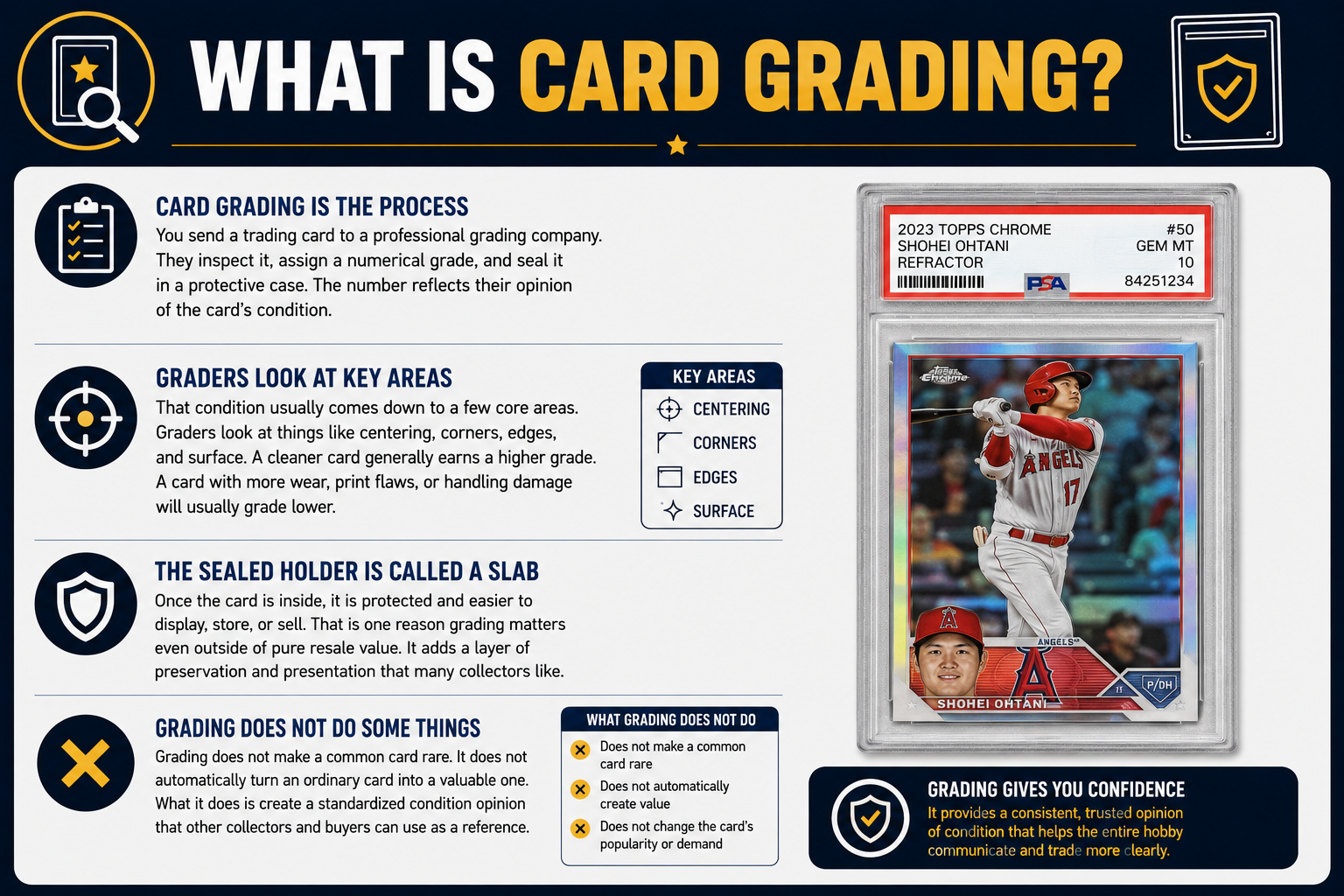
Card grading is the process of sending a trading card to a professional grading company so it can be inspected, assigned a numerical grade, and sealed in a protective case. The number reflects the company’s opinion of the card’s condition.
That condition usually comes down to a few core areas. Graders look at things like centering, corners, edges, and surface. A cleaner card generally earns a higher grade. A card with more wear, print flaws, or handling damage will usually grade lower.
The sealed holder is often called a slab. Once the card is inside, it is protected and easier to display, store, or sell. That is one reason grading matters even outside of pure resale value. It adds a layer of preservation and presentation that many collectors like.
It is also important to understand what grading does not do. Grading does not make a common card rare. It does not automatically turn an ordinary card into a valuable one. What it does is create a standardized condition opinion that other collectors and buyers can use as a reference.
Why Do People Grade Cards?
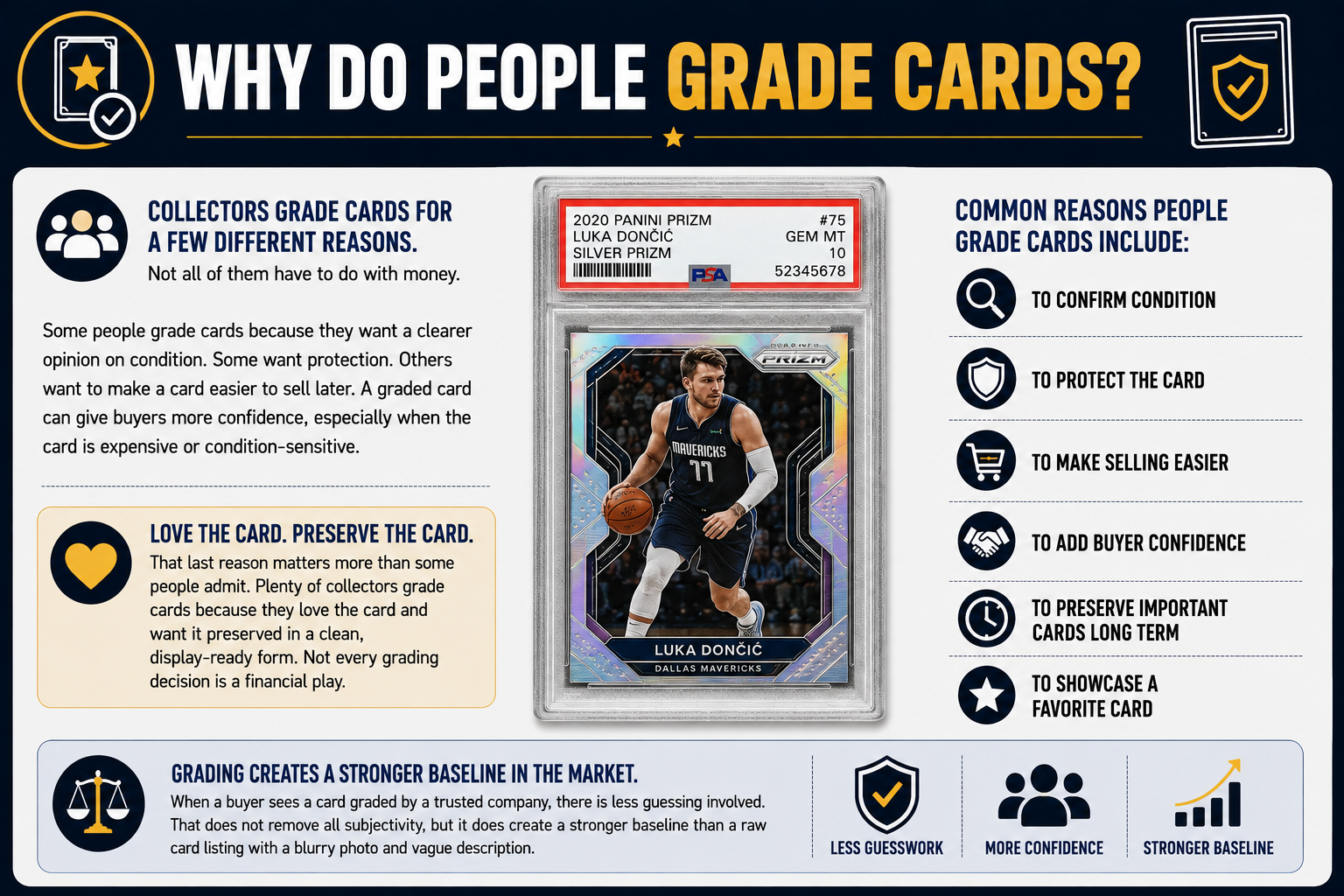
Collectors grade cards for a few different reasons, and not all of them have to do with money.
Some people grade cards because they want a clearer opinion on condition. Some want protection. Others want to make a card easier to sell later. A graded card can give buyers more confidence, especially when the card is expensive or condition-sensitive.
Common reasons people grade cards include:
- To Confirm Condition
- To Protect The Card
- To Make Selling Easier
- To Add Buyer Confidence
- To Preserve Important Cards Long Term
- To Showcase A Favorite Card
That last reason matters more than some people admit. Plenty of collectors grade cards because they love the card and want it preserved in a clean, display-ready form. Not every grading decision is a financial play.
At the same time, grading can matter a lot in the market. When a buyer sees a card graded by a trusted company, there is less guessing involved. That does not remove all subjectivity, but it does create a stronger baseline than a raw card listing with a blurry photo and vague description.
How Card Grading Actually Works
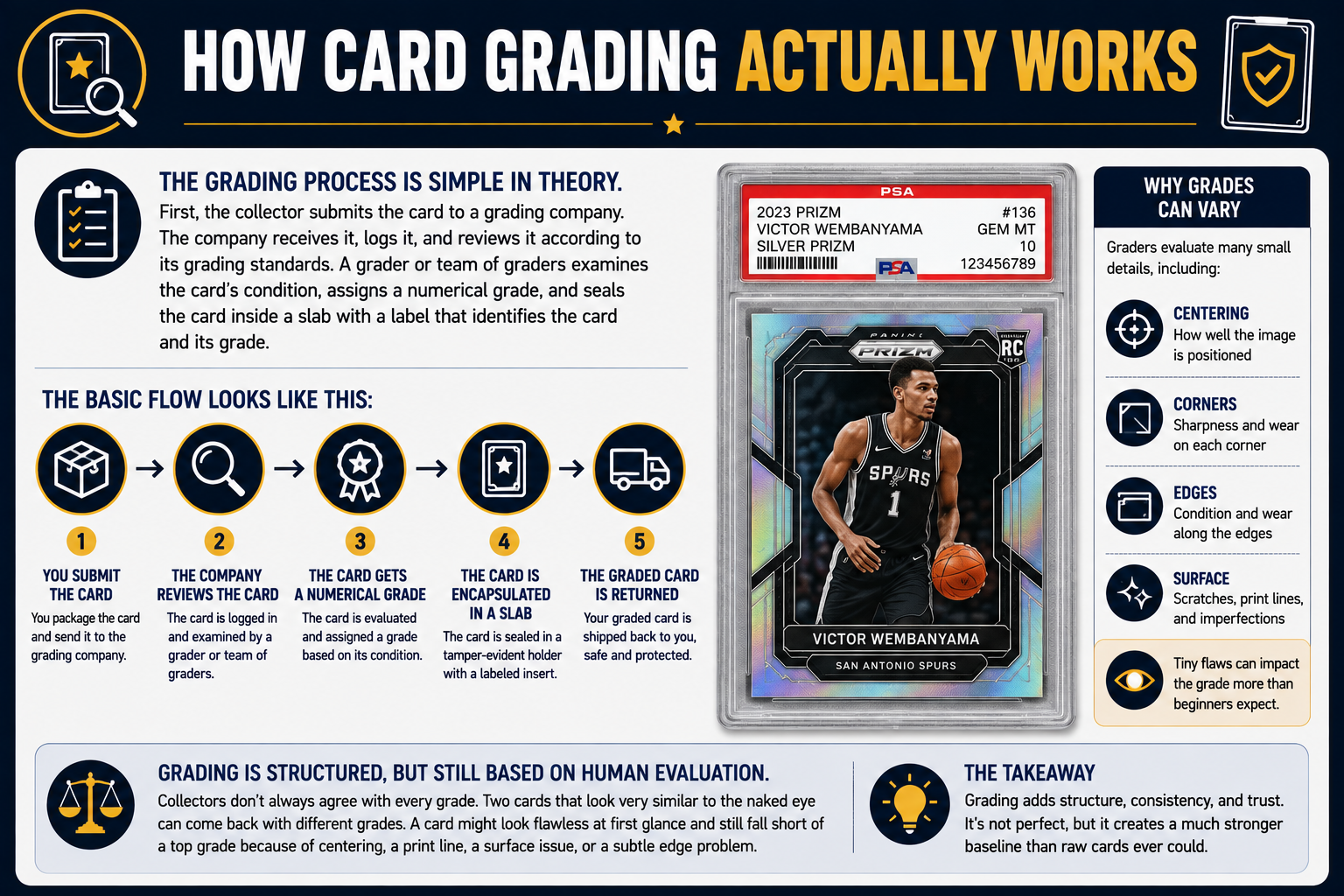
The grading process is pretty simple in theory, even if it feels intimidating at first.
First, the collector submits the card to a grading company. The company receives it, logs it, and reviews it according to its grading standards. A grader or team of graders examines the card’s condition, assigns a numerical grade, and seals the card inside a slab with a label that identifies the card and its grade.
The basic flow looks like this:
- You Submit The Card
- The Company Reviews The Card
- The Card Gets A Numerical Grade
- The Card Is Encapsulated In A Slab
- The Graded Card Is Returned
That sounds clean and straightforward, though real hobby conversations around grading can get a little messier. Collectors do not always agree with every grade. Two cards that look very similar to the naked eye can come back with different grades. Tiny flaws can matter more than beginners expect.
That is one reason grading has such a reputation in the hobby. It is structured, but it is still based on human evaluation. A card might look flawless at first glance and still fall short of a top grade because of centering, a print line, a surface issue, or a subtle edge problem.
What Do Card Grades Mean?
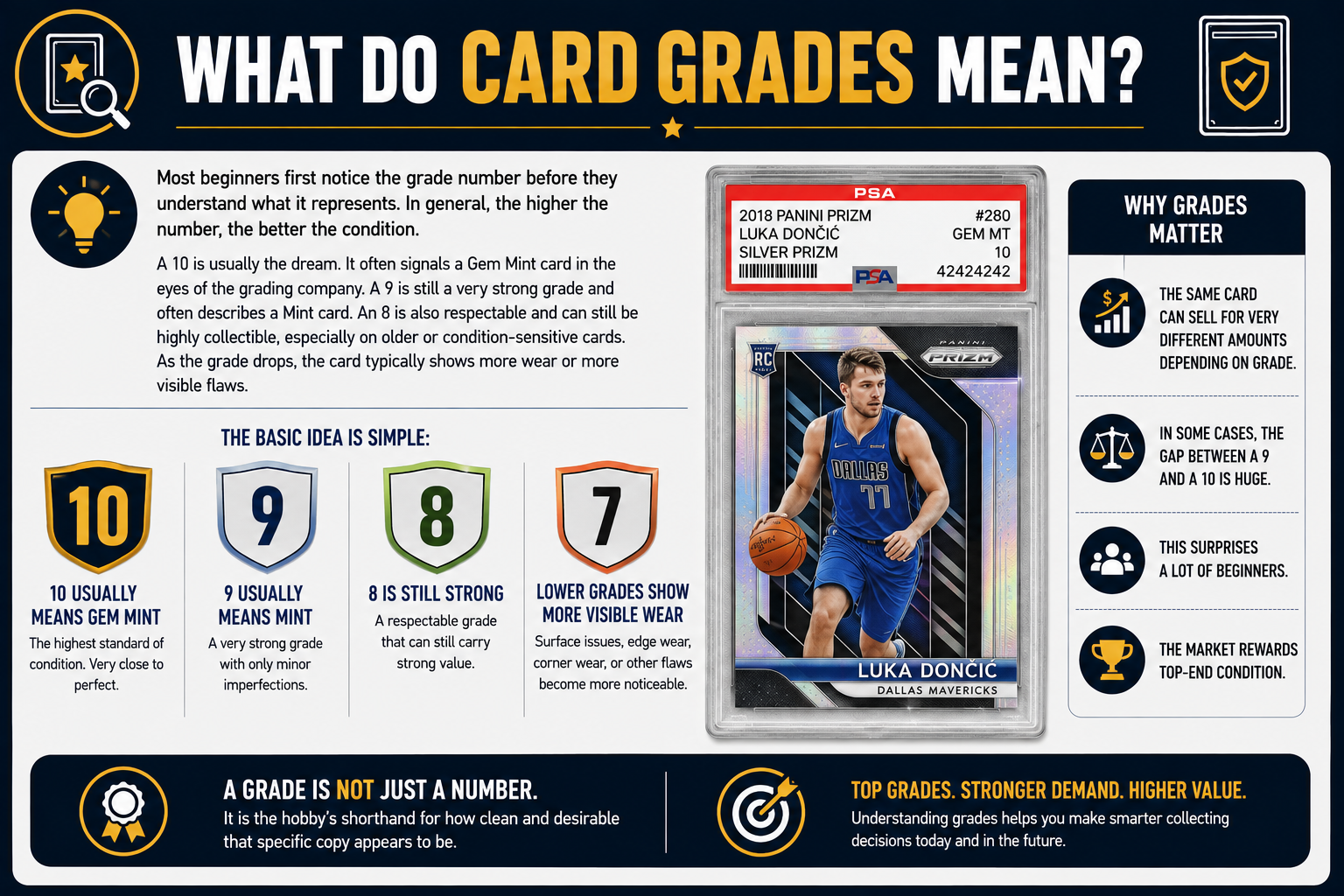
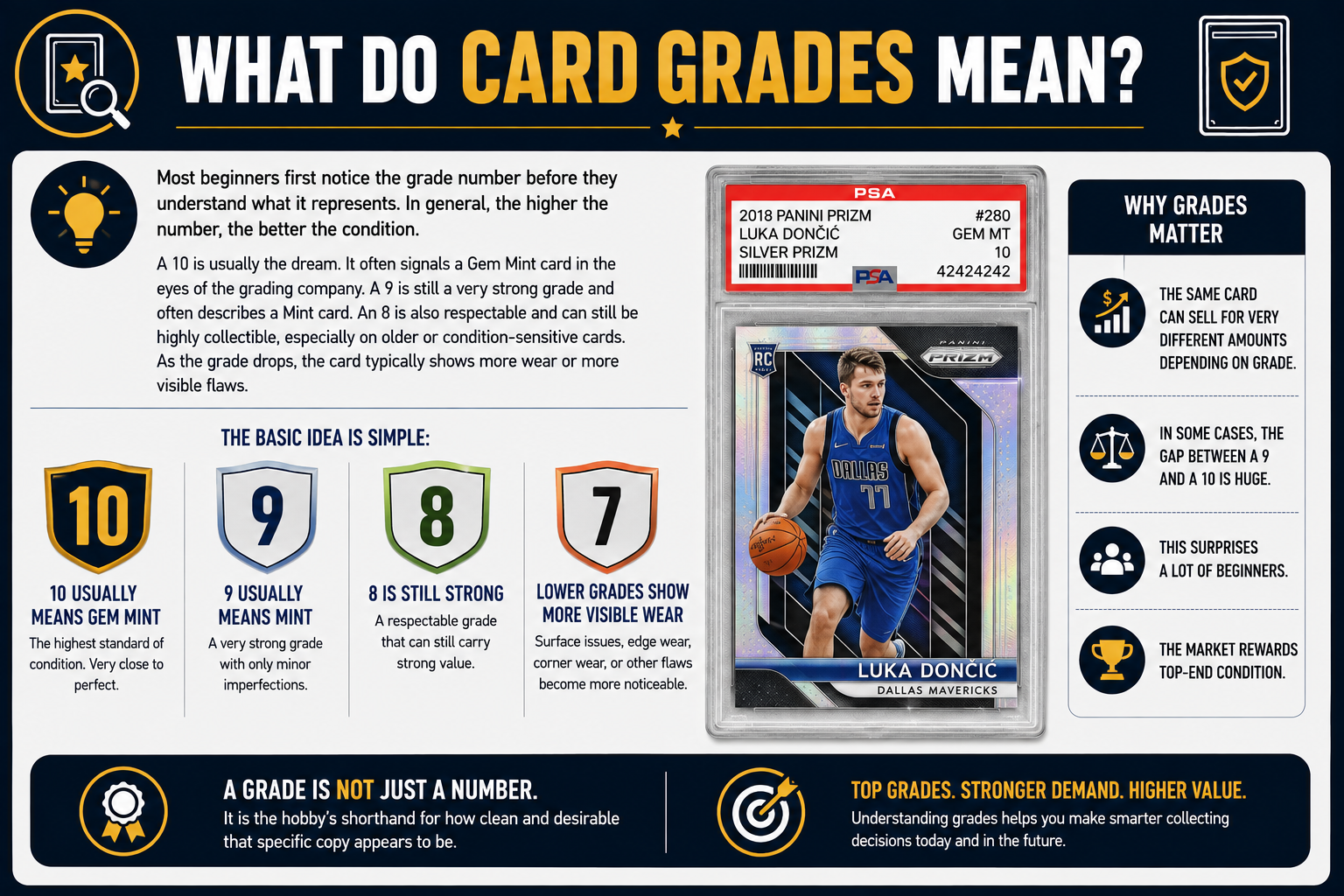
Most beginners first notice the grade number before they understand what it represents. In general, the higher the number, the better the condition.
A 10 is usually the dream. It often signals a Gem Mint card in the eyes of the grading company. A 9 is still a very strong grade and often describes a Mint card. An 8 is also respectable and can still be highly collectible, especially on older or condition-sensitive cards. As the grade drops, the card typically shows more wear or more visible flaws.
The basic idea is simple:
- 10 Usually Means Gem Mint
- 9 Usually Means Mint
- 8 Is Still Strong
- Lower Grades Show More Visible Wear
This matters because the same card can sell for very different amounts depending on grade. In some cases, the gap between a 9 and a 10 is huge. That surprises a lot of beginners, but it makes sense once you understand how much the market rewards top-end condition.
A grade is not just a number. It is the hobby’s shorthand for how clean and desirable that specific copy appears to be.
What Do Graders Look At?
Grading companies focus on a few main condition categories. Once you know what they are, grading starts to feel much easier to understand.
The main areas are:
- Centering
- Corners
- Edges
- Surface
Centering refers to how evenly the card image and borders are aligned. A card that is visibly off-center may grade lower even if it looks sharp otherwise. Corners are exactly what they sound like. Soft, bent, or frayed corners can quickly hurt a grade. Edges matter too, especially on dark-bordered or chromium-style cards where chipping can show easily. Surface covers scratches, print lines, dents, stains, gloss loss, and other flaws that may not stand out right away.
This is why a card can look clean at first glance and still disappoint when graded. Small defects matter. A tiny surface issue or slight centering problem can separate a very good grade from a great one.
That is also why experienced collectors often inspect cards closely before submitting them. They are not just asking whether the card looks nice. They are asking whether it has realistic top-grade potential.
PSA Grading Explained Simply
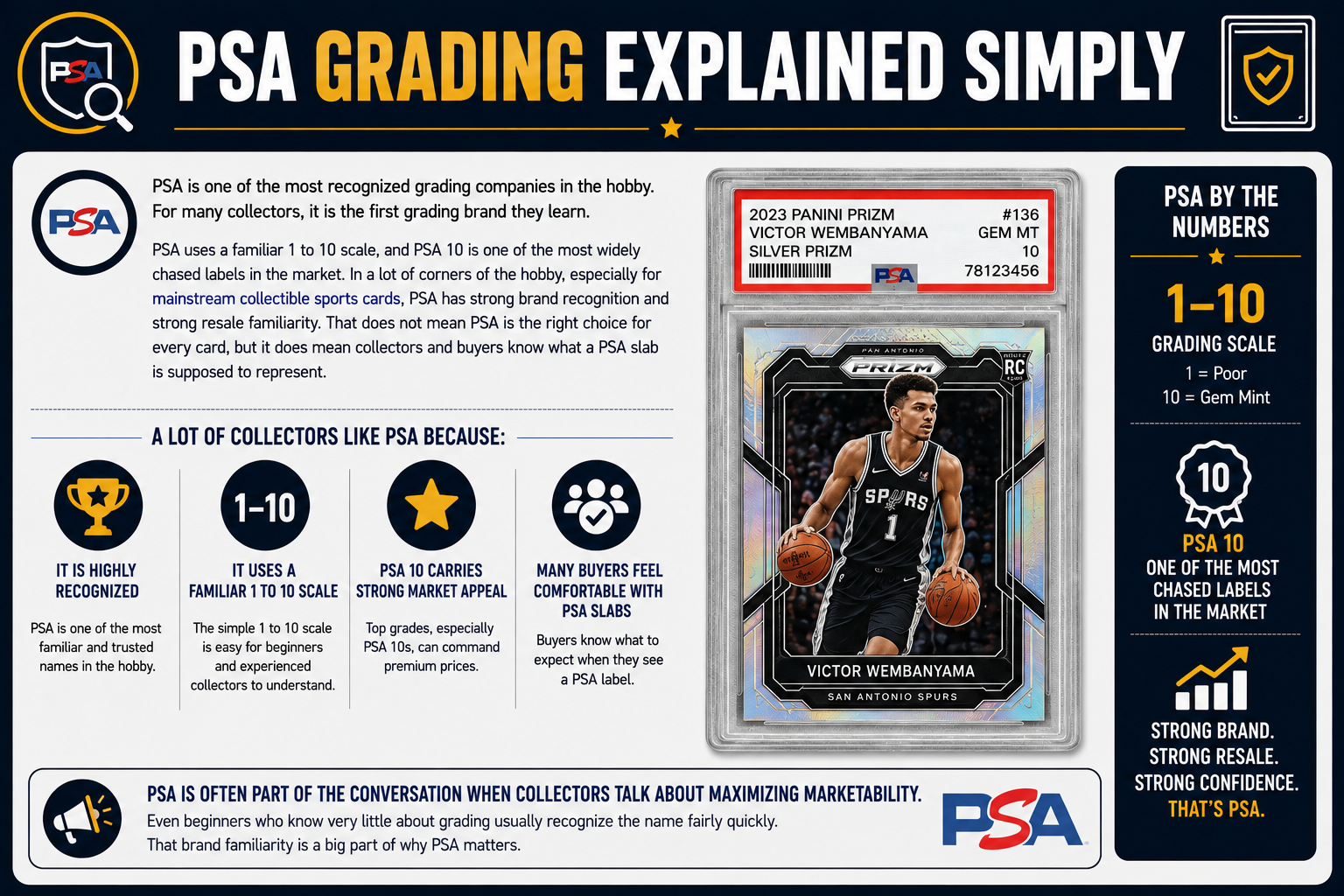
PSA is one of the most recognized grading companies in the hobby. For many collectors, it is the first grading brand they learn.
PSA uses a familiar 1 to 10 scale, and PSA 10 is one of the most widely chased labels in the market. In a lot of corners of the hobby, especially for mainstream collectible sports cards, PSA has strong brand recognition and strong resale familiarity. That does not mean PSA is the right choice for every card, but it does mean collectors and buyers know what a PSA slab is supposed to represent.
A lot of collectors like PSA because:
- It Is Highly Recognized
- It Uses A Familiar 1 To 10 Scale
- PSA 10 Carries Strong Market Appeal
- Many Buyers Feel Comfortable With PSA Slabs
PSA is often part of the conversation when collectors talk about maximizing marketability. Even beginners who know very little about grading usually recognize the name fairly quickly. That brand familiarity is a big part of why PSA matters.
BGS Grading Explained Simply
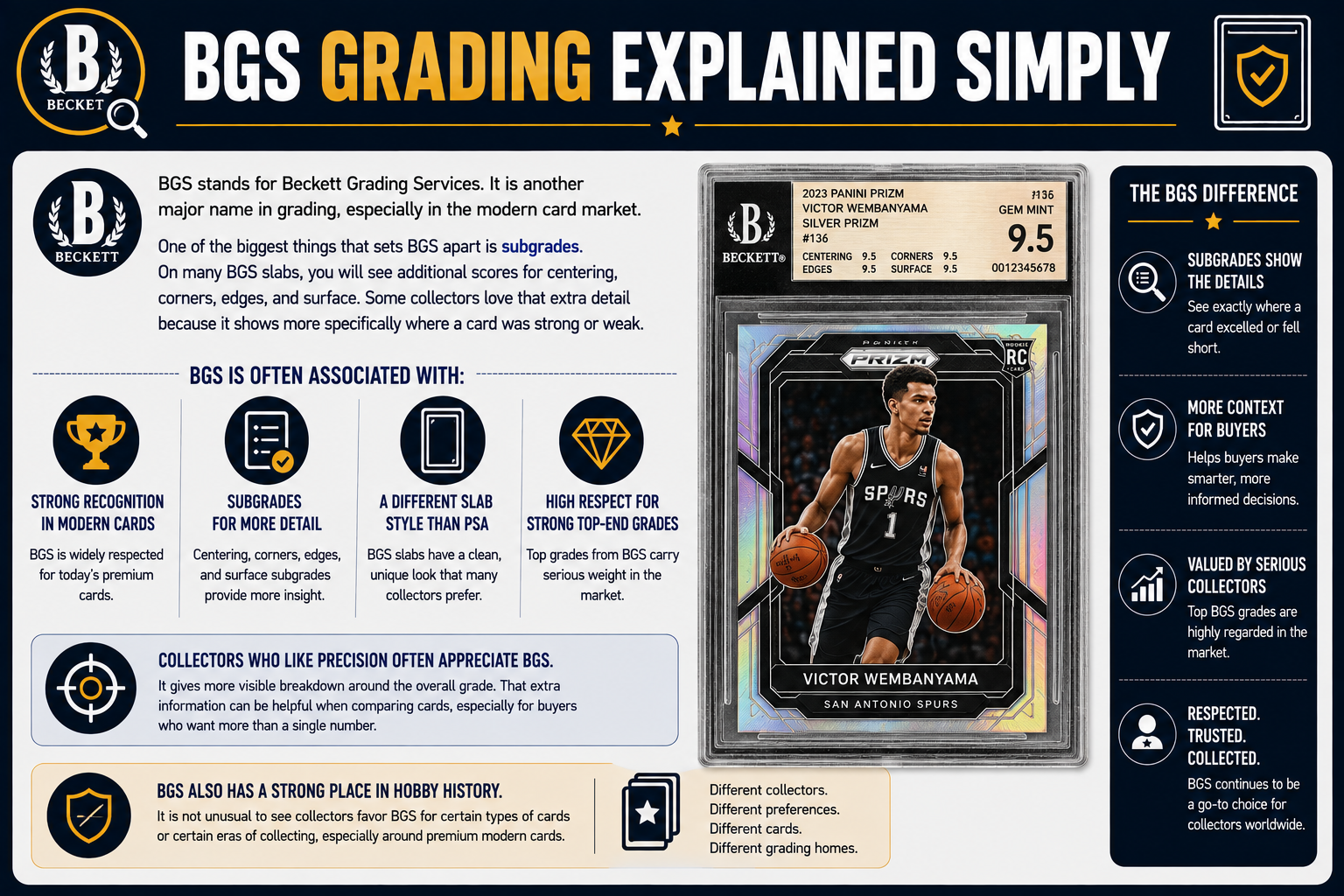
BGS stands for Beckett Grading Services. It is another major name in grading, especially in the modern card market.
One of the biggest things that sets BGS apart is subgrades. On many BGS slabs, you will see additional scores for centering, corners, edges, and surface. Some collectors love that extra detail because it shows more specifically where a card was strong or weak.
BGS is often associated with:
- Strong Recognition In Modern Cards
- Subgrades For More Detail
- A Different Slab Style Than PSA
- High Respect For Strong Top-End Grades
Collectors who like precision often appreciate BGS because it gives more visible breakdown around the overall grade. That extra information can be helpful when comparing cards, especially for buyers who want more than a single number.
BGS also has a strong place in hobby history, especially around premium modern cards. It is not unusual to see collectors favor BGS for certain types of cards or certain eras of collecting.
SGC Grading Explained Simply
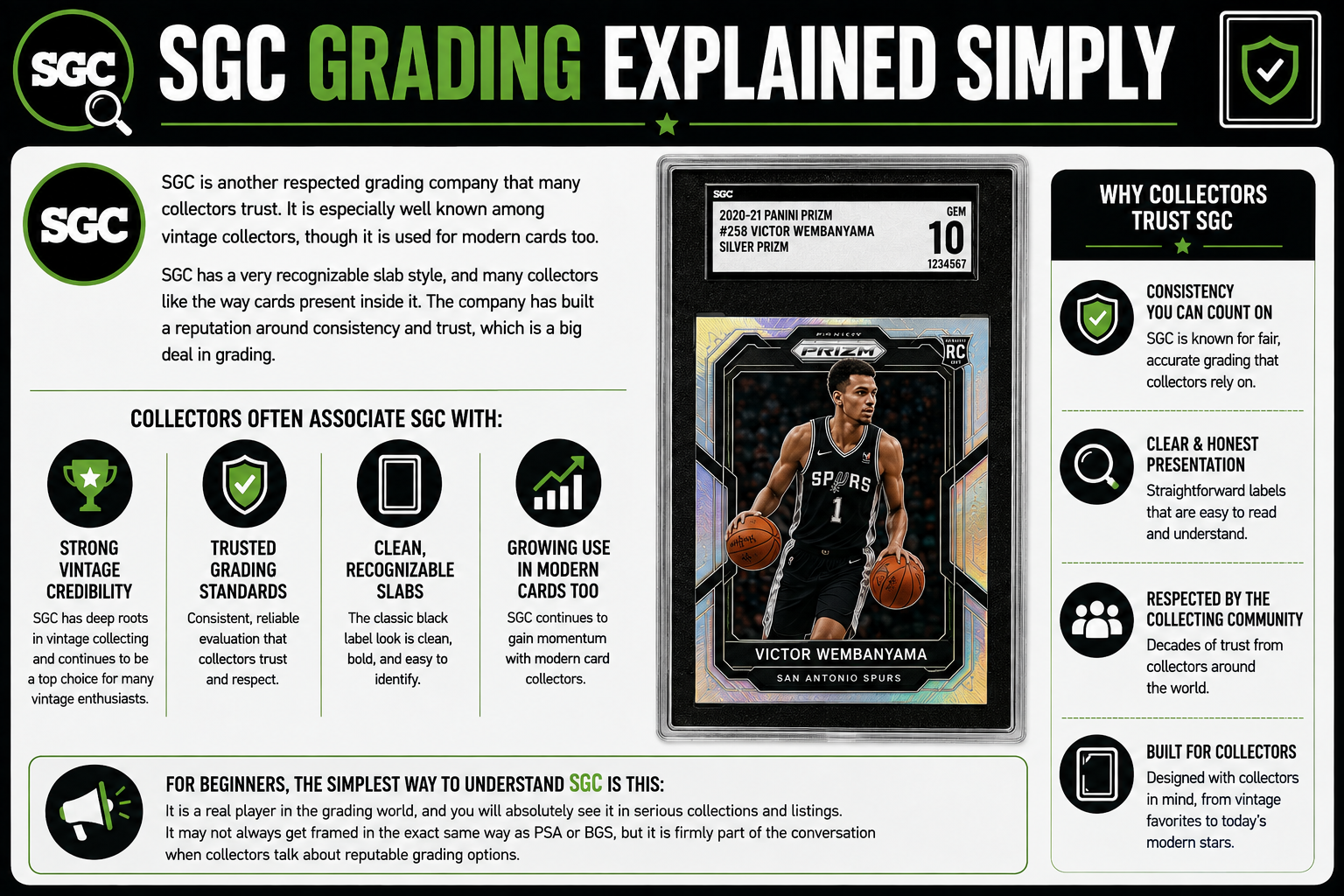
SGC is another respected grading company that many collectors trust. It is especially well known among vintage collectors, though it is used for modern cards too.
SGC has a very recognizable slab style, and many collectors like the way cards present inside it. The company has built a reputation around consistency and trust, which is a big deal in grading.
Collectors often associate SGC with:
- Strong Vintage Credibility
- Trusted Grading Standards
- Clean, Recognizable Slabs
- Growing Use In Modern Cards Too
For beginners, the simplest way to understand SGC is this: it is a real player in the grading world, and you will absolutely see it in serious collections and listings. It may not always get framed in the exact same way as PSA or BGS, but it is firmly part of the conversation when collectors talk about reputable grading options.
PSA Vs. BGS Vs. SGC: What Is The Difference?
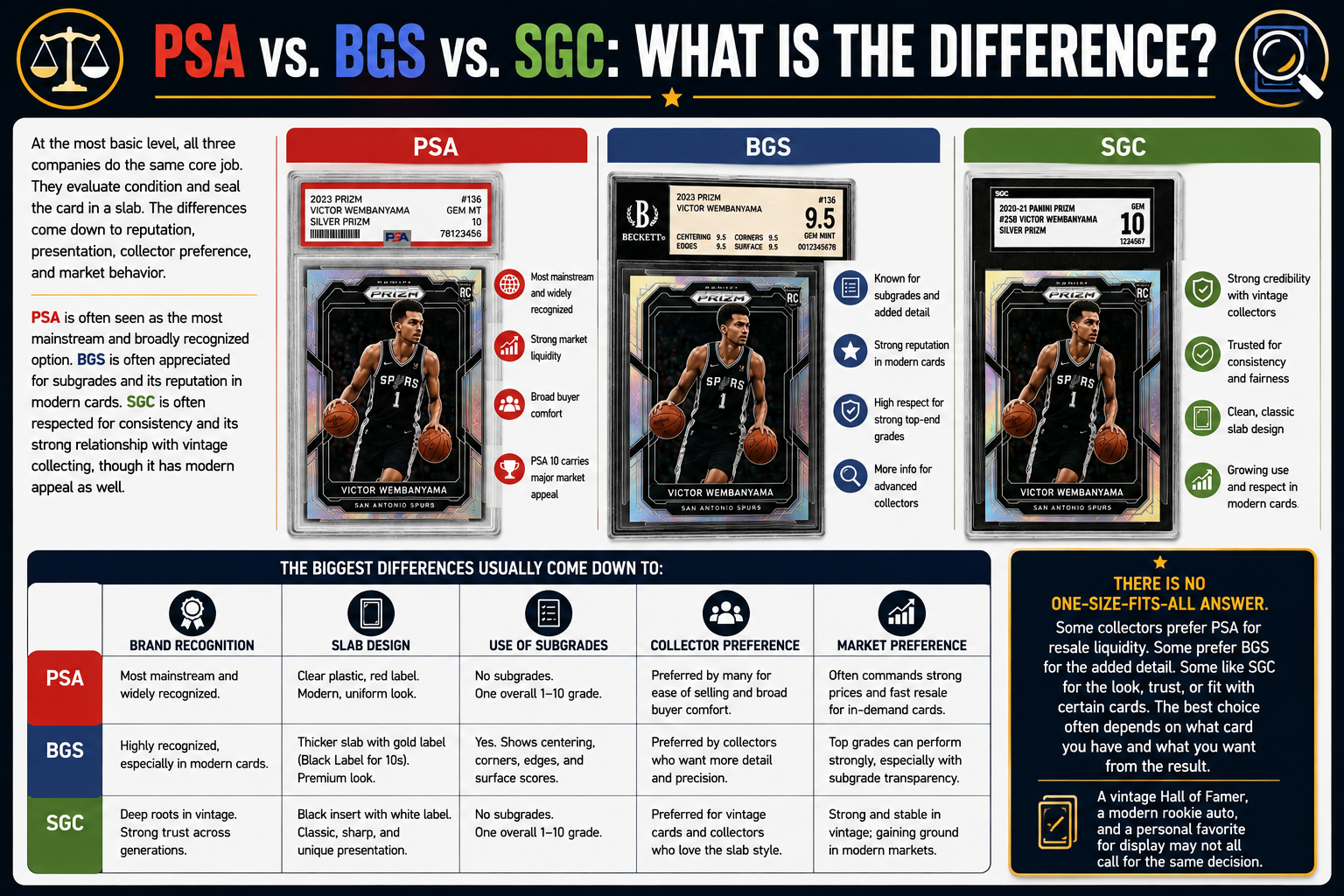
At the most basic level, all three companies do the same core job. They evaluate condition and seal the card in a slab. The differences come down to reputation, presentation, collector preference, and market behavior.
PSA is often seen as the most mainstream and broadly recognized option. BGS is often appreciated for subgrades and its reputation in modern cards. SGC is often respected for consistency and its strong relationship with vintage collecting, though it has modern appeal as well.
The biggest differences usually come down to:
- Brand Recognition
- Slab Design
- Use Of Subgrades
- Collector Preference
- Market Preference
There is no one-size-fits-all answer. Some collectors prefer PSA for resale liquidity. Some prefer BGS for the added detail. Some like SGC for the look, trust, or fit with certain cards. The best choice often depends on what card you have and what you want from the result.
A vintage Hall of Famer, a modern rookie auto, and a personal favorite for display may not all call for the same decision.
Should You Grade Your Cards?
This is the question most beginners really want answered, and the honest answer is: sometimes.
Some cards are great grading candidates. Others are not. A card may be worth grading if it has strong value potential, appears to be in excellent condition, carries personal importance, or would benefit from long-term protection and easier resale.
Grading often makes sense when:
- The Card Is Important To You
- The Card Has Strong Value Potential
- The Condition Looks Very Strong
- You Want Long-Term Protection
- You Want Easier Resale
Grading may not make sense when:
- The Card Is Too Common
- The Condition Is Clearly Weak
- Grading Costs More Than The Likely Upside
- You Only Need Basic Storage
That last point matters. Some collectors feel pressure to grade everything, especially once they start seeing slabs all over social media and marketplaces. That is not necessary. A lot of great collections include mostly raw cards. Grading is a tool, not a requirement.
Why Grading Can Change A Card’s Value
Grading can affect value because it changes how much confidence buyers have in a card’s condition. That matters most on cards where condition is a major driver of price.
A high grade can create a major jump in value, especially if the market strongly rewards top-condition copies. On the other hand, a disappointing grade can limit upside or even make the submission feel like a mistake if the grading fees were too high.
Still, grading does not create value out of thin air. A weak card in a slab does not magically become a grail. The same forces still matter:
- Condition
- Rarity
- Demand
- Player Significance
- Set Reputation
What grading does is help standardize one key piece of the value equation. It gives the market a clearer way to understand what condition tier the card belongs in.
Common Beginner Mistakes With Card Grading
Most collectors make a few grading mistakes early, and that is normal. Grading looks simple from the outside, but there is a learning curve.
Common mistakes include:
- Assuming Every Card Should Be Graded
- Expecting Every Clean Card To Get A 10
- Ignoring Surface And Centering
- Spending Too Much On Low-Upside Cards
- Confusing Personal Value With Market Value
- Not Researching The Card Before Submitting It
A card can look great in your hand and still fall short of a top grade. That is not always because something went wrong. It is often because grading standards are stricter than casual visual inspection.
The best approach is to treat grading like part of the learning process. The more cards you inspect, compare, and follow in the market, the easier it gets to spot what does and does not make sense to submit.
Raw Cards Vs. Graded Cards
A raw card is simply an ungraded card. A graded card has been reviewed by a grading company and sealed in a slab.
That does not mean graded is always better in every situation. Plenty of collectors enjoy raw cards because they are easier to access, easier to store in binders or boxes, and often more affordable. A raw card can still be valuable, especially if it is rare or highly desirable.
Graded cards tend to offer:
- More Condition Confidence
- Better Protection
- Easier Market Comparison
- Stronger Buyer Trust
Raw cards tend to offer:
- More Flexibility
- Lower Upfront Cost
- Simpler Collecting For Casual Buyers
Both formats have a place in the hobby. Some collectors mix both without overthinking it.
Final Thoughts
So, what is card grading?
It is a way to have a third-party company evaluate a card’s condition, assign a grade, and protect it inside a slab. PSA, BGS, and SGC are three of the biggest names beginners will see, and each one plays a real role in the hobby.
You do not need to become a grading expert overnight. What matters most at the beginning is understanding what grading is for, what a grade is actually measuring, and when grading makes sense for the cards you own.
Once that clicks, grading starts to feel less intimidating. It becomes another useful part of the hobby instead of some secret language only longtime collectors understand.
If you’re learning how card grading fits into the hobby, CardWiki can help you track your collection, understand card structure, and make better sense of what you own.
FAQs
What Is Card Grading?
Card grading is the process of having a third-party company inspect a trading card’s condition, assign it a numerical grade, and seal it in a protective slab.
What Does A PSA 10 Mean?
A PSA 10 usually means the card is considered Gem Mint according to PSA’s grading standards. It generally signals top-tier condition.
Is PSA Better Than BGS?
Not always. PSA, BGS, and SGC each have strengths. The best choice depends on the card, the collector’s goal, and what kind of market appeal matters most.
Is SGC A Good Grading Company?
Yes. SGC is widely respected, especially for vintage cards, and many collectors trust it for modern cards as well.
Should I Grade My Sports Cards?
Sometimes. Grading can make sense if the card has strong condition, value potential, personal importance, or resale value. Not every card needs grading.
How Do I Know If My Card Is Worth Grading?
Look at the card’s condition, rarity, demand, and likely value after grading. If grading fees outweigh the upside, it may not be worth submitting.
Do Graded Cards Sell For More?
They often can, especially when the card receives a strong grade and buyer confidence matters. Grading does not guarantee a higher price, though.
What Is The Difference Between Raw And Graded Cards?
Raw cards are ungraded. Graded cards have been evaluated by a grading company and sealed in a slab with a numerical grade.
What Do Card Graders Look At?
Graders typically look at centering, corners, edges, and surface when determining a card’s grade.