What Does Parallel Mean In Trading Cards?
What does parallel mean in trading cards? Learn how parallel cards work, why collectors chase them, and how they differ from base cards.

If you are new to trading cards, “parallel” is one of those terms you will hear constantly. Collectors talk about silver parallels, gold parallels, numbered parallels, rookie parallels, color matches, refractors, prizms, and rainbow chases. At first, it can sound like a completely different language.
The good news is that the basic idea is simple.
A parallel card is a variation of a base card. It usually features the same player, same basic design, and often the same card number, but something about it is different. That difference might be the color, foil, pattern, finish, serial numbering, or print run.
That small change can matter a lot. Two cards may look almost identical at first glance, but one might be a common base card while the other is a rare gold parallel numbered to 10. Same player, same image, very different hobby meaning.
Once you understand how parallels work, modern trading cards become much easier to read.
What Does Parallel Mean In Trading Cards?
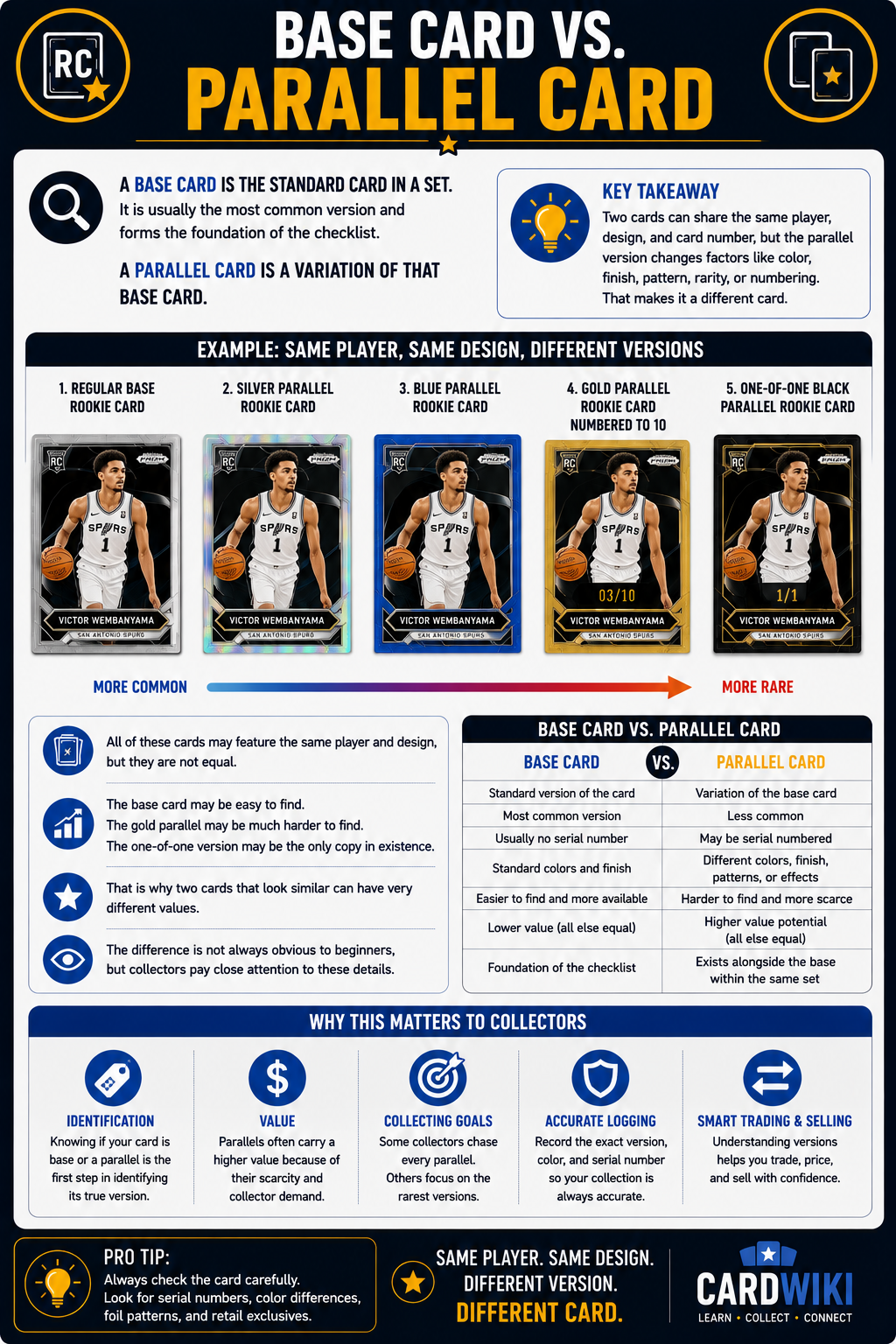
In trading cards, a parallel is a modified version of a base card. Think of the base card as the standard version. The parallel is a version that runs alongside it with a different look or scarcity level.
A parallel might have:
- Different Color
- Different Foil Finish
- Different Pattern
- Serial Numbering
- Lower Print Run
- Retail Exclusive Design
The key thing to understand is that a parallel is connected to the base card, but it is not the exact same card. It belongs to the same release and usually shares the same core design, though collectors treat it as a separate version.
That is why identifying parallels matters. If you log, sell, trade, or compare a card without knowing whether it is base or parallel, you may misunderstand what you actually have.
Base Card Vs. Parallel Card
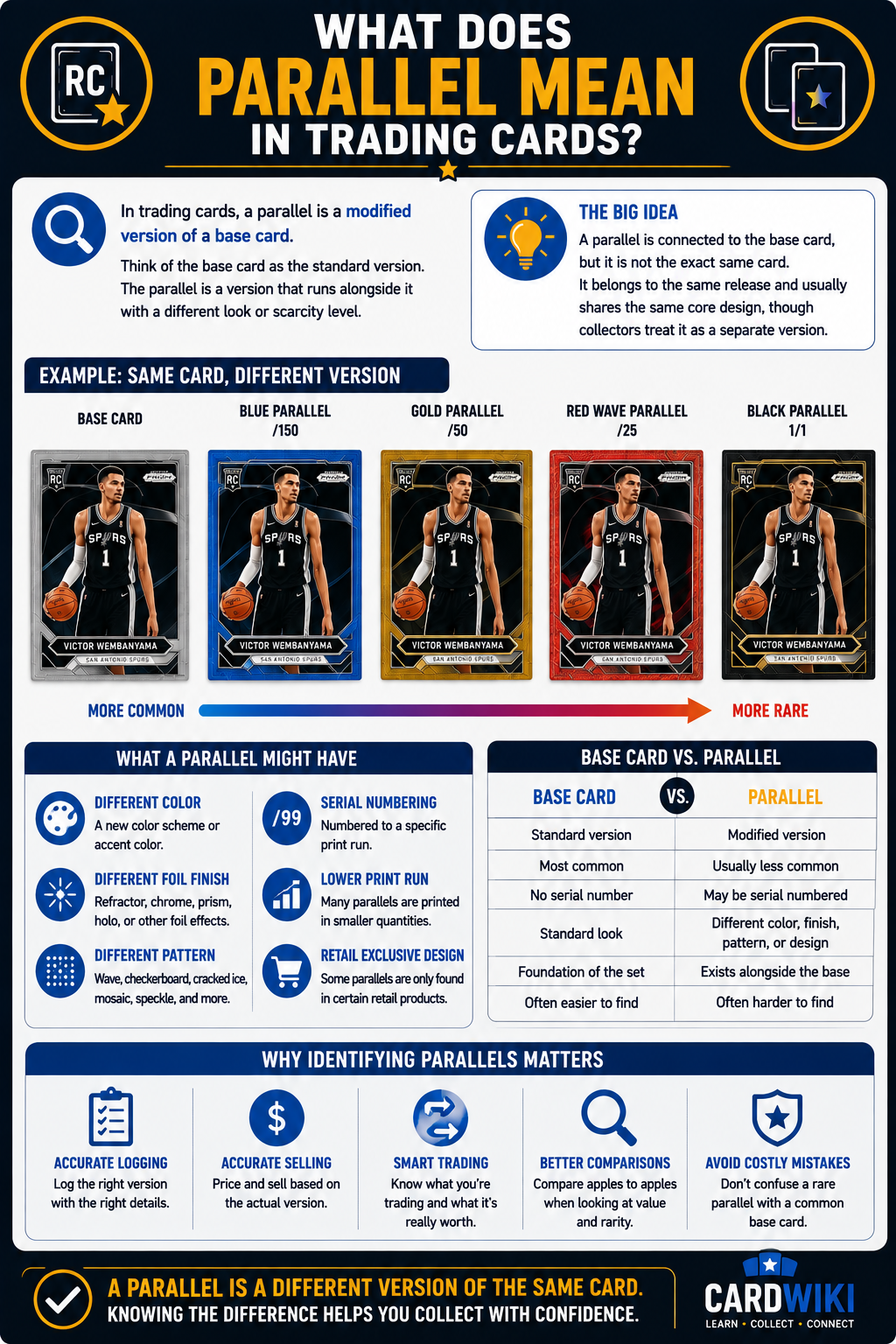
A base card is the standard card in a set. It is usually the most common version and forms the foundation of the checklist.
A parallel card is a variation of that base card.
For example, a modern release might include:
- Regular Base Rookie Card
- Silver Parallel Rookie Card
- Blue Parallel Rookie Card
- Gold Parallel Rookie Card Numbered To 10
- One-Of-One Black Parallel Rookie Card
All of those cards may feature the same player and design, but they are not equal. The base card may be easy to find. The gold parallel may be much harder to find. The one-of-one version may be the only copy in existence.
That is why two cards that look similar can have very different values. The difference is not always obvious to beginners, but collectors pay close attention to these details.
Why Do Parallels Exist?
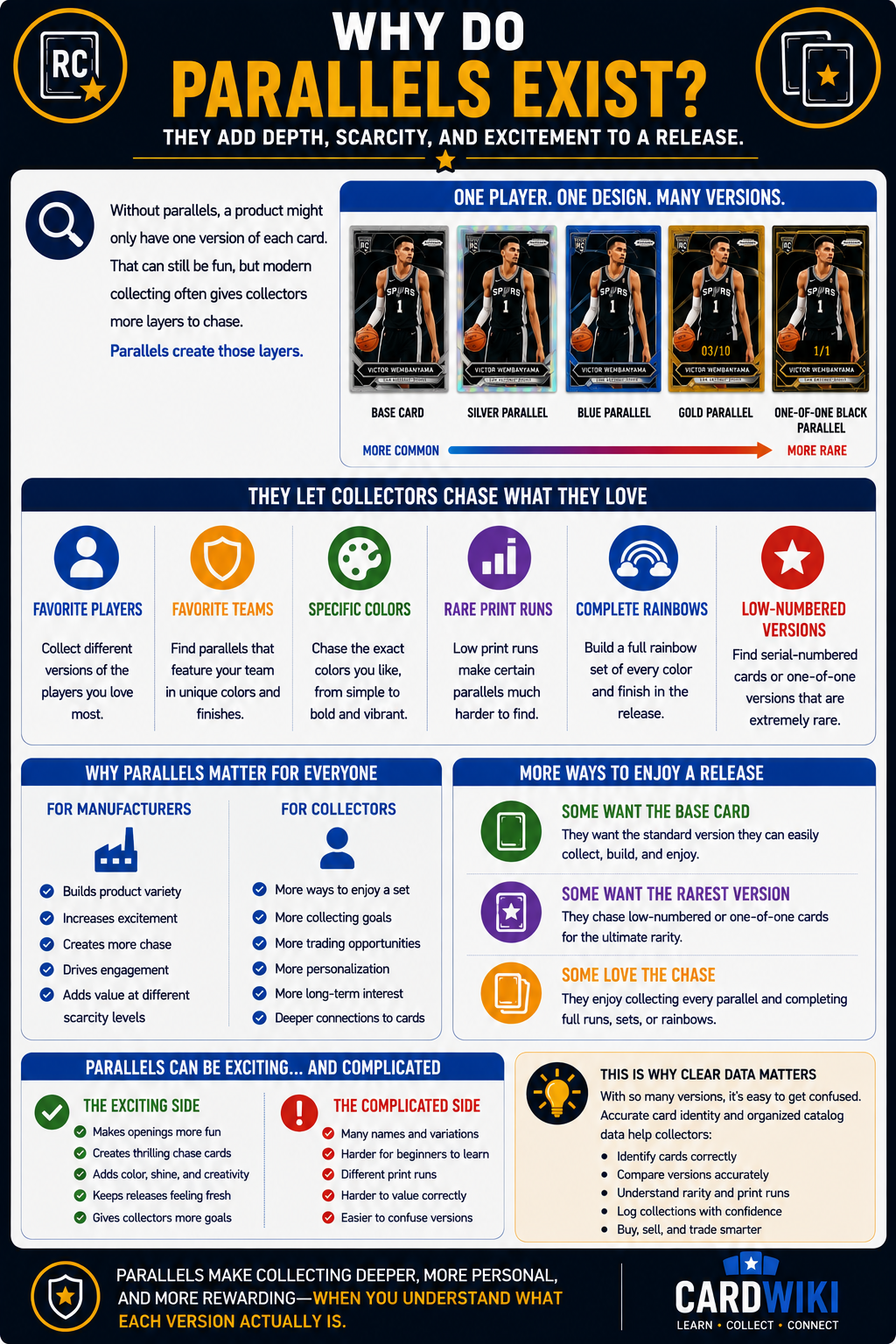
Parallels exist because they add depth, scarcity, and excitement to a release.
Without parallels, a product might only have one version of each card. That can still be fun, but modern collecting often gives collectors more layers to chase. Parallels create those layers.
They let collectors chase:
- Favorite Players
- Favorite Teams
- Specific Colors
- Rare Print Runs
- Complete Rainbows
- Low-Numbered Versions
For manufacturers, parallels help build product variety. For collectors, they create more ways to enjoy a set. Some people want the regular base card. Others want the rarest version they can find. Others enjoy chasing a full run of different colors and finishes.
Parallels can make the hobby more exciting, but they can also make releases harder to understand. That is why clear card identity and organized catalog data matter so much.
Common Types Of Parallel Cards
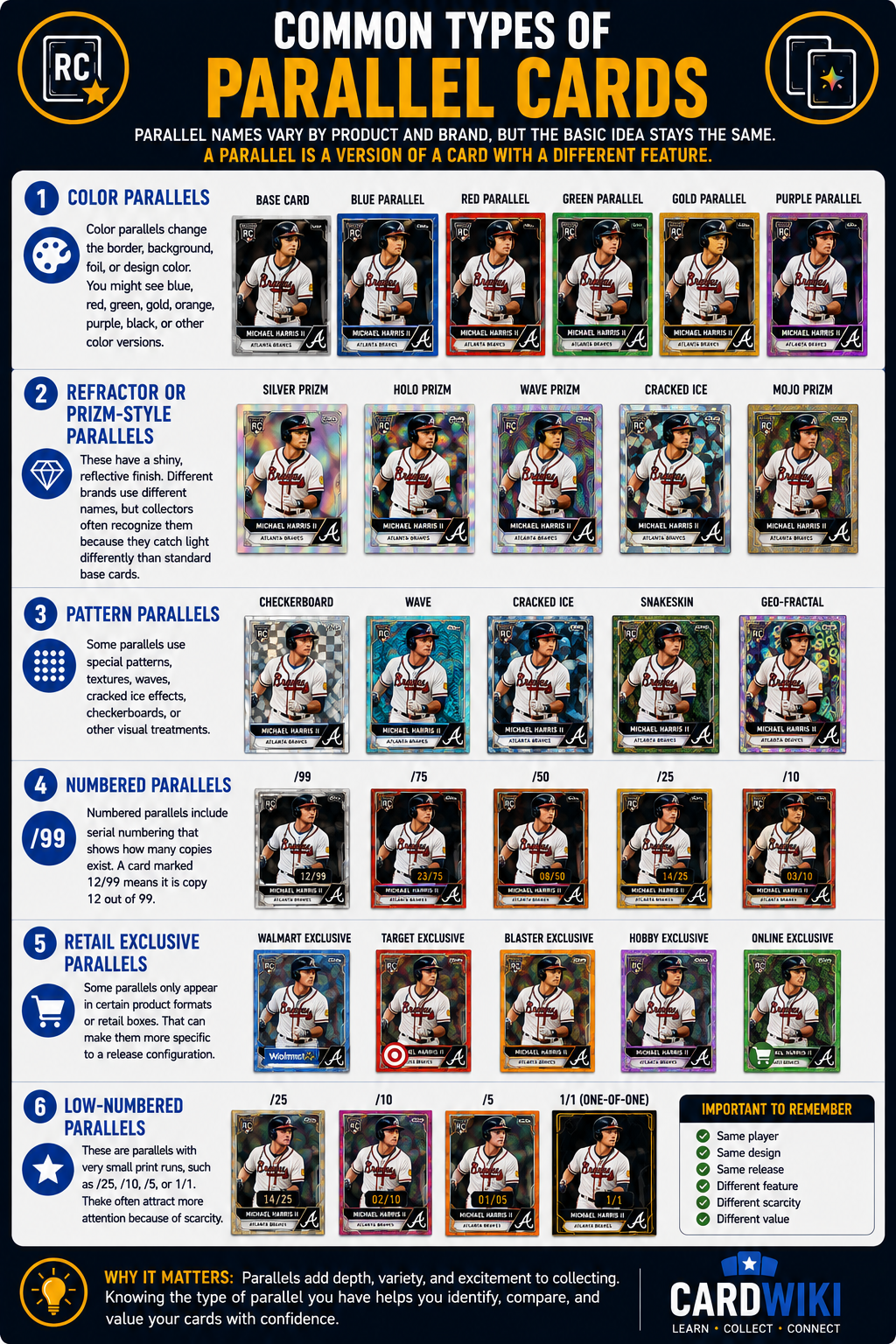
Parallel names vary by product and brand, but the basic idea stays the same. A parallel is a version of a card with a different feature.
Color Parallels
Color parallels change the border, background, foil, or design color. You might see blue, red, green, gold, orange, purple, black, or other color versions.
Refractor Or Prizm-Style Parallels
These have a shiny, reflective finish. Different brands use different names, but collectors often recognize them because they catch light differently than standard base cards.
Pattern Parallels
Some parallels use special patterns, textures, waves, cracked ice effects, checkerboards, or other visual treatments.
Numbered Parallels
Numbered parallels include serial numbering that shows how many copies exist. A card marked 12/99 means it is copy 12 out of 99.
Retail Exclusive Parallels
Some parallels only appear in certain product formats or retail boxes. That can make them more specific to a release configuration.
Low-Numbered Parallels
These are parallels with very small print runs, such as /25, /10, /5, or 1/1. These often attract more attention because of scarcity.
What Is A Numbered Parallel?
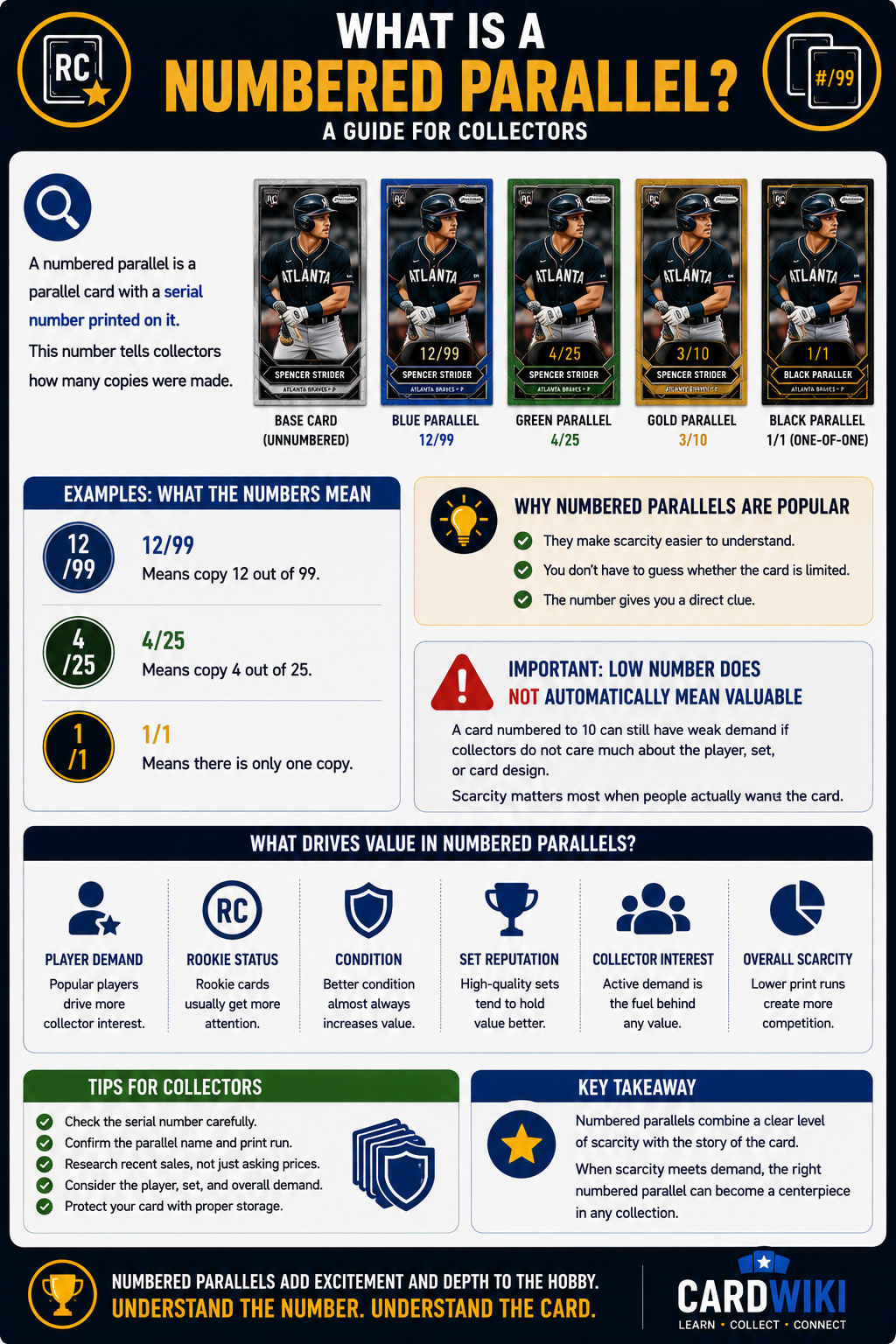
A numbered parallel is a parallel card with a serial number printed on it. This number tells collectors how many copies were made.
For example:
- 12/99 Means Copy 12 Out Of 99.
- 4/25 Means Copy 4 Out Of 25.
- 1/1 Means There Is Only One Copy.
Numbered parallels are popular because they make scarcity easier to understand. You do not have to guess whether the card is limited. The number gives you a direct clue.
That said, lower numbered does not automatically mean valuable. A card numbered to 10 can still have weak demand if collectors do not care much about the player, set, or card design. Scarcity matters most when people actually want the card.
The strongest numbered parallels usually combine scarcity with player demand, rookie status, condition, set reputation, and collector interest.
Why Are Some Parallels Worth More Than Others?
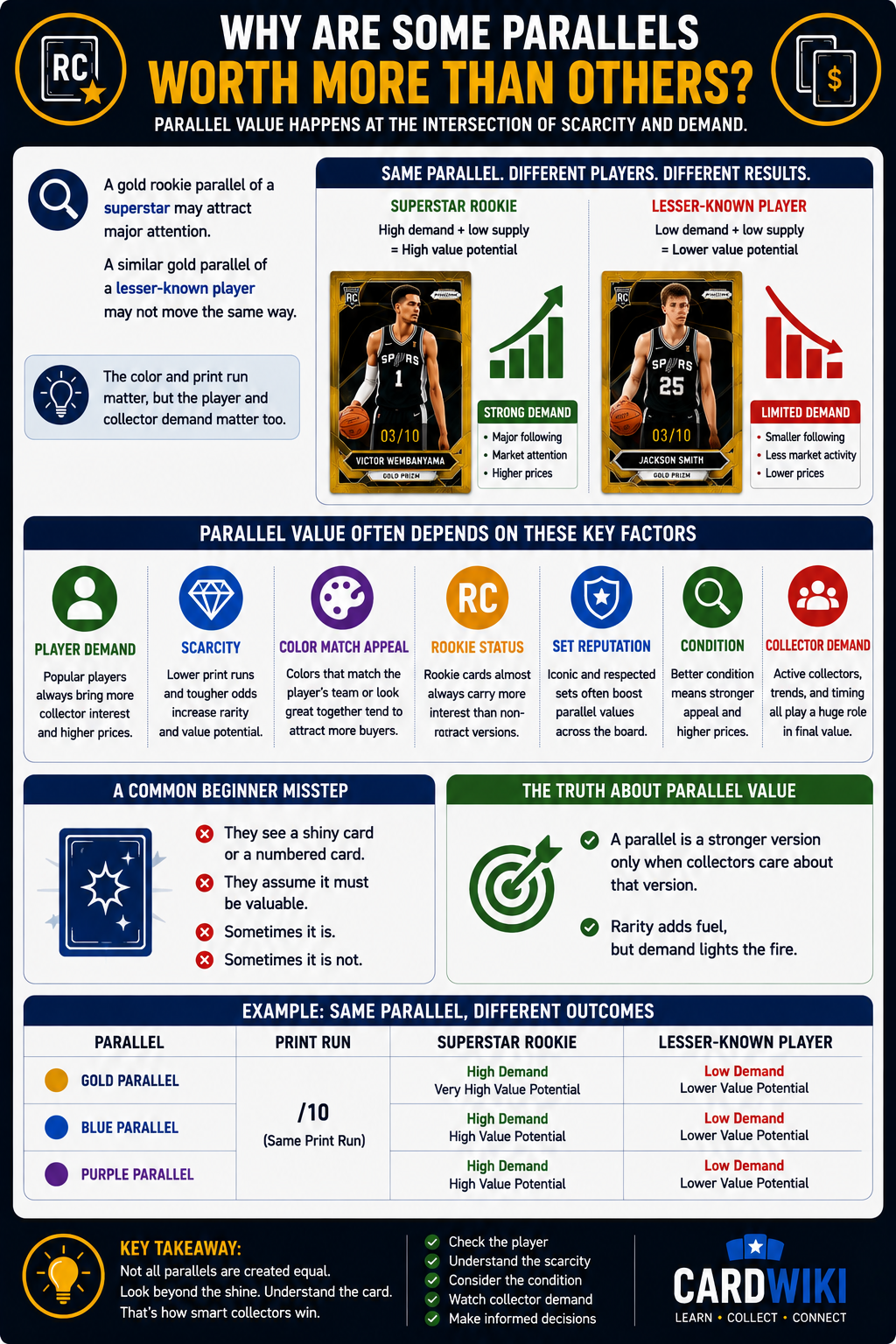
Some parallels are worth more because they sit at the intersection of scarcity and demand.
A gold rookie parallel of a superstar may attract major attention. A similar gold parallel of a lesser-known player may not move the same way. The color and print run matter, but the player and collector demand matter too.
Parallel value often depends on:
- Player Demand
- Scarcity
- Color Match Appeal
- Rookie Status
- Set Reputation
- Condition
- Collector Demand
This is where beginners sometimes get tripped up. They see a shiny card or a numbered card and assume it must be valuable. Sometimes it is. Sometimes it is not.
A parallel is a stronger version only when collectors care about that version. Rarity adds fuel, but demand lights the fire.
What Is A Color Match Parallel?
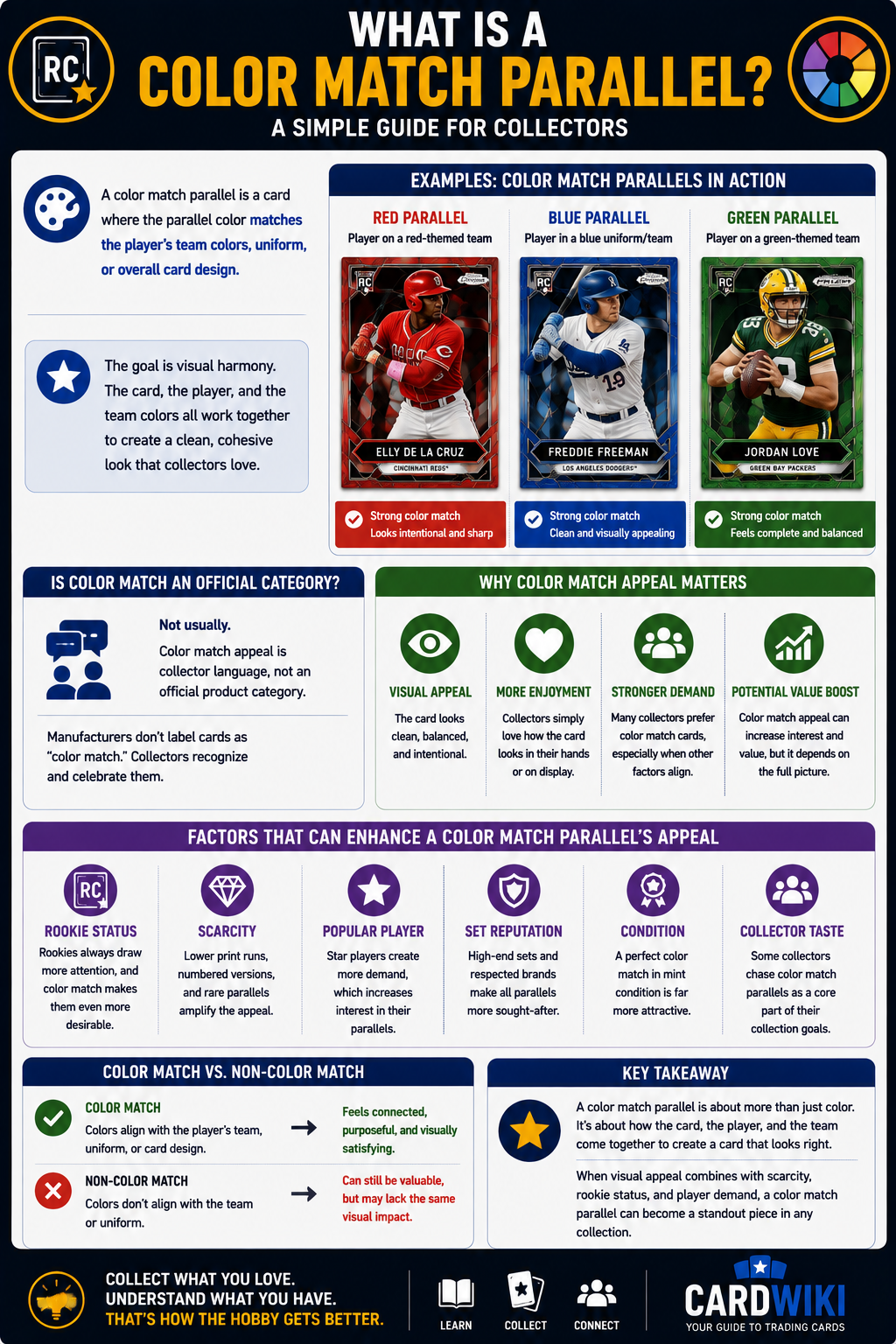
A color match parallel is a card where the parallel color matches the player’s team colors, uniform, or overall card design.
For example, a red parallel of a player on a red-themed team may be called a color match. A blue parallel of a player in a blue uniform may get similar attention.
Color match appeal is not always an official product category. It is usually collector language. Still, it matters because collectors often love cards that look visually complete. A strong color match can make a parallel feel cleaner, more intentional, and more desirable.
That visual appeal can sometimes affect demand, especially when the card also has rookie status, scarcity, or a popular player attached to it.
Rookie Parallels Explained
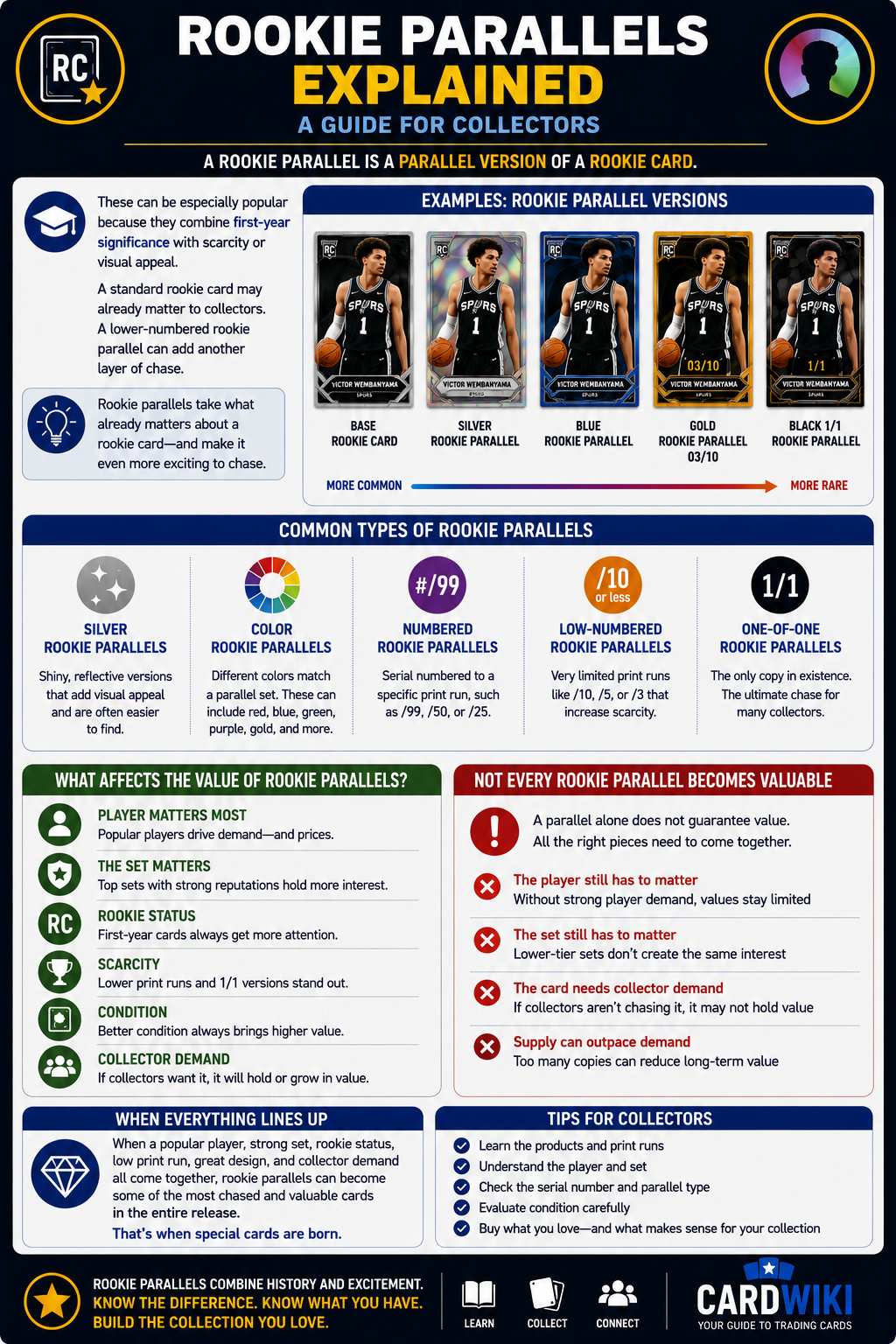
A rookie parallel is a parallel version of a rookie card.
These can be especially popular because they combine first-year significance with scarcity or visual appeal. A standard rookie card may already matter to collectors. A lower-numbered rookie parallel can add another layer of chase.
Rookie parallels may include:
- Silver Rookie Parallels
- Color Rookie Parallels
- Numbered Rookie Parallels
- Low-Numbered Rookie Parallels
- One-Of-One Rookie Parallels
Not every rookie parallel becomes valuable, though. The player still has to matter. The set still has to matter. The card still needs collector demand.
When all those pieces line up, rookie parallels can become some of the most chased cards in a release.
Why Parallels Can Get Confusing
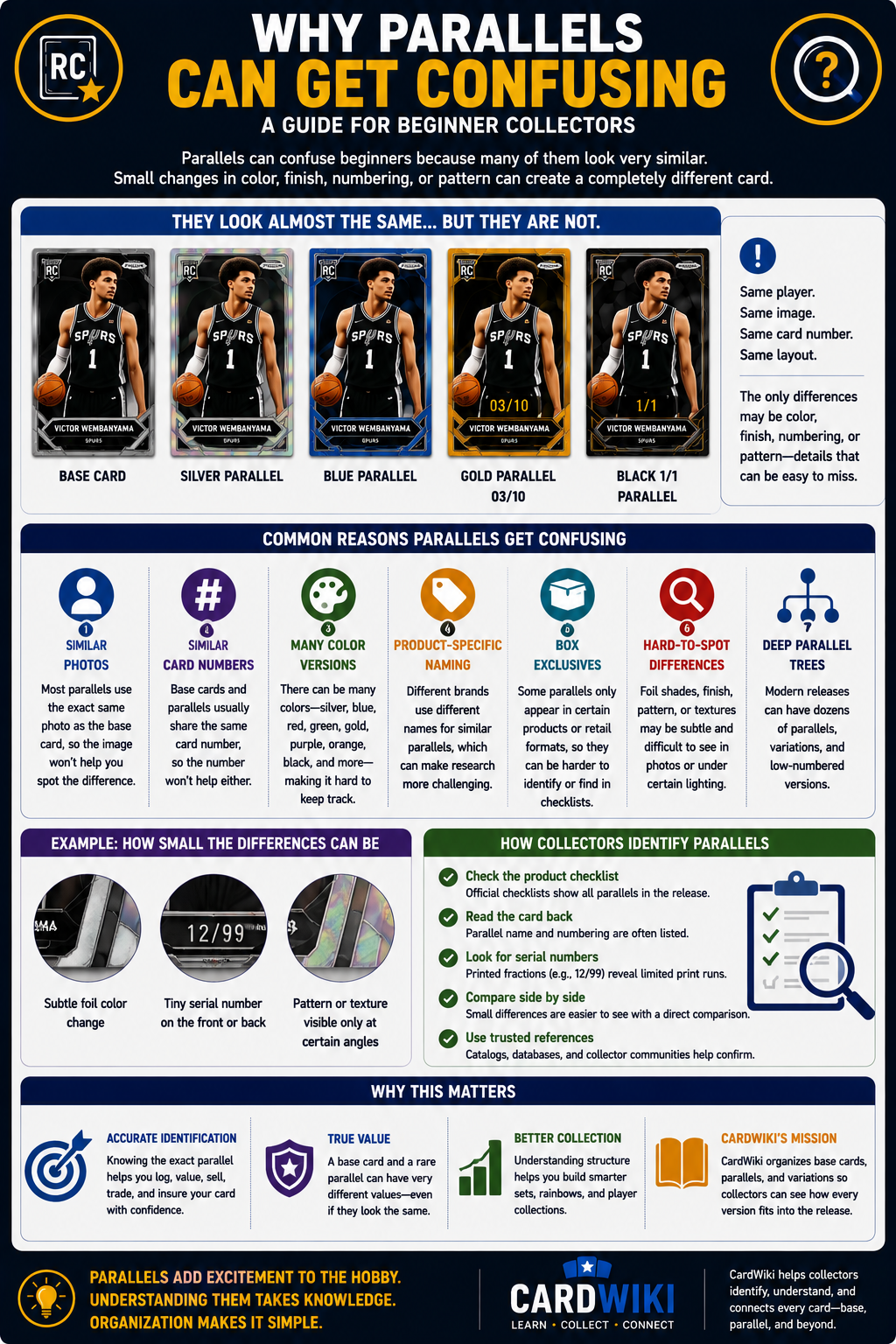
Parallels can confuse beginners because many of them look very similar.
A base card and a parallel may share the same player, image, card number, and layout. The only difference might be a foil color, a small serial number, a subtle finish, or a pattern that is hard to see in certain lighting.
Common reasons parallels get confusing include:
- Similar Photos
- Similar Card Numbers
- Many Color Versions
- Product-Specific Naming
- Box Exclusives
- Hard-To-Spot Differences
- Deep Parallel Trees
Modern releases can include a lot of parallel versions. Some are obvious. Others require careful comparison. This is why collectors often check product checklists, card backs, serial numbers, and catalog references before deciding exactly what they have.
CardWiki is built around this kind of structure. When base cards, parallels, and variations are organized clearly, collectors can understand how each version connects to the larger release.
How To Tell If You Have A Parallel Card
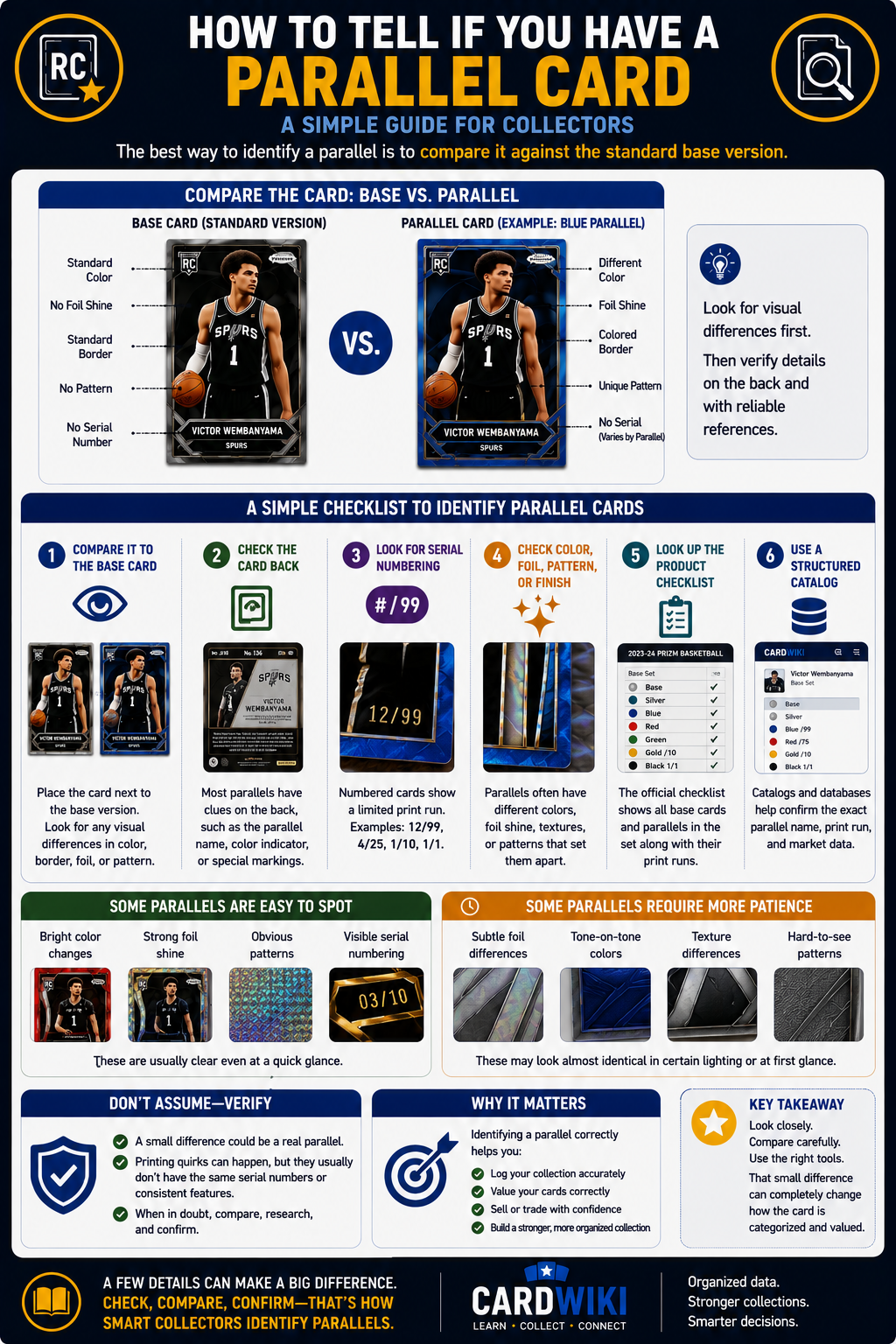
The best way to identify a parallel is to compare it against the standard base version.
Start with the obvious visual details. Look at the color, foil, border, pattern, and finish. Then check the back of the card. Some parallels include serial numbering or product details that help confirm the version.
A simple checklist can help:
- Compare It To The Base Card
- Check The Card Back
- Look For Serial Numbering
- Check Color, Foil, Pattern, Or Finish
- Look Up The Product Checklist
- Use A Structured Catalog
Some parallels are easy to identify right away. Others require more patience. If a card looks slightly different from the regular version, do not assume it is just a printing quirk. It may be a real parallel.
That small difference can completely change how the card is categorized.
Common Beginner Mistakes With Parallel Cards
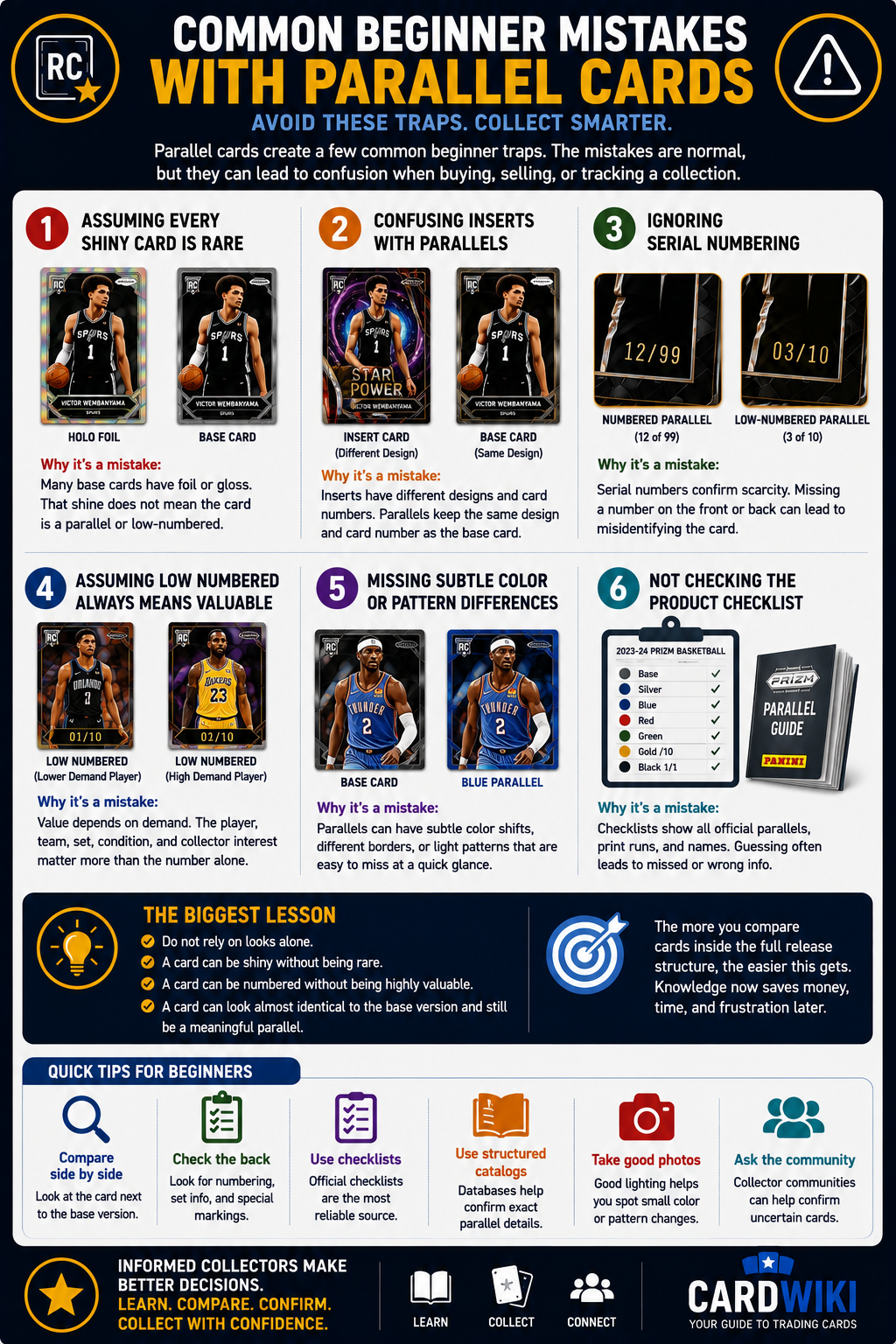
Parallel cards create a few common beginner traps. The mistakes are normal, but they can lead to confusion when buying, selling, or tracking a collection.
Common mistakes include:
- Assuming Every Shiny Card Is Rare
- Confusing Inserts With Parallels
- Ignoring Serial Numbering
- Assuming Low Numbered Always Means Valuable
- Missing Subtle Color Or Pattern Differences
- Not Checking The Product Checklist
The biggest lesson is simple. Do not rely on looks alone. A card can be shiny without being rare. A card can be numbered without being highly valuable. A card can look almost identical to the base version and still be a meaningful parallel.
The more you compare cards inside the full release structure, the easier this gets.
How Collectors Approach Parallels
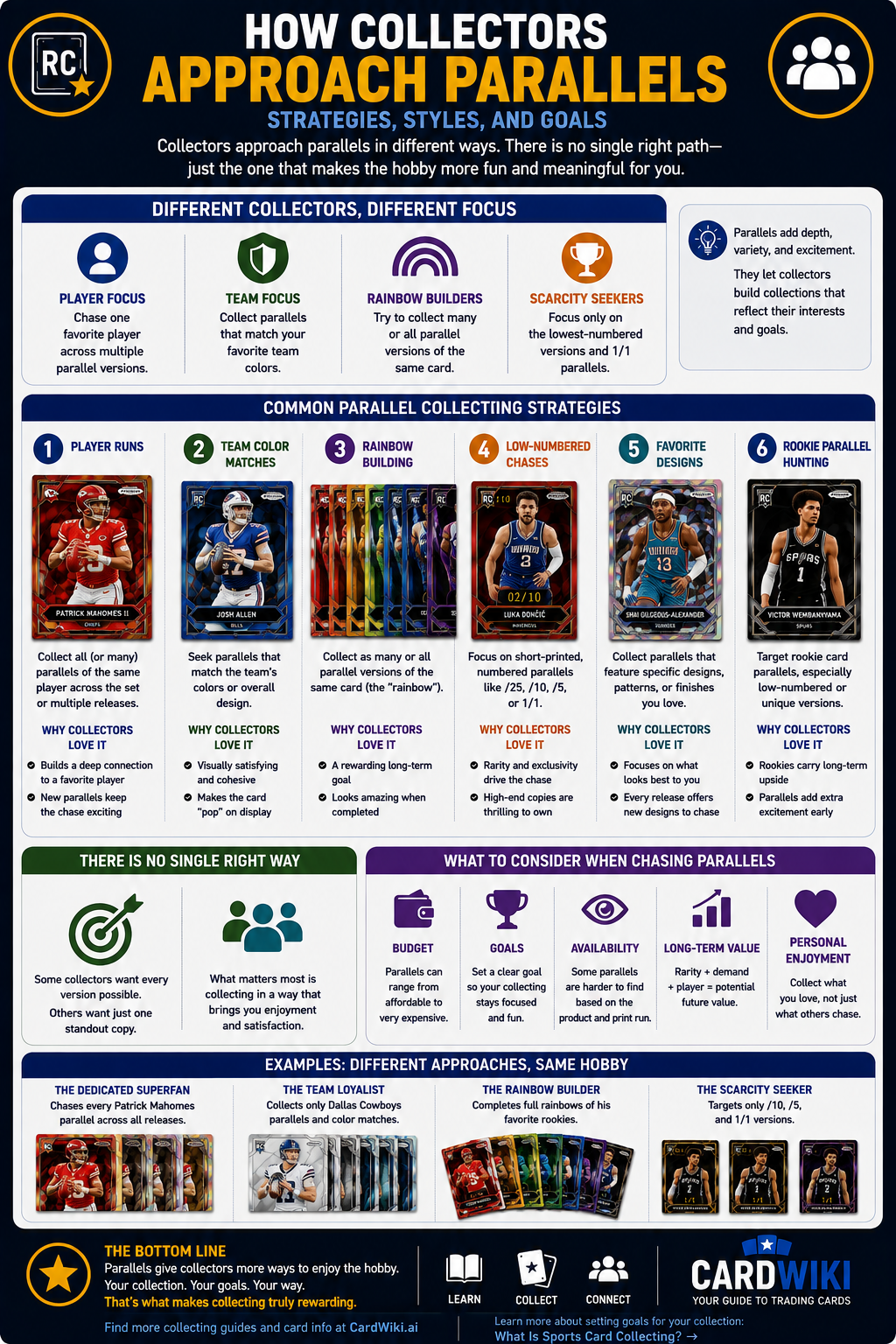
Collectors approach parallels in different ways.
Some people chase one favorite player across multiple versions. Others focus on team color matches. Some try to build a rainbow, which means sport collecting many or all parallel versions of the same card. Others only care about the lowest-numbered versions.
Common parallel sport collecting strategies include:
- Player Runs
- Team Color Matches
- Rainbow Building
- Low-Numbered Chases
- Favorite Designs
- Rookie Parallel Hunting
There is no single right way to collect parallels. Some collectors want every version. Others only want one standout copy. The best approach is the one that fits your interests, budget, and sports collecting goals.
Final Thoughts
So, what does parallel mean in trading cards?
A parallel is a variation of a base card. It may change the color, foil, pattern, finish, numbering, or scarcity level while keeping the same basic card identity.
Parallels matter because they add variety, chase, and structure to modern collecting. They can turn one base card into a whole family of related versions, each with its own look and level of demand.
They can also make the hobby confusing if you do not know what to look for. Once you understand the relationship between base cards and parallels, it becomes much easier to identify what you own, compare cards correctly, and collect with more confidence.
Collect Like a Pro
If you’re learning how parallels fit into the hobby, CardWiki can help you track your collection, compare card versions, and understand how base cards, parallels, and releases connect.
FAQs
What Does Parallel Mean In Trading Cards?
A parallel is a variation of a base card. It usually keeps the same core design but changes color, finish, pattern, numbering, or scarcity.
What Is The Difference Between A Base Card And A Parallel?
A base card is the standard version. A parallel is a modified version of that base card.
Are Parallel Cards Valuable?
Some are valuable, but not all of them. Value depends on scarcity, player demand, condition, set reputation, and collector interest.
What Is A Numbered Parallel Card?
A numbered parallel card has a serial number that shows how many copies were made, such as 12/99 or 4/25.
What Is A Color Match Parallel?
A color match parallel is a parallel where the card color matches the player’s team colors, uniform, or design.
Are Rookie Parallels Worth More?
They can be, especially if the player is popular and the parallel is scarce. Rookie status alone does not guarantee high value.
How Can I Tell If My Card Is A Parallel?
Compare it to the base card, check for serial numbering, look at the color or finish, and review the product checklist.
Are Inserts The Same As Parallels?
No. Inserts are separate themed cards, while parallels are variations of base cards or other cards within a release.
Why Do Trading Card Sets Have So Many Parallels?
Parallels add variety, scarcity, and chase to modern releases. They also give collectors more ways to build around players, teams, and card designs.