What Is A Refractor, Prizm, Chrome, Or Holo Card?
Learn the difference between refractor, Prizm, Chrome, and holo cards, including how these shiny trading card finishes work and why collectors care.
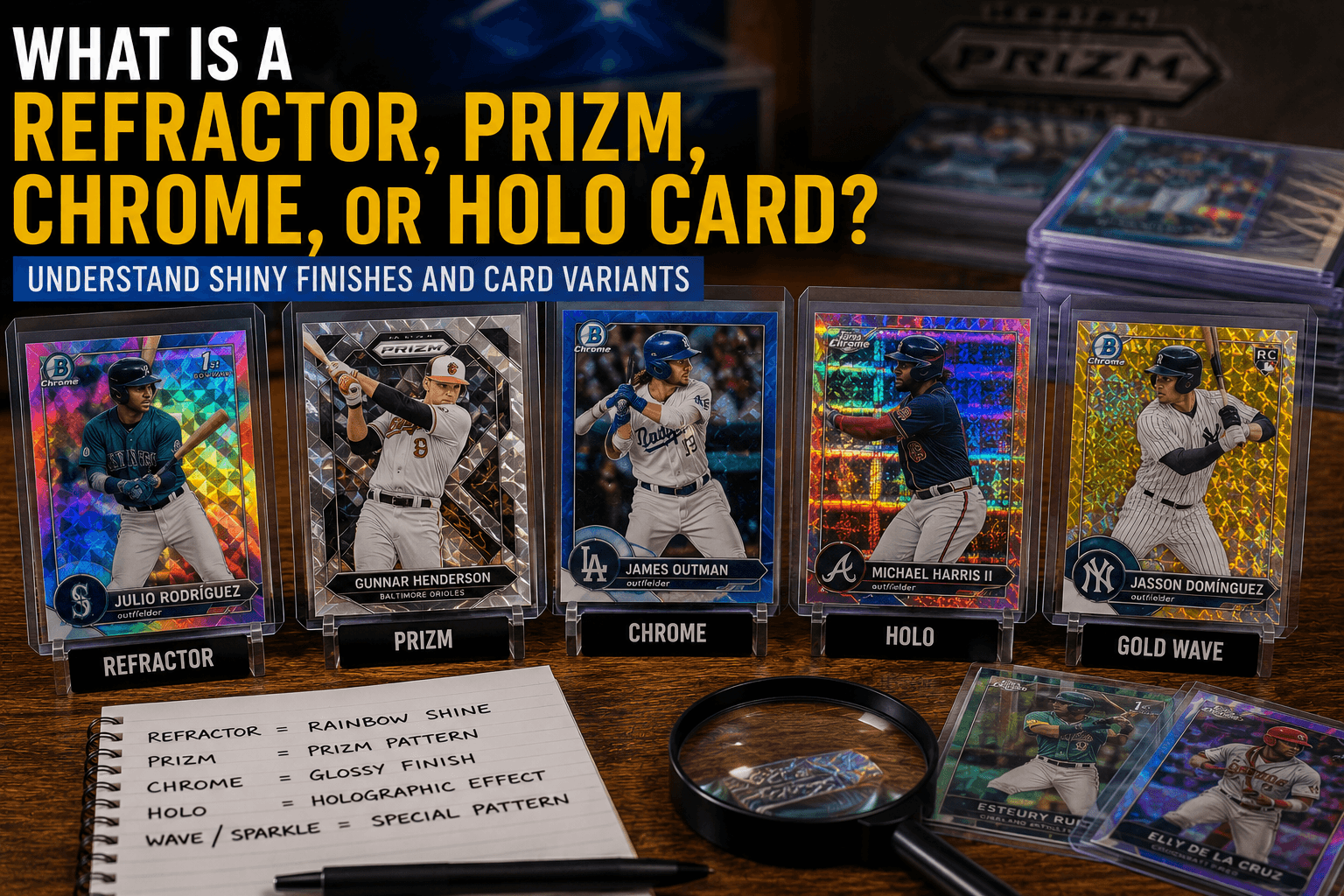
If you collect modern trading cards, you are going to run into shiny cards fast. Some are called refractors. Some are called Prizms. Some are Chrome cards. Some are holo cards. At first, those words can feel like they all mean the same thing.
They are related, but they are not always identical.
These terms usually describe card finish, product style, or visual treatment. In plain English, they are ways cards reflect light, shine, or stand apart from standard paper-style cards. Some are base cards from shiny products. Some are parallels. Some are insert cards. Some are special versions collectors chase because of scarcity, design, or player demand.
The tricky part is that different brands use different names. One product might call a shiny version a refractor. Another might call it a Prizm. Another might use holo, optic, chrome, wave, sparkle, ice, or another finish term.
Once you understand the difference, it becomes much easier to identify what you own.
Why Finish Terms Matter In Trading Cards
Finish terms matter because they help define the exact version of a card.
Two cards can feature the same player, same photo, same year, same set, and same card number, but one might be a standard base card while the other has a shiny refractor-style finish. That difference can affect identity, rarity, demand, and value.
Collectors use finish terms to understand:
- What Version The Card Is
- Whether It Is Base Or Parallel
- Whether It Has A Premium Finish
- Whether It Belongs To A Chrome-Style Product
- Whether It May Be More Desirable
- How It Fits Into The Set Structure
- How To Track It Correctly
This is exactly why CardWiki focuses on structured catalog data. A card is not fully understood until the finish, version, set, and identity all line up.
What Is A Refractor Card?
A refractor card is a shiny trading card that reflects light in a rainbow-like way. When you tilt the card, the surface catches light and creates a colorful reflective effect.
Collectors often associate refractors with chrome-style products. A regular chrome card may already have a glossy finish, but a refractor usually has a stronger rainbow shine that makes it stand out from the standard version.
A refractor may be:
- A Parallel Version
- A Shiny Variant
- A Numbered Version
- A Color Version
- A Rookie Version
- An Insert Version
The key idea is that a refractor changes the way the card reflects light. That visual difference often helps collectors identify it as a separate version from the regular base card.
What Is A Prizm Card?
A Prizm card is usually a shiny card from a Prizm-style product or a Prizm parallel within that product family. Collectors often use “Prizm” to describe a reflective finish, but it can also refer to the product line itself.
This is where beginners get confused.
A card can be from a Prizm product and still have different versions inside that product. There may be a standard base Prizm card, then silver Prizms, color Prizms, numbered Prizms, autographed Prizms, and other variations.
Common Prizm-style versions may include:
- Silver Prizm
- Green Prizm
- Red Prizm
- Blue Prizm
- Gold Prizm
- Orange Prizm
- Black Prizm
- Prizm Autographs
A Prizm card often has a bold, reflective look. The exact meaning depends on the product and checklist, so collectors should always confirm the specific version.
Refractor Vs Prizm Card
The phrase “refractor vs Prizm card” usually comes down to brand language and product structure.
A refractor is commonly used to describe a rainbow-reflective finish in chrome-style products. Prizm is commonly used as a product name and finish term in Prizm-style releases.
The simple difference is:
- Refractor Usually Refers To A Reflective Chrome-Style Finish
- Prizm Often Refers To A Product Line Or Reflective Parallel Type
- Both Can Describe Shiny Cards
- Both Can Have Color And Numbered Versions
- Both Can Be Valuable Depending On Player, Rarity, And Demand
The important thing is not just the word. The important thing is the exact card identity. A silver Prizm, base Chrome card, and refractor parallel are not automatically the same kind of card.
What Is A Chrome Card?
A Chrome card usually refers to a card from a chrome-style product or a card printed with a glossy, metallic-looking finish.
Chrome cards often feel different from traditional paper cards. They tend to be smoother, shinier, and more reflective. Many collectors like Chrome products because they feel more premium and often include popular refractor parallels.
A Chrome card may be:
- A Base Chrome Card
- A Chrome Rookie Card
- A Chrome Insert
- A Chrome Refractor
- A Chrome Autograph
- A Numbered Chrome Parallel
This matters because “Chrome” may refer to the product itself, not necessarily a rare version. A base Chrome card can be common, while a numbered Chrome refractor can be much scarcer.
What Is A Holo Card?
A holo card is a card with a holographic or reflective finish. The word “holo” is often used broadly by collectors, especially when describing cards that shine, shimmer, or reflect light.
In some products, holo may be an official term. In others, collectors may use it casually to describe a shiny card. This is why context matters.
A holo card may have:
- Rainbow Shine
- Foil Reflection
- Holographic Pattern
- Glossy Finish
- Light-Reactive Surface
- Special Insert Treatment
Holo is a useful term, but it can be less specific than refractor, Prizm, or Chrome. If you are identifying a card, do not stop at “holo.” Try to confirm the actual set, version, card number, and checklist name.
Are Refractors, Prizms, Chrome, And Holos Always Parallels?
No.
This is one of the biggest beginner misunderstandings.
Some shiny cards are parallels. Some are base cards from shiny products. Some are inserts. Some are special versions of inserts. The finish alone does not always tell you the category.
For example:
- A Chrome Base Card Can Be A Standard Base Card
- A Chrome Refractor Can Be A Parallel
- A Silver Prizm Can Be A Parallel
- A Holo Insert Can Be Part Of An Insert Checklist
- A Numbered Gold Prizm Can Be A Scarce Parallel
The finish is a clue, not the full answer.
To identify the card correctly, you still need the year, set, player, card number, checklist, and version.
How To Tell If A Shiny Card Is A Parallel
A shiny finish can be a sign that you have a parallel, but it is not proof by itself.
To check whether a shiny card is a parallel, compare it to the standard version from the same set. Look at the card number, design, color, finish, and checklist details.
A shiny card may be a parallel if it has:
- Different Color Than The Base Version
- Stronger Rainbow Reflection
- Serial Numbering
- Special Foil Pattern
- Retail Exclusive Finish
- Parallel Name On The Checklist
- Different Background Treatment
- Known Color Or Finish Variant
If the card has the same number and design as the base card but a different reflective finish, it may be a parallel.
Why Shiny Cards Can Be Valuable
Shiny cards can be valuable because collectors like visual appeal, scarcity, player demand, and premium product identity.
A shiny card of a major rookie can attract strong attention. A low-numbered gold refractor or rare Prizm parallel can become a major chase card. A popular insert with a holo finish can also become desirable if collectors love the design.
Value often depends on:
- Player Demand
- Rookie Status
- Scarcity
- Serial Numbering
- Product Reputation
- Condition
- Color Match Appeal
- Collector Demand
A shiny finish can help a card stand out, but it does not guarantee value. A common shiny card of a low-demand player may still be inexpensive.
Why Some Shiny Cards Are Not Valuable
Not every shiny card is rare. Not every shiny card is valuable.
Modern products include many reflective cards, and some are printed in large quantities. A card can look premium without being especially scarce.
A shiny card may not be valuable if:
- The Player Demand Is Low
- The Card Is Common
- The Product Is Less Popular
- The Condition Is Poor
- The Finish Is Not Rare
- The Card Is Not A Key Rookie
- There Are Many Similar Versions
Collectors should avoid assuming shine equals value. Shine is only one part of the identity.
What Are Color Refractors And Color Prizms?
Color refractors and color Prizms are versions of cards with different colored finishes.
These are often parallels. Some may be numbered, while others may not be. The color can help identify the version and sometimes adds collector appeal.
Common colors include:
- Silver
- Blue
- Red
- Green
- Purple
- Orange
- Gold
- Black
Gold and black versions are often associated with lower print runs, though that depends on the product. Always confirm with the checklist.
What Is A Silver Prizm?
A Silver Prizm is one of the most recognized Prizm-style parallels. It usually has a reflective silver finish and stands apart from the regular base version.
Silver Prizms are popular because they often feel clean, classic, and important within the product structure. For rookies and stars, they can attract strong demand.
Still, value depends on:
- Player
- Sport
- Product Year
- Condition
- Population
- Collector Demand
- Whether It Is A Key Rookie
A Silver Prizm is not automatically expensive, but it is one of the finish terms collectors pay close attention to.
What Is A Rainbow In Trading Cards?
A rainbow is a collector term for gathering multiple parallel versions of the same card.
For example, a collector may try to collect the base card, silver version, blue version, red version, gold version, and one-of-one version of the same player and card.
A rainbow may include:
- Base Version
- Silver Version
- Color Parallels
- Numbered Versions
- Low-Numbered Versions
- One-Of-One Version
Rainbow sports collecting is popular because it turns one card into a full chase. It also shows why structured catalog data matters. Collectors need to see all related versions clearly.
How To Identify A Refractor, Prizm, Chrome, Or Holo Card
The best way to identify a shiny card is to combine visual clues with catalog structure.
Start with the card itself. Then confirm the exact version against a checklist or structured catalog.
Use this process:
- Check The Year
- Find The Set
- Confirm The Player
- Check The Card Number
- Compare Against The Base Version
- Look For Color Or Finish Differences
- Check For Serial Numbering
- Look For Product-Specific Finish Names
- Search The Checklist
- Confirm The Version In A Catalog
- Track The Exact Version
Do not rely only on the shine. Some finish differences are subtle, and some products use similar terms in different ways.
Common Beginner Mistakes With Shiny Cards
Shiny cards are exciting, but they can lead to mistakes if collectors move too fast.
Common mistakes include:
- Assuming Every Shiny Card Is Rare
- Confusing Chrome Base Cards With Refractors
- Treating Prizm As One Single Card Type
- Missing Serial Numbering
- Ignoring Color Differences
- Confusing Inserts With Parallels
- Not Checking The Checklist
- Assuming Shine Automatically Means Value
The goal is not to memorize every finish term overnight. The goal is to learn how to confirm what you have.
Why Finish Terms Matter To CardWiki
Finish terms matter because they are part of card identity.
A base card, silver Prizm, gold refractor, holo insert, and black one-of-one may all feature the same player. They may even look similar at first glance. But they are different records with different collector meaning.
CardWiki is built to help collectors connect those versions clearly.
A strong catalog should help answer:
- Is This Card Base Or Parallel?
- Is It A Refractor, Prizm, Chrome, Or Holo Version?
- What Set Does It Belong To?
- What Card Number Is It?
- Is It Numbered?
- Are There Related Versions?
- Do I Own This Exact Version?
- Is The Card Graded?
That structure helps collectors move from “this card is shiny” to “I know exactly what this card is.”
Final Thoughts
So, what is a refractor, Prizm, Chrome, or holo card?
They are finish and product terms that describe shiny, reflective, or premium-looking trading cards. A refractor usually refers to a rainbow-reflective finish. Prizm can refer to a product line or reflective parallel. Chrome often refers to a glossy product style. Holo usually describes a holographic or reflective treatment.
The key is remembering that finish terms are only part of the card’s identity. You still need to check the set, card number, parallel status, serial numbering, and checklist details.
Once you understand that, shiny cards become much easier to identify, organize, and track.
If you are trying to understand shiny card finishes, CardWiki can help you compare versions, explore structured catalog records, and track the exact cards in your collection.
FAQs
What Is A Refractor Card?
A refractor card is a shiny card with a rainbow-like reflective finish, often found in chrome-style products.
What Is A Prizm Card?
A Prizm card usually refers to a reflective card from a Prizm-style product or a Prizm parallel within that release.
What Is The Difference Between A Refractor And A Prizm?
A refractor usually describes a chrome-style reflective finish, while Prizm often refers to a product line or parallel naming system.
What Is A Chrome Card?
A Chrome card is usually a card from a glossy, metallic-looking product style. It may be a base card or a special parallel.
What Is A Holo Card?
A holo card is a card with a holographic or reflective finish. The term can be official or used casually by collectors.
Are Refractor Cards Valuable?
Some are valuable, especially rare versions of popular rookies or stars. Value depends on demand, scarcity, condition, and set reputation.
Are All Shiny Cards Parallels?
No. Some shiny cards are base cards, some are inserts, and some are parallels.
How Do I Tell What Shiny Card I Have?
Check the year, set, card number, finish, color, serial numbering, and checklist details to confirm the exact version.