What Is Sports Card Collecting?
Learn what sports card collecting is, how the hobby works, what types of cards exist, and how beginners can start building a collection with confidence.
A Beginner’s Guide to the Hobby
Sports card collecting is one of those hobbies that looks simple at first and then quickly opens up into something much deeper. At its core, it’s about collecting cards that feature athletes, teams, stats, and moments from sports history. For many people, it starts with a pack, a favorite player, or a childhood memory. From there, it can grow into a structured collection, a personal archive, or even a long-term passion.
If you’re new to the hobby, this Card Wiki AI guide will walk you through what sports card collecting actually is, why people do it, and how you can get started without overcomplicating things.
What Is Sports Card Collecting?
Sports card collecting is the hobby of acquiring, organizing, and keeping trading cards that feature athletes and sports-related content. These cards can include player photos, team information, career stats, and unique design elements tied to specific sets or releases.
Some collectors focus on building complete sets. Others collect specific players, teams, or types of cards. Some enjoy the history behind older cards, while others focus on newer releases and rare pulls.
It’s important to understand that collecting is not the same as flipping or investing, even though those parts exist. At its foundation, sports card collecting is about enjoyment, connection, and building something that reflects your interests.
A Quick History of Sports Card Collecting
Sports cards have been around for well over a century. Early versions appeared in the late 1800s as promotional inserts in tobacco products. Over time, baseball cards became especially popular and helped shape the hobby into what it is today.
As the hobby evolved, new sports joined in, including basketball, football, and hockey. Card designs became more detailed, and manufacturers introduced new concepts like inserts, limited print runs, and autograph cards.
Today’s hobby combines that history with modern technology, online marketplaces, and global collector communities.
Why People Collect Sports Cards
There isn’t just one reason people collect. That’s part of what makes the hobby so flexible.
Some collectors focus on personal connections. They collect players they grew up watching or teams they’ve followed for years. Others enjoy the challenge of completing sets or tracking down specific cards.
There’s also the appeal of rarity. Limited cards, unique parallels, and hard-to-find inserts create a sense of discovery. At the same time, many collectors enjoy the community side, from trading and sharing to discussing cards online or at shows.
For some, it’s nostalgic. For others, it’s something new. Either way, it’s a hobby that adapts to the person collecting.
Types of Sports Cards
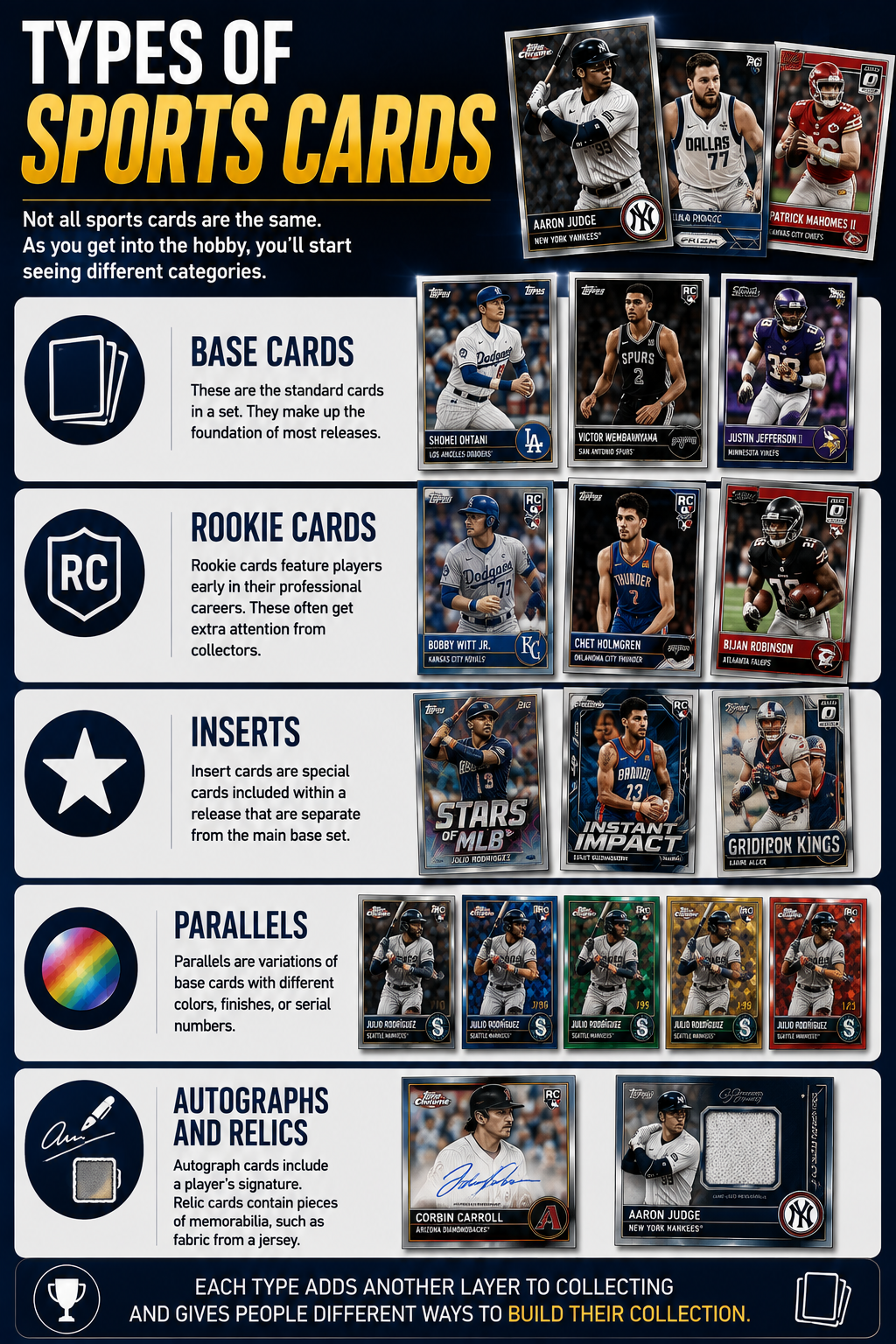
Not all sports cards are the same. As you get into the hobby, you’ll start seeing different categories.
Base Cards
These are the standard cards in a set. They make up the foundation of most releases.
Rookie Cards
Rookie cards feature players early in their professional careers. These often get extra attention from collectors.
Inserts
Insert cards are special cards included within a release that are separate from the main base set.
Parallels
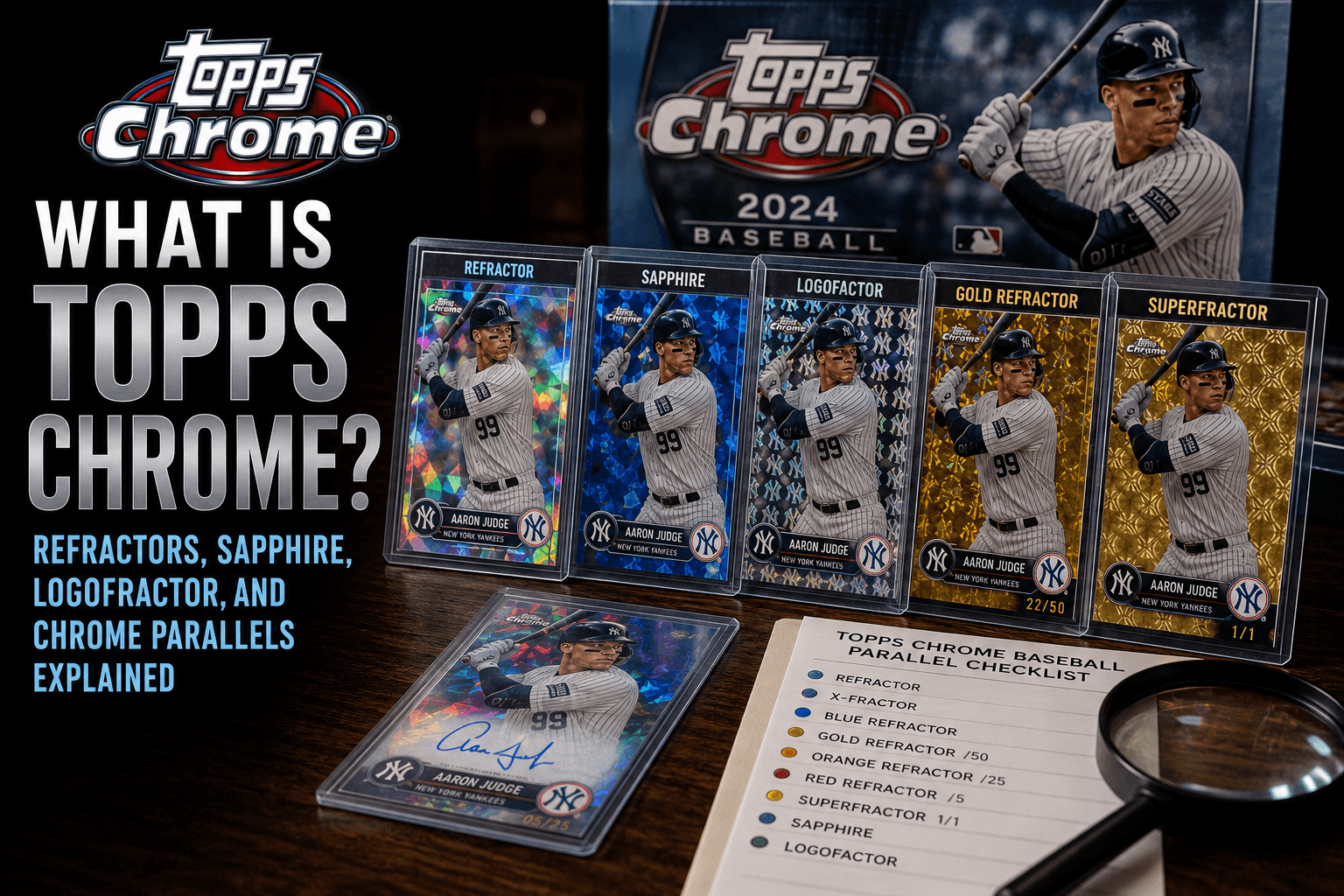
Parallels are variations of base cards with different colors, finishes, or serial numbers.
Autographs and Relics
Autograph cards include a player’s signature. Relic cards contain pieces of memorabilia, such as fabric from a jersey.
Each type adds another layer to collecting and gives people different ways to build their collection.
How Sports Card Collecting Works Today
The hobby has changed quite a bit over time. Today, collectors have more ways to participate than ever.
You can still buy packs and open them yourself, which is one of the most exciting parts of the hobby. At the same time, many collectors buy individual cards online to target exactly what they want.
There are also breaks, where collectors purchase spots in group openings. Online platforms make it easier to find cards, compare options, and connect with other collectors.
Another major shift is how people track their collections. Instead of relying only on physical storage, many collectors now use digital tools to organize what they own.
What Makes a Sports Card Valuable
Value in sports cards is influenced by several factors.
The player matters a lot. Popular or successful athletes tend to drive more interest. Rarity also plays a role. Limited cards or unique versions are often harder to find.
Condition is another key factor. Cards in better shape typically hold more value. That’s why some collectors choose to have cards graded.
Demand ties everything together. Even a rare card needs collector interest to carry value.
Still, not every card needs to be valuable to matter. Many collections are built around personal enjoyment rather than price.
How Beginners Can Start Collecting
Getting started doesn’t need to be complicated.
Pick a sport, player, or team that you actually care about. That gives your collection direction right away. From there, start small. Buy a few packs, pick up some singles, or explore different sets to see what you like.
Pay attention to how cards are labeled. Learn the basics of sets, parallels, and numbering. Over time, these details will start to click.
Most importantly, don’t rush. The hobby rewards consistency more than speed.
Why Organization Matters Early
It’s easy to overlook organization at the beginning. The collection feels small, and everything seems manageable.
That changes quickly.
Without some structure, cards pile up, duplicates get missed, and it becomes harder to know what you actually have. Keeping things organized from the start saves time and keeps the hobby enjoyable.
Even simple tracking can make a big difference.
Tools That Help Collectors Today
Collectors today have access to tools that didn’t exist years ago.
You can browse large catalogs, look up card details, and track your collection in one place. You can also explore market trends and find cards you’re interested in without digging through endless listings.
Platforms like CardWiki are built around this idea. Instead of only identifying cards, they help collectors organize, explore, and contribute to a shared catalog.
Common Mistakes Beginners Make
Most beginners make a few similar mistakes early on.
Some buy too broadly without a focus, which makes collections harder to manage. Others ignore condition or skip learning basic details about cards.
A big one is not tracking cards at all. That leads to confusion later on.
Another is chasing hype without understanding what they’re buying. Taking a slower, more intentional approach usually leads to a better experience.
Is Sports Card Collecting Worth It?
That depends on what you’re looking for.
If you’re expecting instant financial returns, the hobby can feel unpredictable. If you’re interested in collecting, learning, and building something over time, it can be very rewarding.
For most people, the value comes from the experience itself. The cards, the stories behind them, and the process of building a collection all play a role.
Final Thoughts
Sports card collecting is a hobby built around passion, detail, and personal interest. It doesn’t require expertise to get started, and it doesn’t demand a huge investment to enjoy.
You can keep it simple or go deep. You can focus on one player or explore entire sets. The path is yours to shape.
If you're starting your collection, you can track it for free on CardWiki and begin building something organized from day one.