What Is A Variation Card? Photo Variations, Image Variations, And Hidden Differences
Learn the variation card meaning, how photo variations and image variations work, and why hidden card differences matter for collectors.

A variation card is a version of a trading card that looks similar to another card in the same set but has one or more meaningful differences. Those differences might be obvious, like a different photo. They might also be subtle, like a different image crop, uniform, background, code, logo placement, or finish detail.
That is why variations can be confusing.
At first glance, two cards may seem like the same card. Same player. Same year. Same set. Same card number. Same basic design. Then you look closer and realize one has a different pose, different background, different image, or hidden detail that changes the card’s identity.
That matters a lot.
Variation cards are one of the clearest examples of why trading cards need structure. A real catalog should not collapse every similar card into one loose record. It should model the actual differences that make one card distinct from another.
That is exactly where CardWiki’s identity-first approach matters.
What Is A Variation Card?
A variation card is an alternate version of a card that differs from the standard version in a specific way.
Most collectors use the term when talking about cards that share a strong relationship with a base card but are not exactly the same. The variation may use a different photo, alternate pose, unique image crop, different background, or another hidden detail that separates it from the regular version.
A variation card may involve:
- Different Photo
- Different Pose
- Different Background
- Different Uniform
- Different Image Crop
- Different Back Code
- Different Logo Placement
- Different Design Detail
- Short Print Status
- Super Short Print Status
The important part is that the variation is not just a random printing flaw. It is usually a recognized version within the release, even if the difference is hard to notice at first.
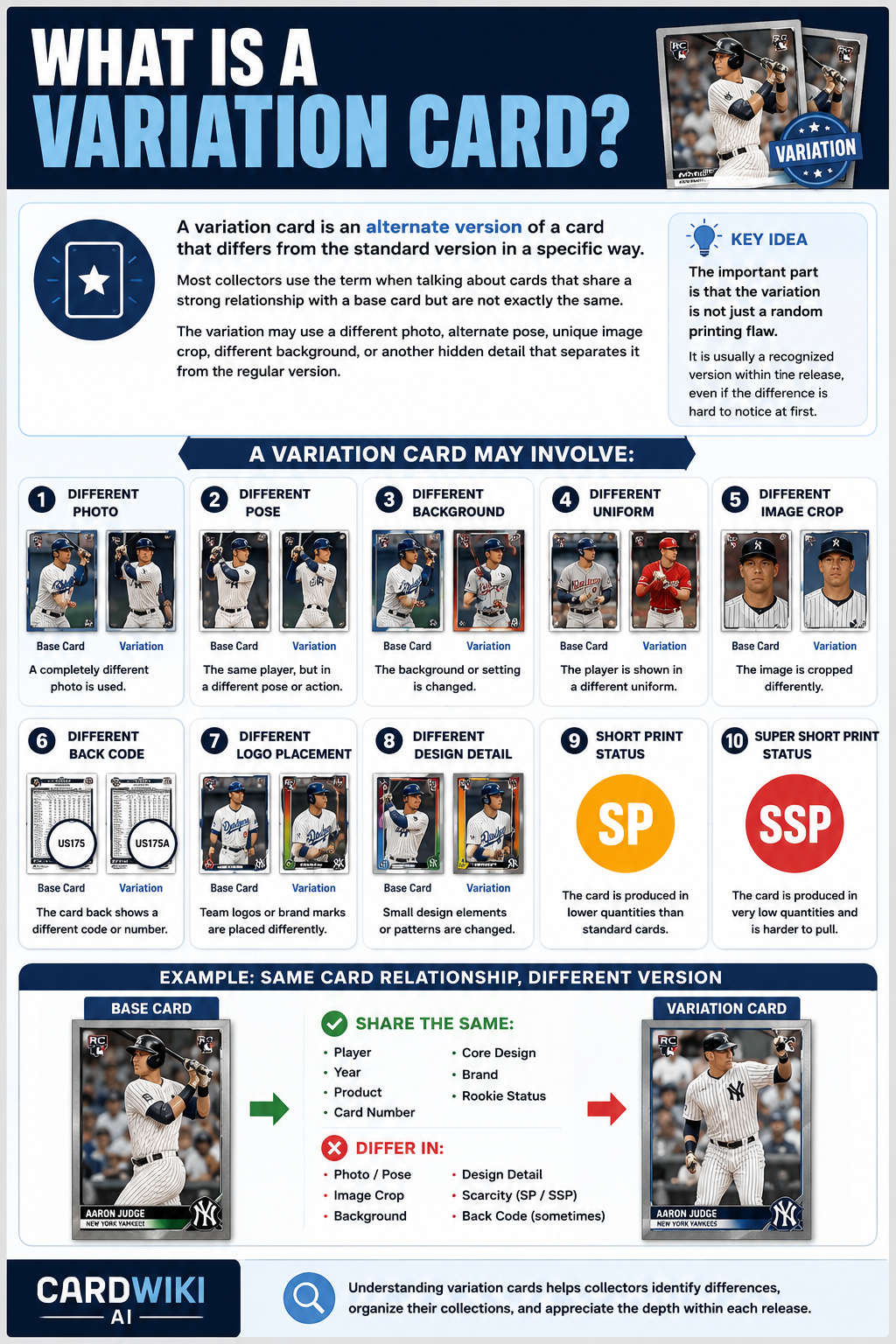
Photo Variation Vs Image Variation
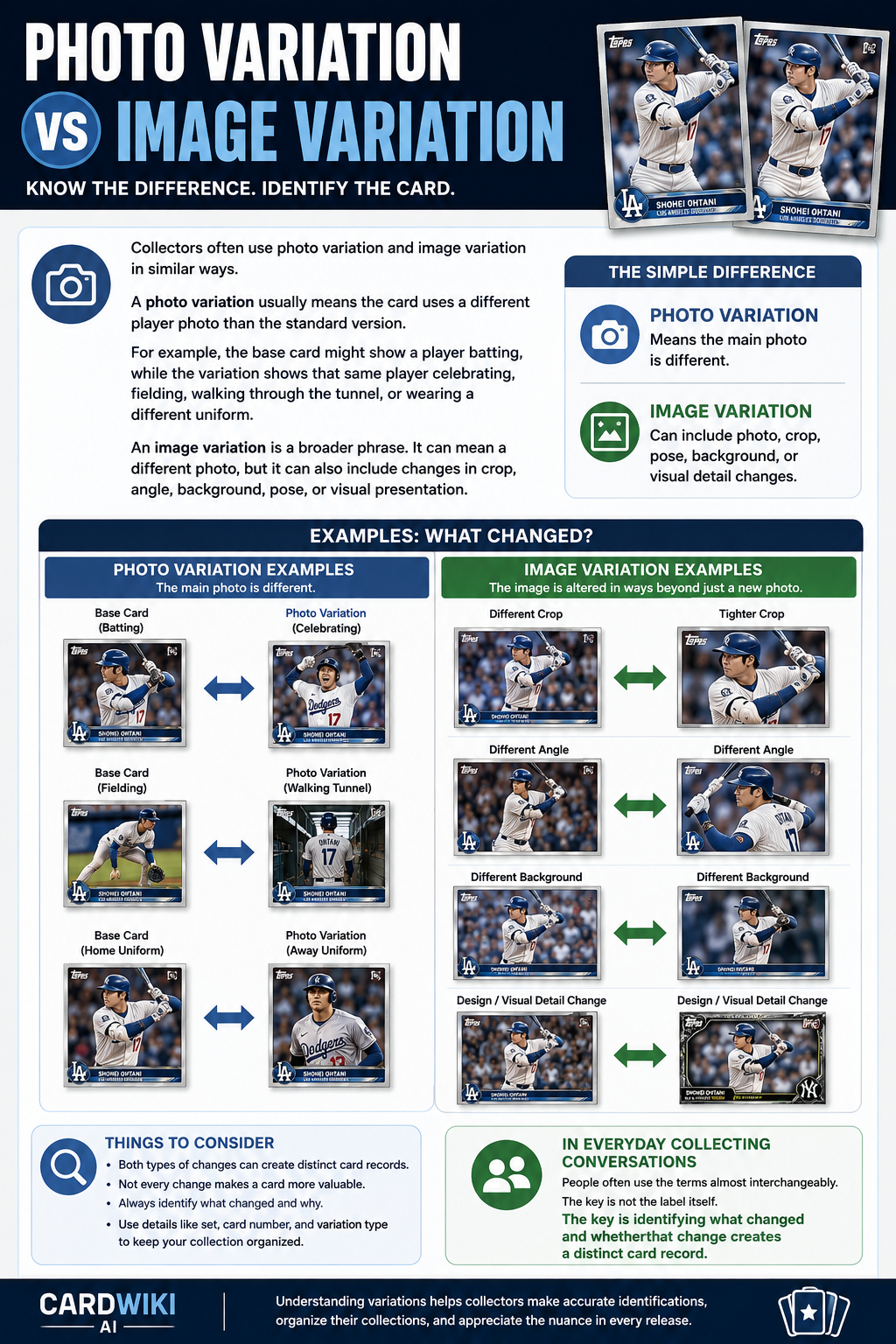
Collectors often use photo variation and image variation in similar ways.
A photo variation usually means the card uses a different player photo than the standard version. For example, the base card might show a player batting, while the variation shows that same player celebrating, fielding, walking through the tunnel, or wearing a different uniform.
An image variation is a broader phrase. It can mean a different photo, but it can also include changes in crop, angle, background, pose, or visual presentation.
The simple difference is:
- Photo Variation Means The Main Photo Is Different
- Image Variation Can Include Photo, Crop, Pose, Background, Or Visual Detail Changes
In everyday collecting conversations, people often use the terms almost interchangeably. The key is not the label itself. The key is identifying what changed and whether that change creates a distinct card record.
Why Variation Cards Matter
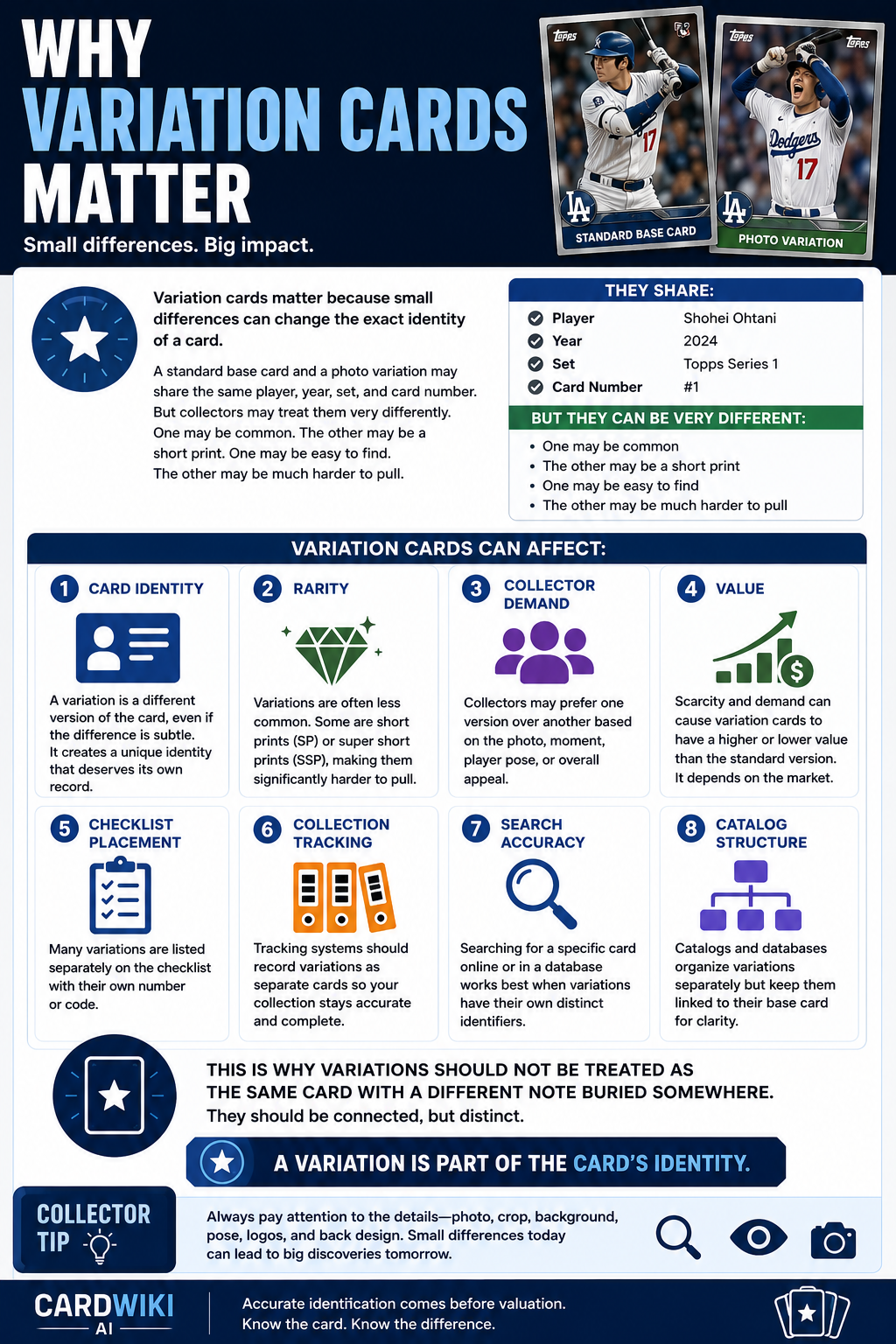
Variation cards matter because small differences can change the exact identity of a card.
A standard base card and a photo variation may share the same player, year, set, and card number. But collectors may treat them very differently. One may be common. The other may be a short print. One may be easy to find. The other may be much harder to pull.
Variation cards can affect:
- Card Identity
- Rarity
- Collector Demand
- Value
- Checklist Placement
- Collection Tracking
- Search Accuracy
- Catalog Structure
This is why variations should not be treated as the same card with a different note buried somewhere. They should be connected, but distinct.
A variation is part of the card’s identity.
Base Card Vs Variation Card
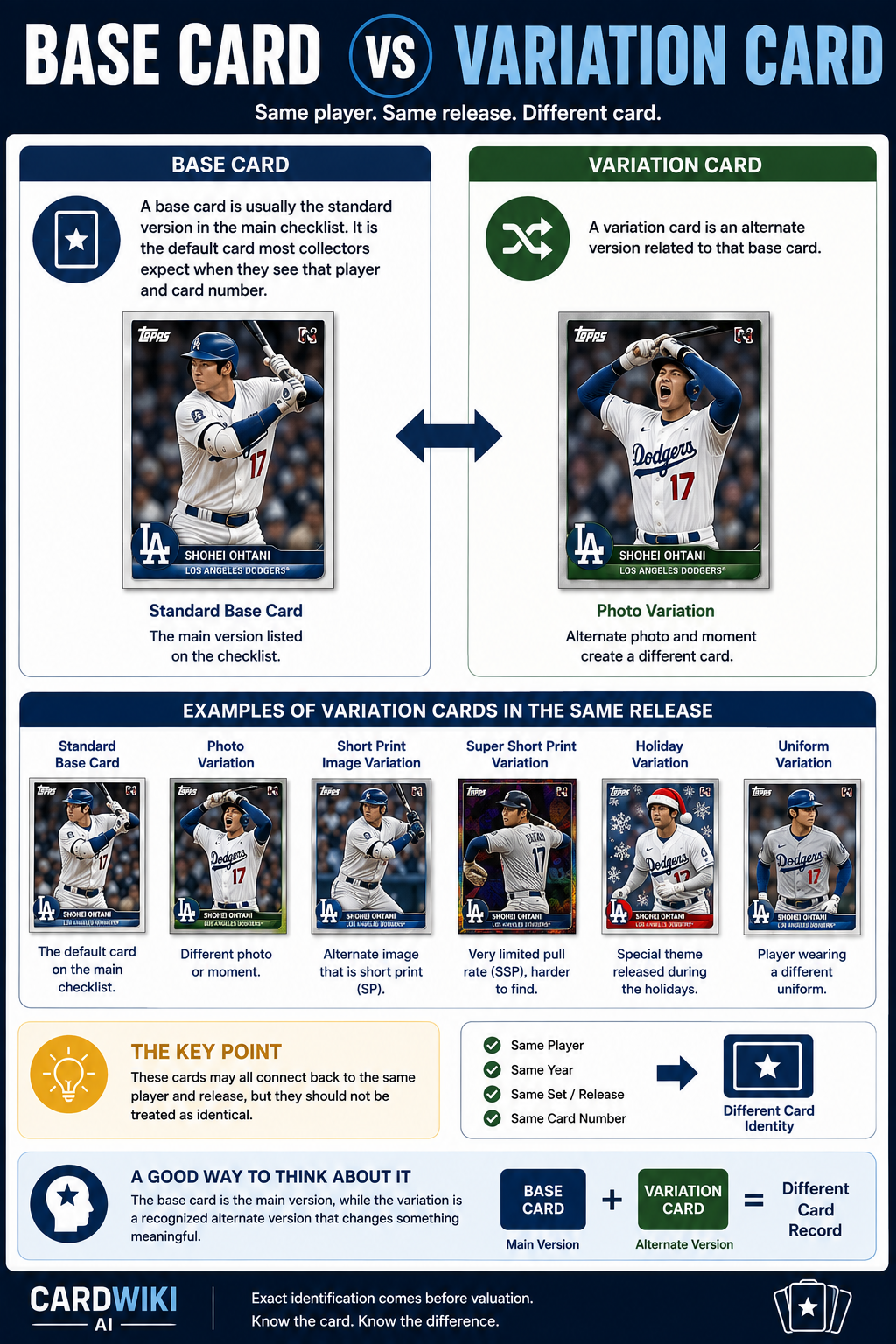
A base card is usually the standard version in the main checklist. It is the default card most collectors expect when they see that player and card number.
A variation card is an alternate version related to that base card.
For example, a release might include:
- Standard Base Card
- Photo Variation
- Short Print Image Variation
- Super Short Print Variation
- Holiday Variation
- Uniform Variation
These cards may all connect back to the same player and release, but they should not be treated as identical.
A good way to think about it is this: the base card is the main version, while the variation is a recognized alternate version that changes something meaningful.
Variation Card Vs Parallel
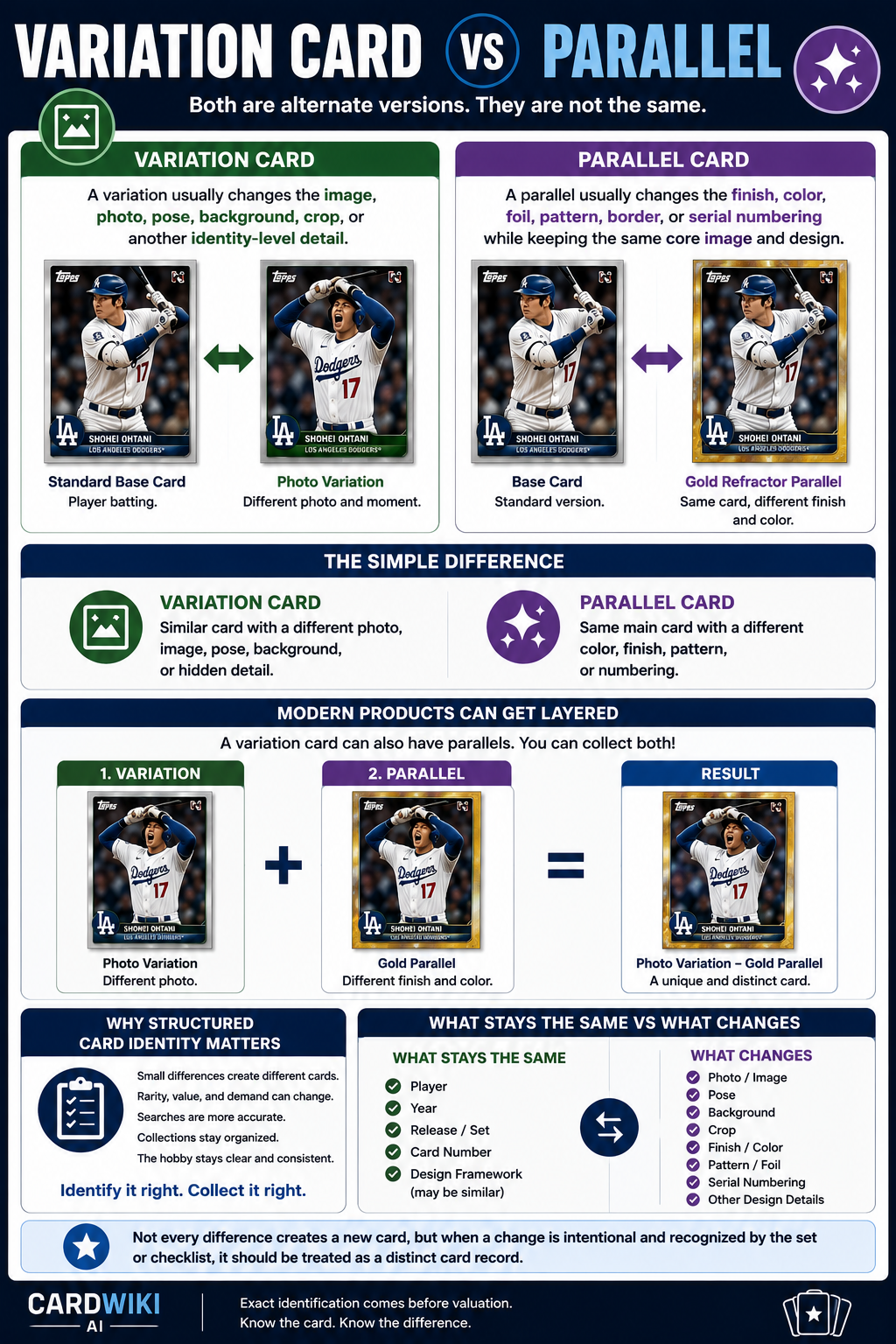
Variation cards and parallel cards are different, although both are alternate versions.
A parallel usually changes the finish, color, foil, pattern, border, or serial numbering while keeping the same core image and design.
A variation usually changes the image, photo, pose, background, crop, or another identity-level detail.
The simple difference is:
- Parallel Card: Same Main Card With A Different Color, Finish, Pattern, Or Numbering
- Variation Card: Similar Card With A Different Photo, Image, Pose, Background, Or Hidden Detail
That said, modern products can get layered. A variation card can also have parallels. That means you might have a photo variation and then a gold parallel of that photo variation.
This is exactly why structured card identity matters.
Common Types Of Variation Cards
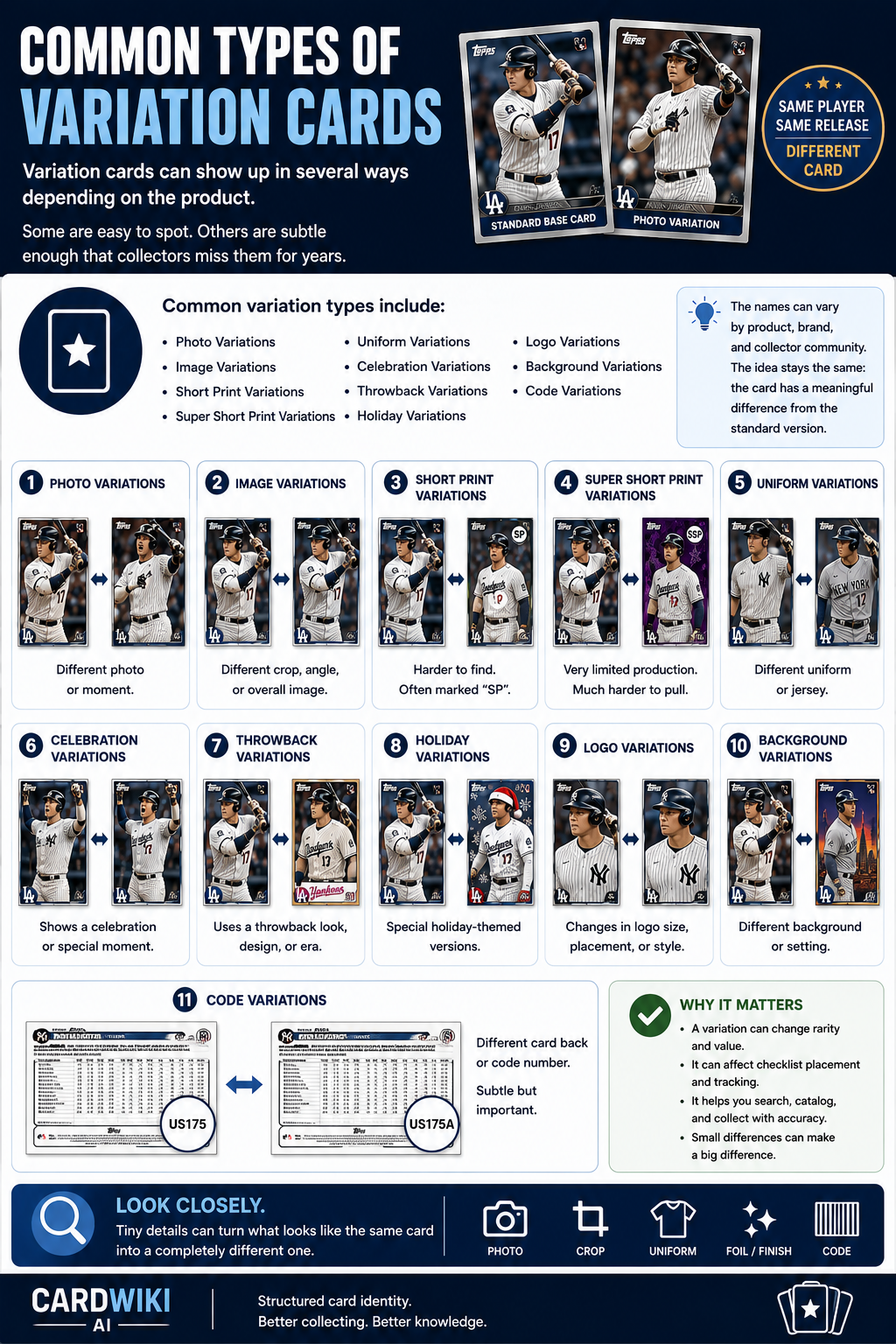
Variation cards can show up in several ways depending on the product.
Some are easy to spot. Others are subtle enough that collectors miss them for years.
Common variation types include:
- Photo Variations
- Image Variations
- Short Print Variations
- Super Short Print Variations
- Uniform Variations
- Celebration Variations
- Throwback Variations
- Holiday Variations
- Logo Variations
- Background Variations
- Code Variations
The names can vary by product, brand, and collector community. The idea stays the same: the card has a meaningful difference from the standard version.
What Is A Short Print Variation?
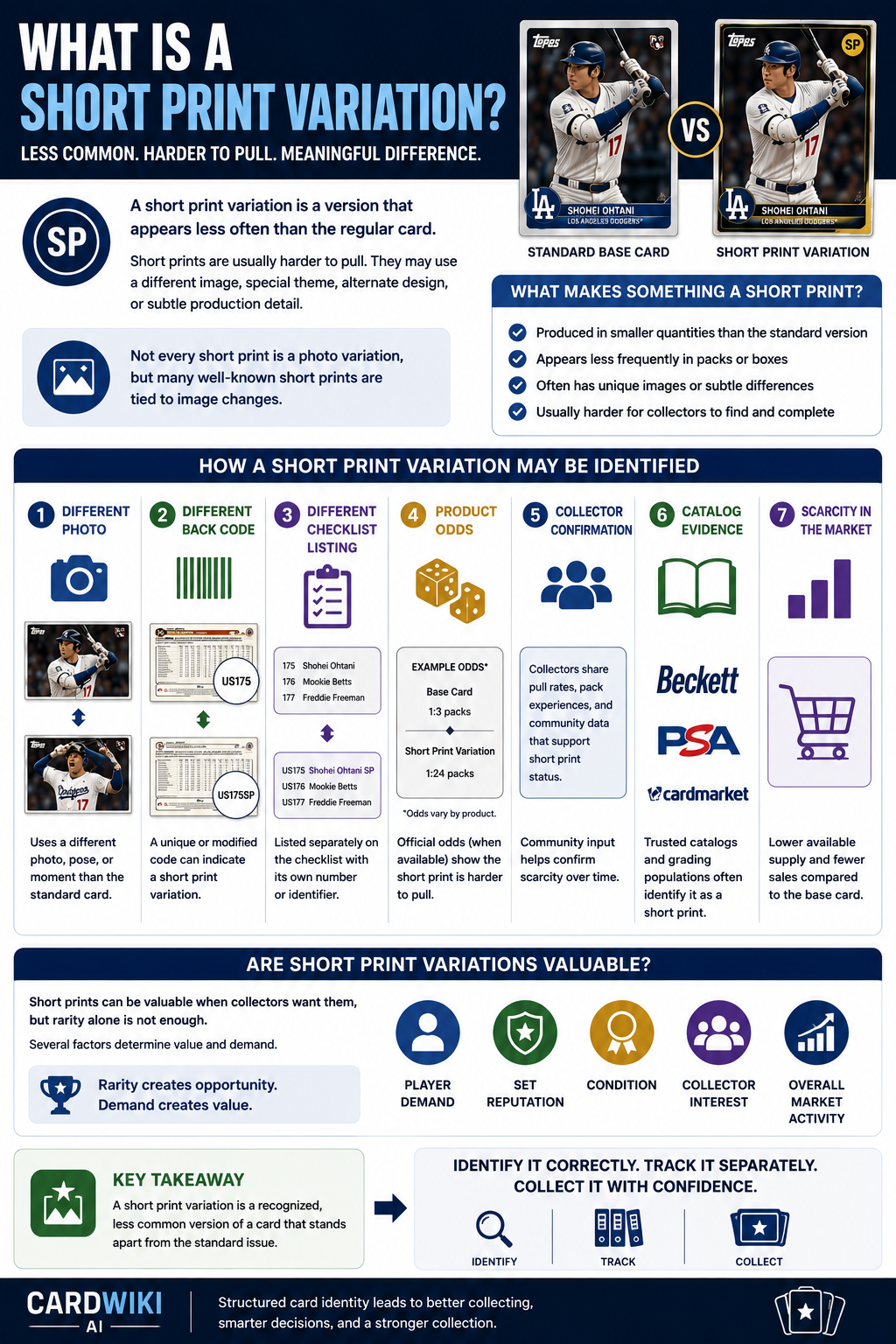
A short print variation is a version that appears less often than the regular card.
Short prints are usually harder to pull. They may use a different image, special theme, alternate design, or subtle production detail. Not every short print is a photo variation, but many well-known short prints are tied to image changes.
A short print variation may be identified through:
- Different Photo
- Different Back Code
- Different Checklist Listing
- Product Odds
- Collector Confirmation
- Catalog Evidence
- Scarcity In The Market
Short prints can be valuable when collectors want them, but rarity alone is not enough. Player demand, set reputation, condition, and collector interest still matter.
What Is A Super Short Print Variation?
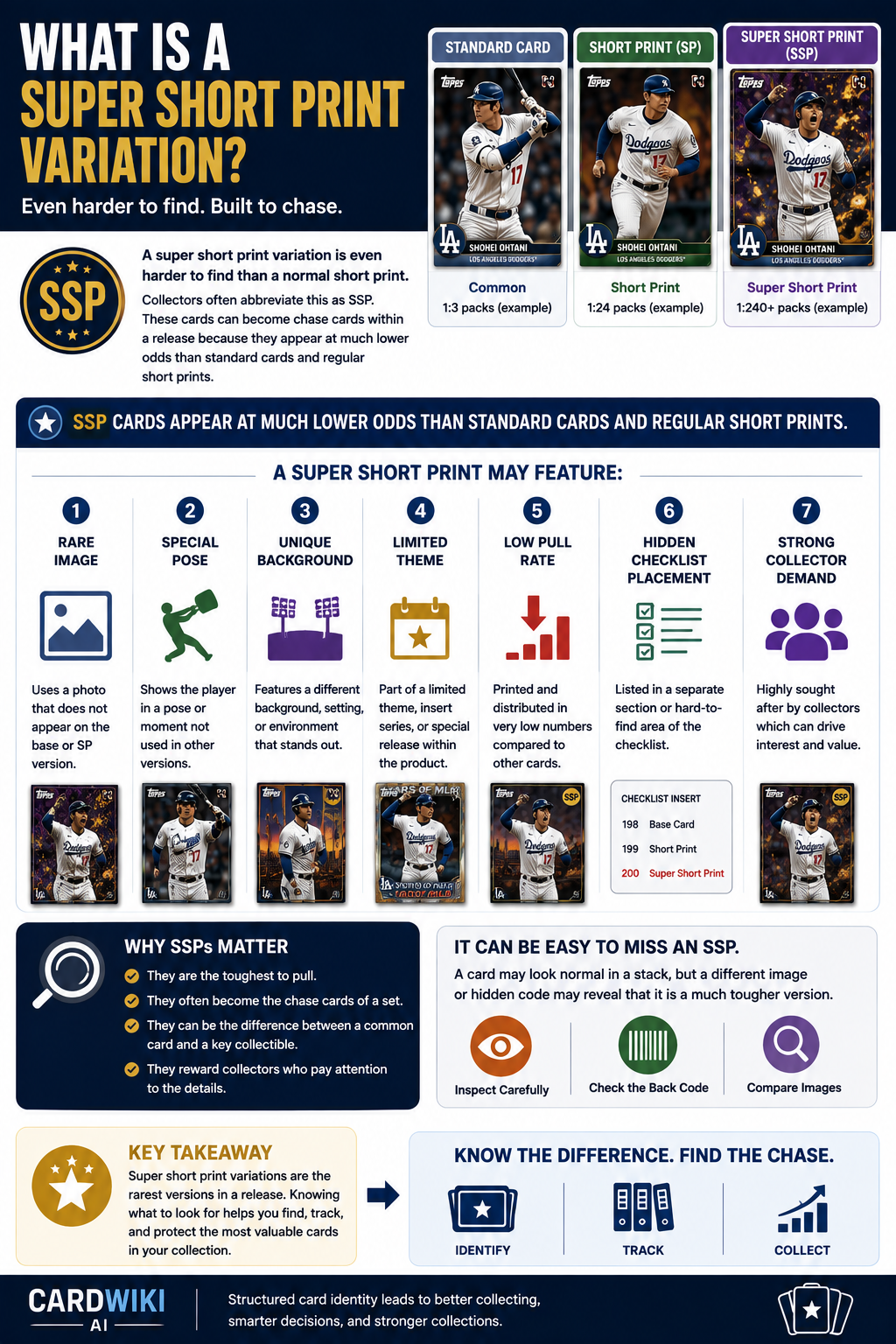
A super short print variation is even harder to find than a normal short print.
Collectors often abbreviate this as SSP. These cards can become chase cards within a release because they appear at much lower odds than standard cards and regular short prints.
A super short print may feature:
- Rare Image
- Special Pose
- Unique Background
- Limited Theme
- Low Pull Rate
- Hidden Checklist Placement
- Strong Collector Demand
Super short prints are one reason collectors inspect cards carefully. A card may look normal in a stack, but a different image or hidden code may reveal that it is a much tougher version.
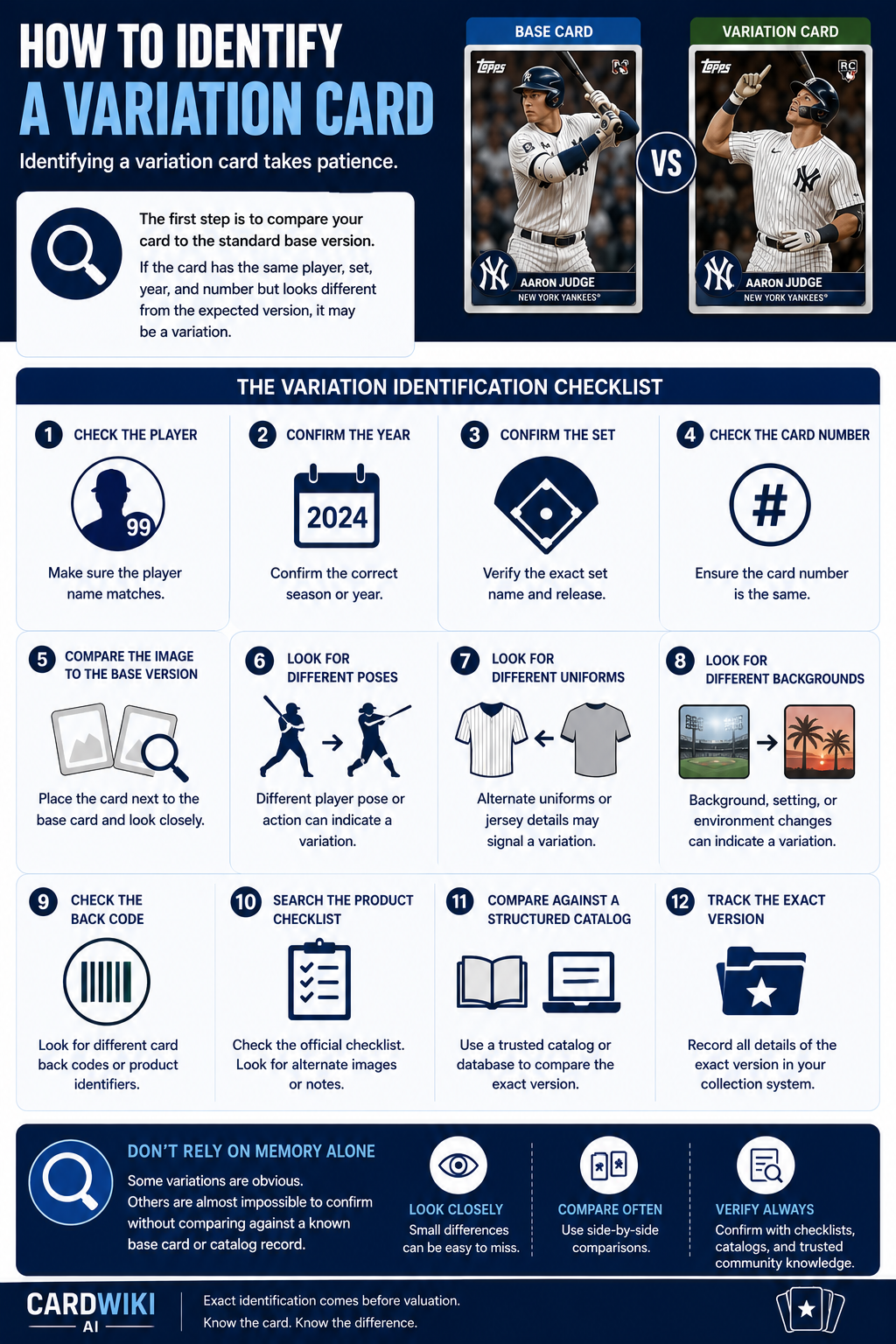
How To Identify A Variation Card
Identifying a variation card takes patience.
The first step is to compare your card to the standard base version. If the card has the same player, set, year, and number but looks different from the expected version, it may be a variation.
Use this checklist:
- Check The Player
- Confirm The Year
- Confirm The Set
- Check The Card Number
- Compare The Image To The Base Version
- Look For Different Poses
- Look For Different Uniforms
- Look For Different Backgrounds
- Check The Back Code
- Search The Product Checklist
- Compare Against A Structured Catalog
- Track The Exact Version
Do not rely on memory alone. Some variations are obvious. Others are almost impossible to confirm without comparing against a known base card or catalog record.
Why The Back Of The Card Matters
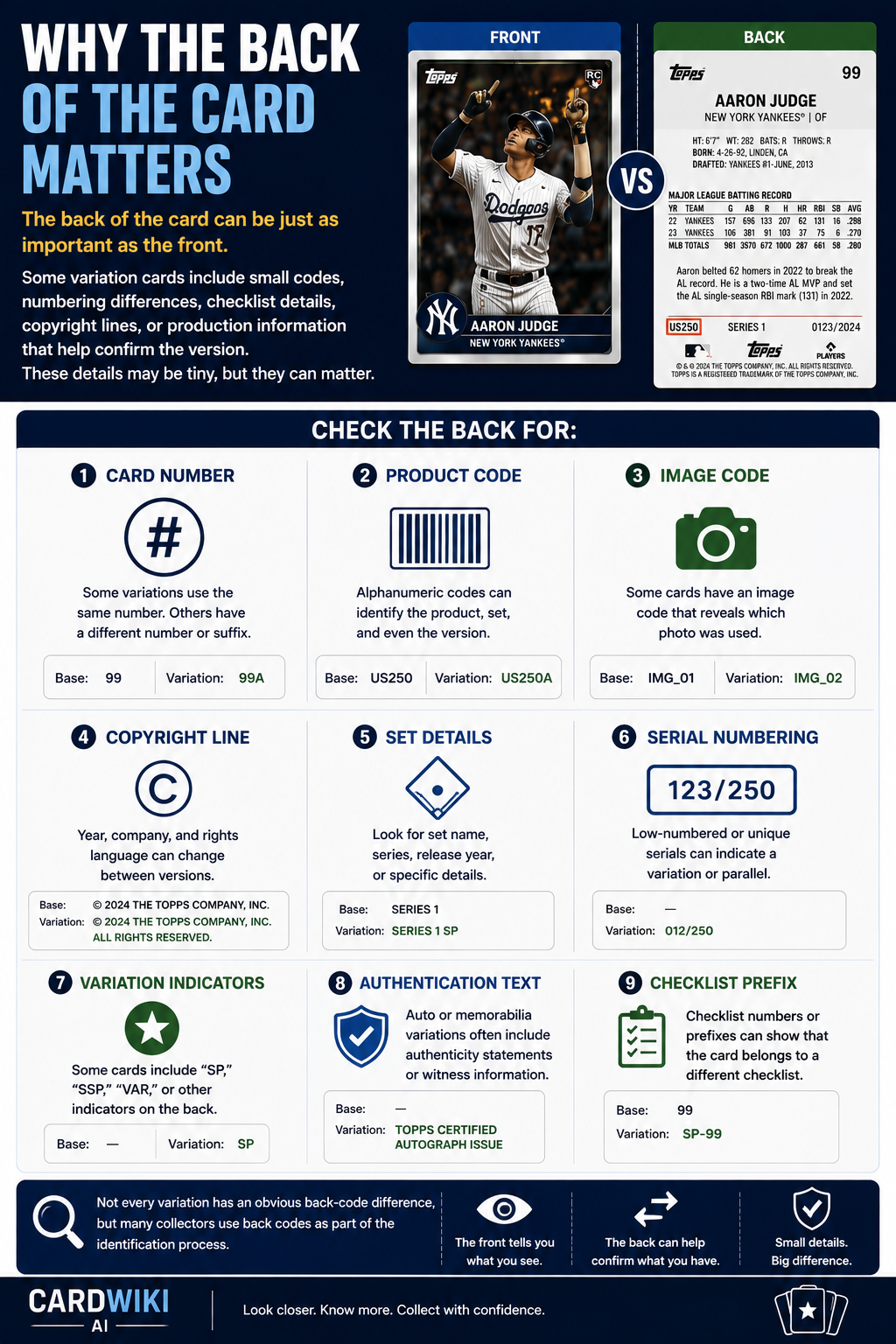
The back of the card can be just as important as the front.
Some variation cards include small codes, numbering differences, checklist details, copyright lines, or production information that help confirm the version. These details may be tiny, but they can matter.
Check the back for:
- Card Number
- Product Code
- Image Code
- Copyright Line
- Set Details
- Serial Numbering
- Variation Indicators
- Authentication Text
- Checklist Prefix
Not every variation has an obvious back-code difference, but many collectors use back codes as part of the identification process.
The front tells you what you see. The back can help confirm what you have.
Hidden Differences Collectors Should Watch For
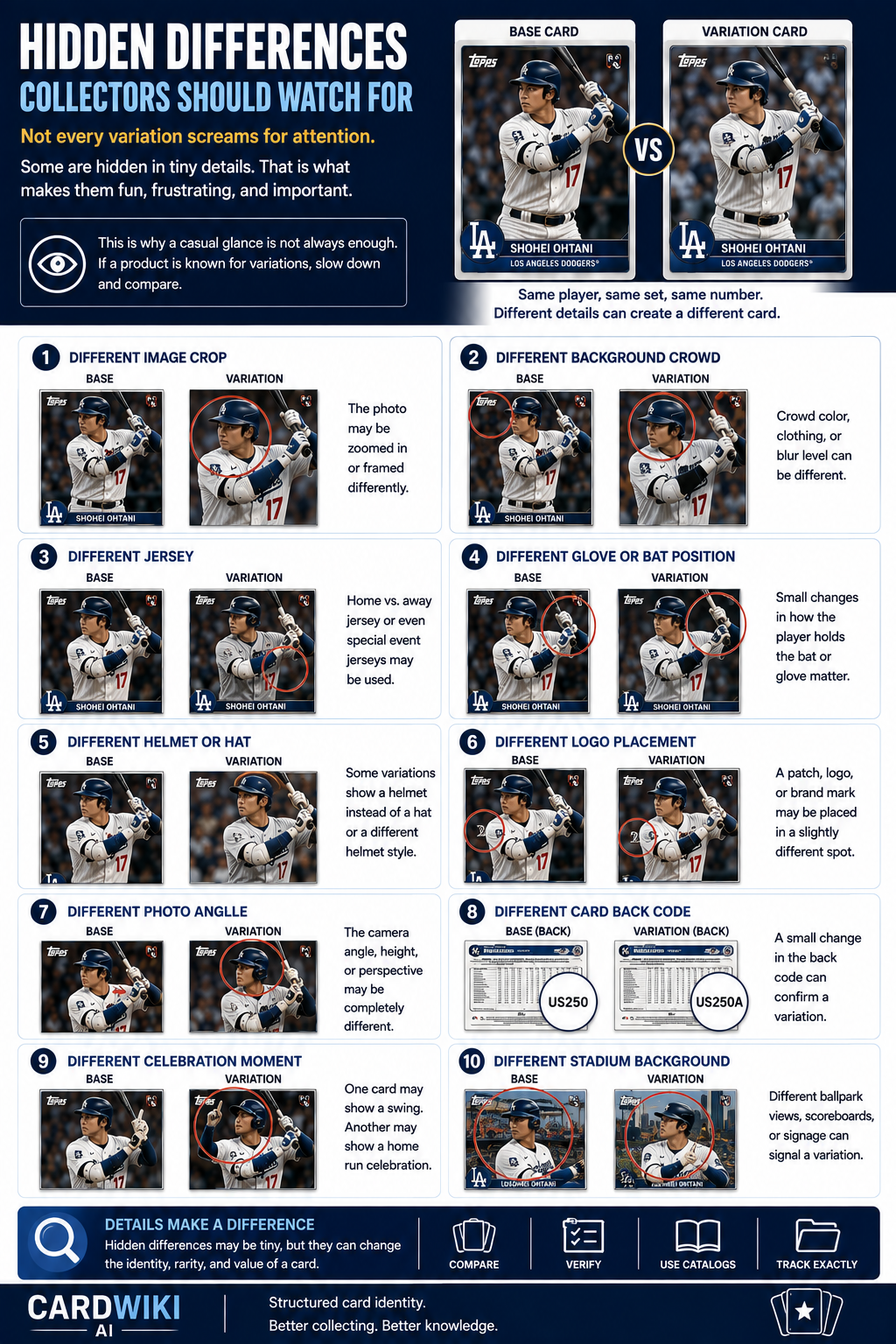
Not every variation screams for attention.
Some are hidden in tiny details. That is what makes them fun, frustrating, and important.
Hidden differences may include:
- Different Image Crop
- Different Background Crowd
- Different Jersey
- Different Glove Or Bat Position
- Different Helmet Or Hat
- Different Logo Placement
- Different Photo Angle
- Different Card Back Code
- Different Celebration Moment
- Different Stadium Background
This is why a casual glance is not always enough. If a product is known for variations, slow down and compare.
Are Variation Cards Valuable?
Some variation cards are valuable. Some are not.
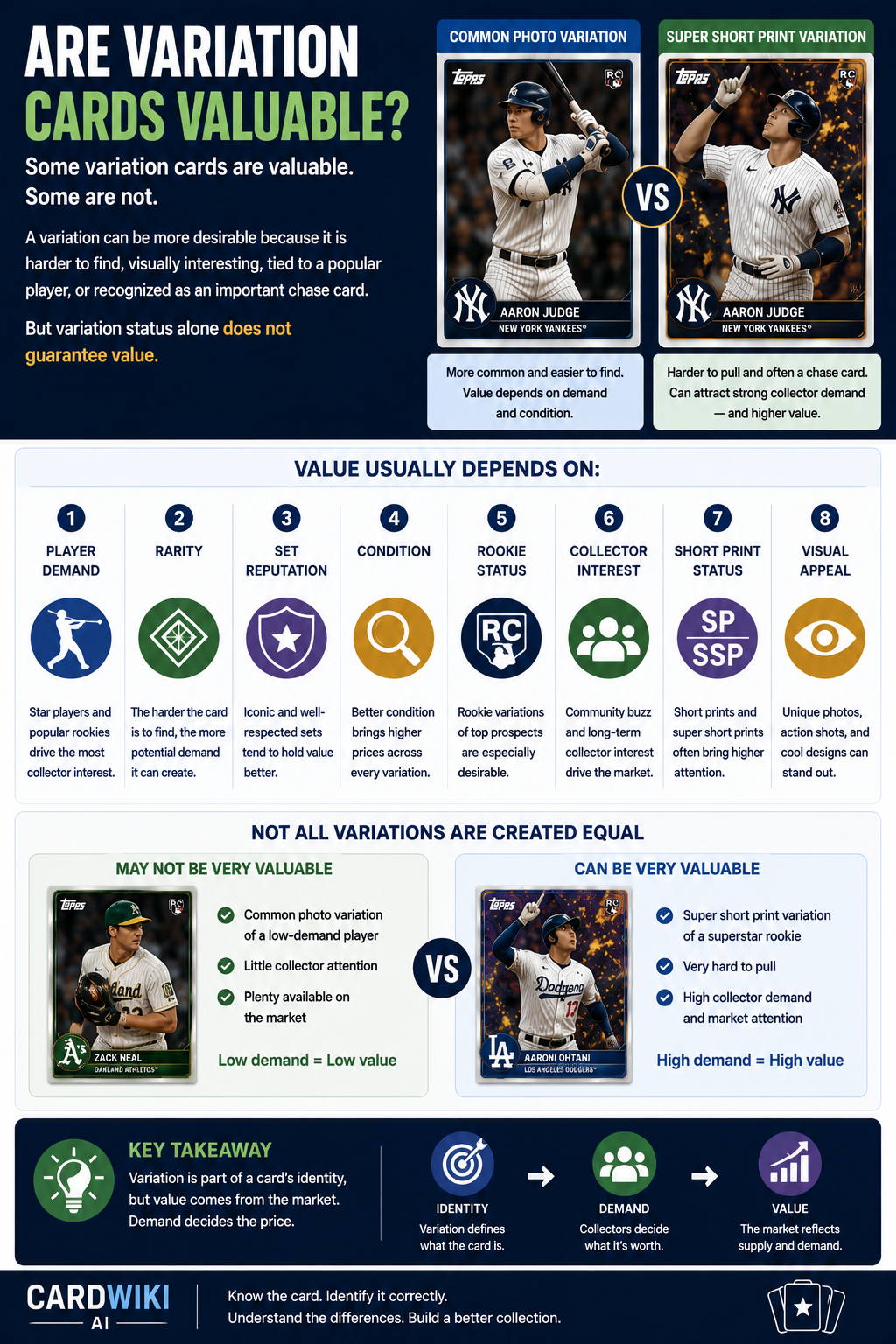
A variation can be more desirable because it is harder to find, visually interesting, tied to a popular player, or recognized as an important chase card. But variation status alone does not guarantee value.
Value usually depends on:
- Player Demand
- Rarity
- Set Reputation
- Condition
- Rookie Status
- Collector Interest
- Short Print Status
- Visual Appeal
A common variation of a low-demand player may not be worth much. A super short print variation of a superstar or key rookie can attract serious attention.
Variation is the identity. Demand decides the market.
Why Some Variations Are Hard To Track
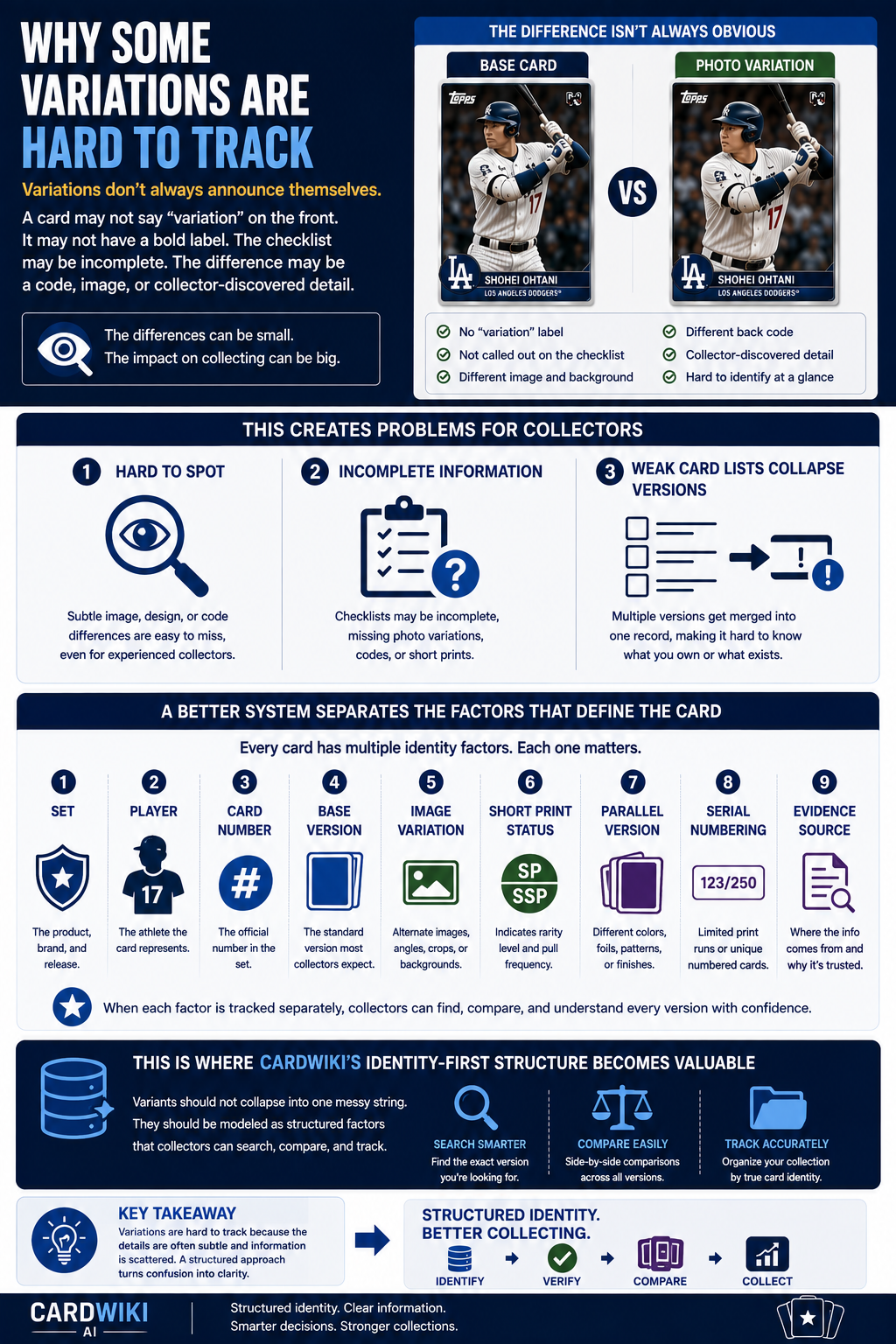
Variations are hard to track because they do not always announce themselves clearly.
A card may not say “variation” on the front. It may not have a bold label. The checklist may be incomplete. The difference may be a code, image, or collector-discovered detail.
That creates problems for collectors.
A weak card list may collapse multiple versions into one record. That makes it hard to know whether you own the base card, the variation, or both.
A better system should separate the factors that define the card:
- Set
- Player
- Card Number
- Base Version
- Image Variation
- Short Print Status
- Parallel Version
- Serial Numbering
- Evidence Source
This is where CardWiki’s identity-first structure becomes valuable. Variants should not collapse into one messy string. They should be modeled as structured factors that collectors can search, compare, and track.
Variation Cards And Card Identity
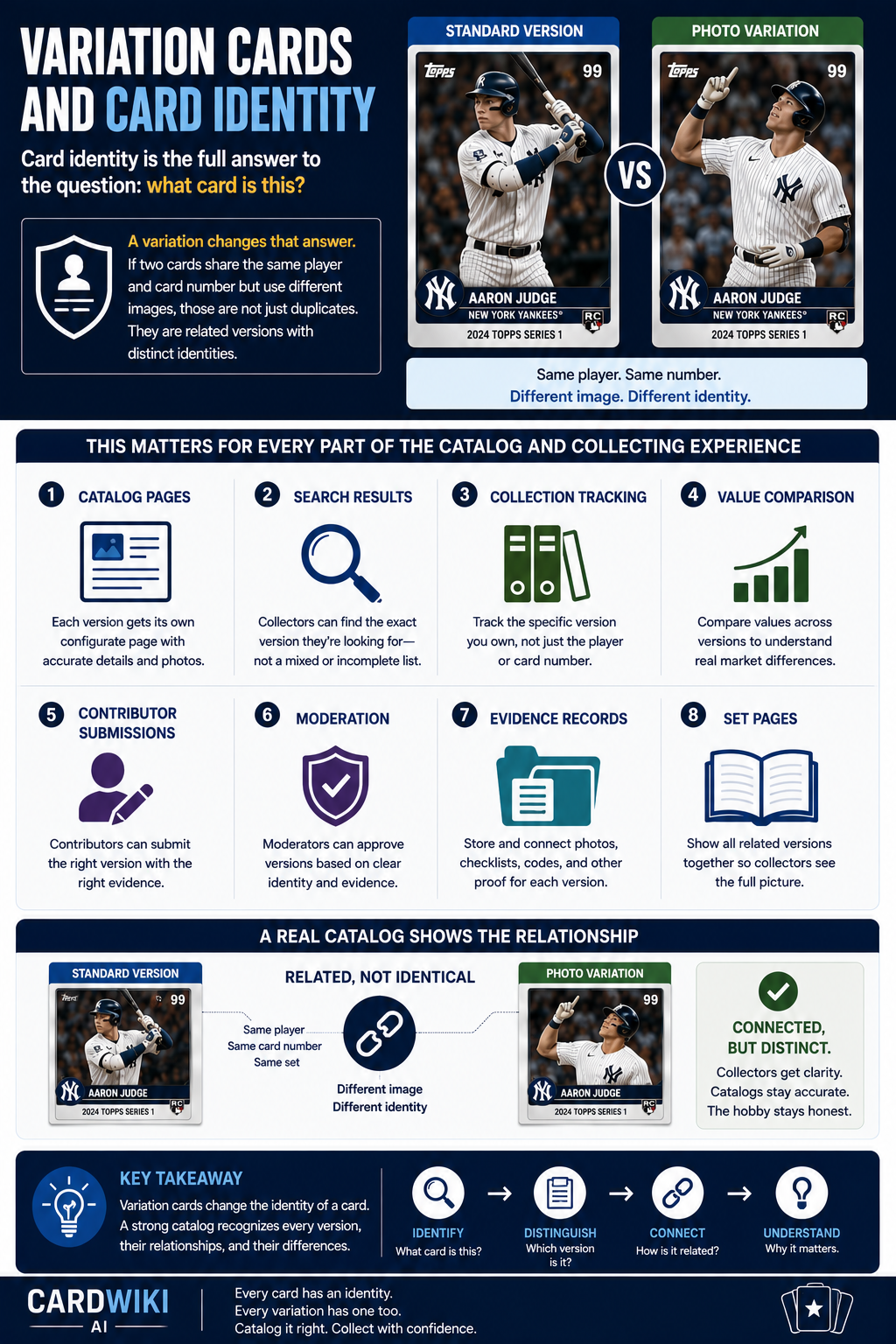
Card identity is the full answer to the question: what card is this?
A variation changes that answer.
If two cards share the same player and card number but use different images, those are not just duplicates. They are related versions with distinct identities.
That matters for:
- Catalog Pages
- Search Results
- Collection Tracking
- Value Comparison
- Contributor Submissions
- Moderation
- Evidence Records
- Set Pages
A real catalog should show the relationship between the standard version and the variation without pretending they are the same card.
Connected, but distinct. That is the key.
How CardWiki Thinks About Variations
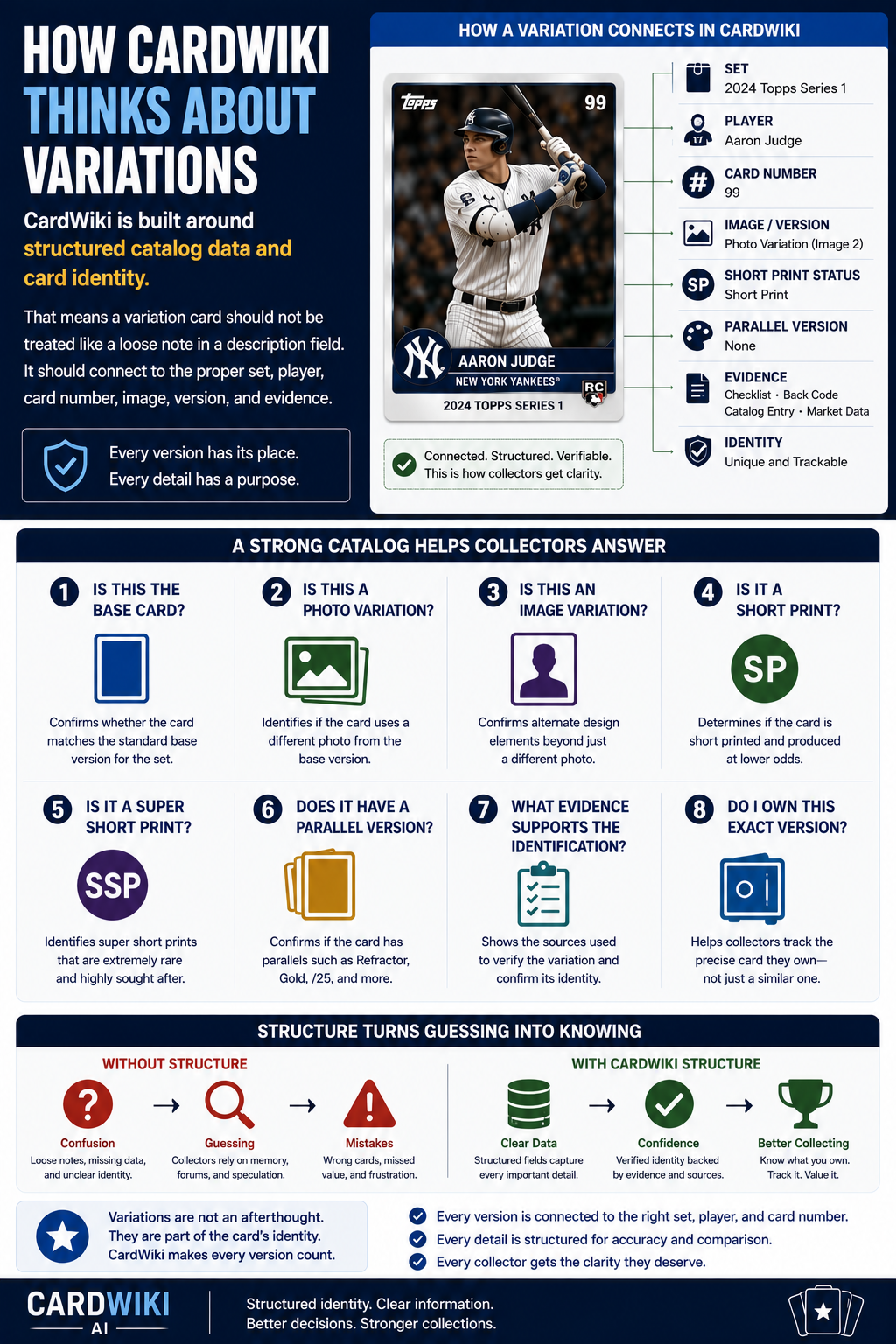
CardWiki is built around structured catalog data and card identity.
That means a variation card should not be treated like a loose note in a description field. It should connect to the proper set, player, card number, image, version, and evidence.
A strong catalog should help collectors answer:
- Is This The Base Card?
- Is This A Photo Variation?
- Is This An Image Variation?
- Is It A Short Print?
- Is It A Super Short Print?
- Does It Have A Parallel Version?
- What Evidence Supports The Identification?
- Do I Own This Exact Version?
That kind of structure helps collectors move from guessing to knowing.
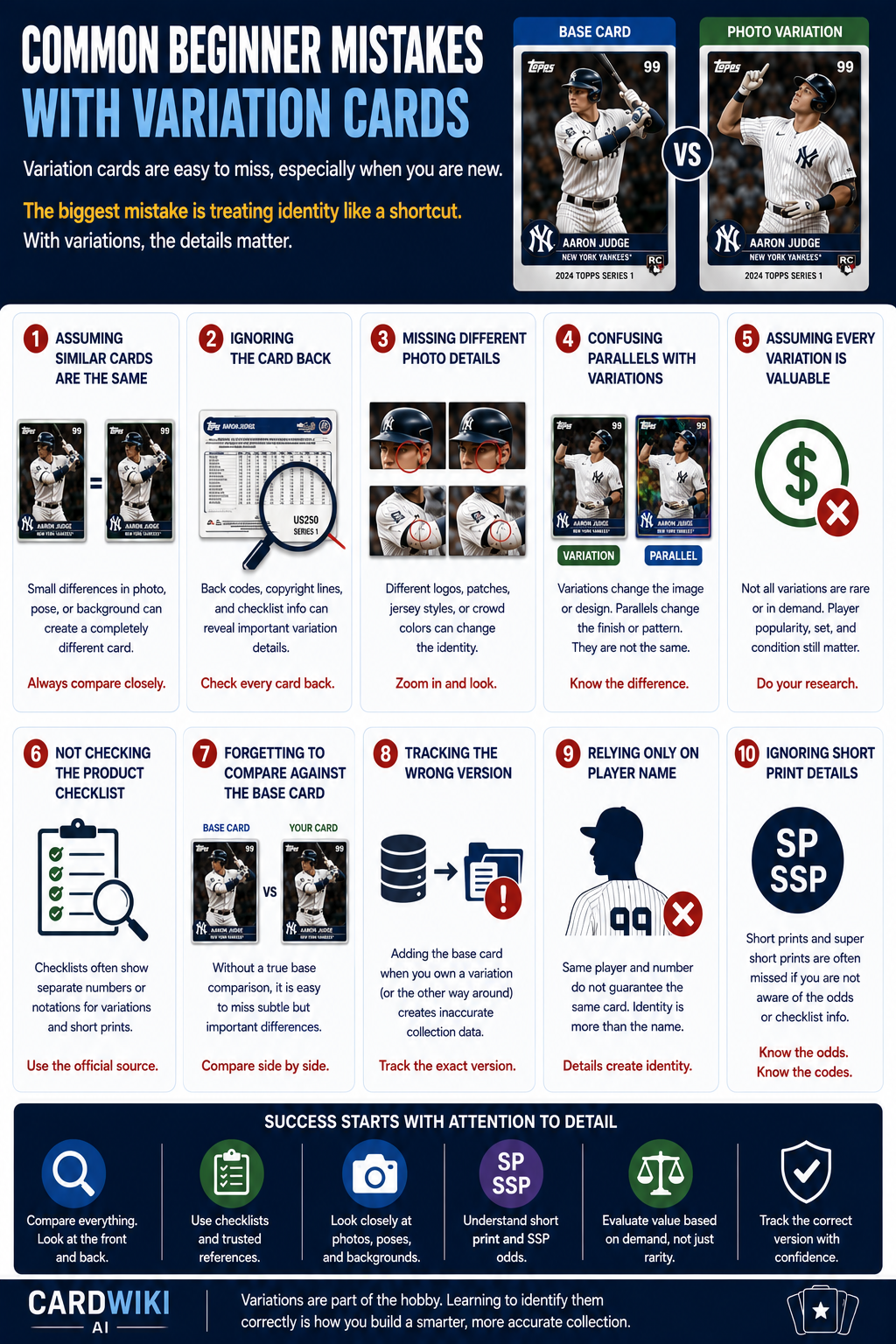
Common Beginner Mistakes With Variation Cards
Variation cards are easy to miss, especially when you are new.
Common mistakes include:
- Assuming Similar Cards Are The Same
- Ignoring The Card Back
- Missing Different Photo Details
- Confusing Parallels With Variations
- Assuming Every Variation Is Valuable
- Not Checking The Product Checklist
- Forgetting To Compare Against The Base Card
- Tracking The Wrong Version
- Relying Only On Player Name
- Ignoring Short Print Details
The biggest mistake is treating identity like a shortcut. With variations, the details matter.
How To Organize Variation Cards
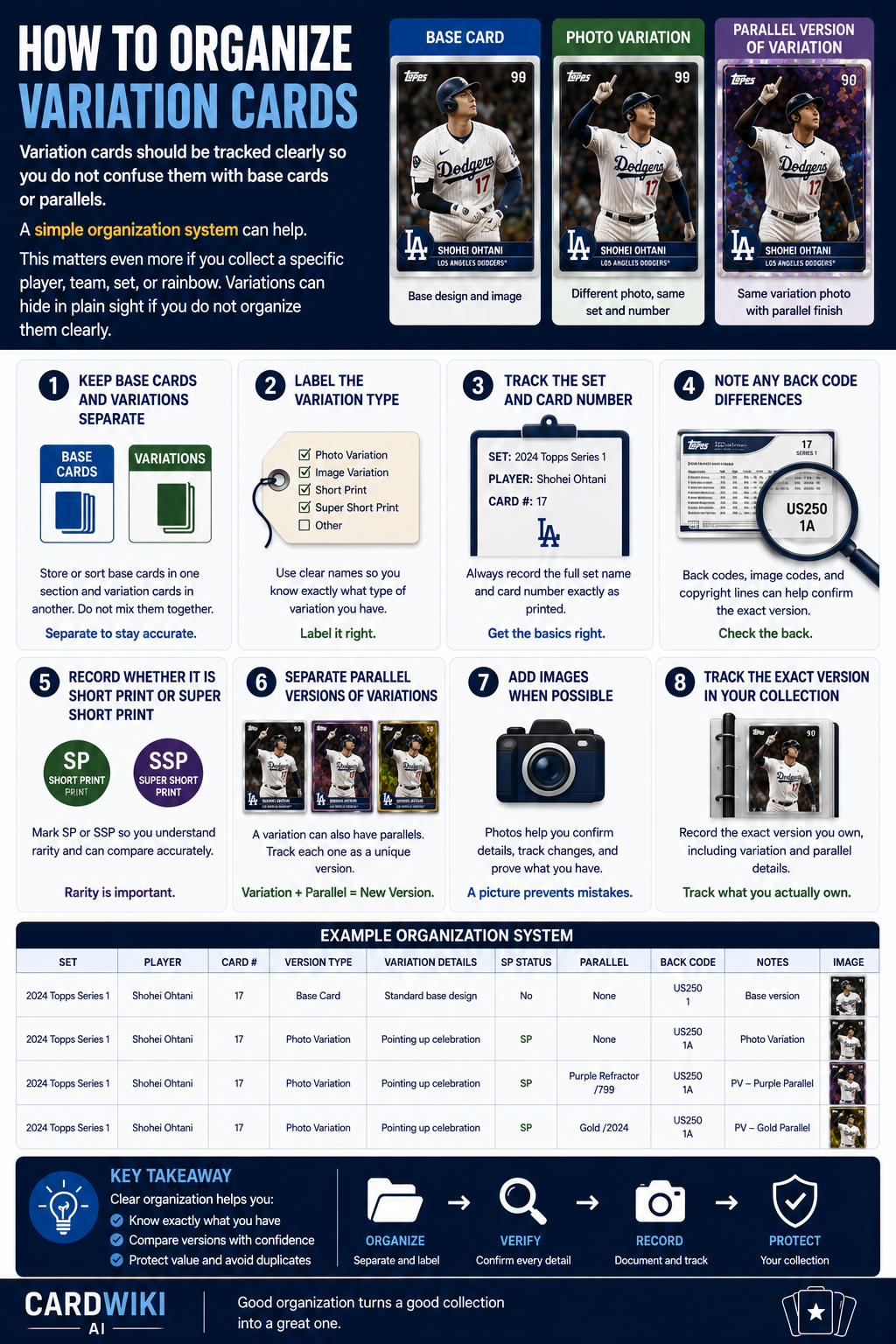
Variation cards should be tracked clearly so you do not confuse them with base cards or parallels.
A simple organization system can help:
- Keep Base Cards And Variations Separate
- Label The Variation Type
- Track The Set And Card Number
- Note Any Back Code Differences
- Record Whether It Is Short Print Or Super Short Print
- Separate Parallel Versions Of Variations
- Add Images When Possible
- Track The Exact Version In Your Collection
This matters even more if you collect a specific player, team, set, or rainbow. Variations can hide in plain sight if you do not organize them clearly.
Final Thoughts
So, what is a variation card?
A variation card is an alternate version of a card with a meaningful difference from the standard version. That difference may be a photo, pose, background, crop, code, uniform, or hidden detail.
Variation cards matter because they change card identity. They can affect rarity, value, collection tracking, and how a card fits inside a release.
The most important thing to remember is simple: similar does not always mean same.
That is why CardWiki is built around identity-first cataloging. Collectors deserve a better way to understand card versions, compare related records, and track the exact cards they own.
If you are trying to figure out whether your card is a base card, variation, parallel, or short print, CardWiki can help you explore structured catalog records and track your collection with more confidence.
FAQs
What Is A Variation Card?
A variation card is an alternate version of a trading card that differs from the standard version in a meaningful way, often through a different photo, image, pose, background, or hidden detail.
What Does Variation Card Meaning Refer To?
Variation card meaning refers to a card version that looks related to another card but has a recognized difference that changes its identity.
What Is A Photo Variation Card?
A photo variation card uses a different photo than the standard version of the card.
What Is An Image Variation Card?
An image variation card may use a different photo, crop, pose, background, or other visual difference from the regular version.
Is A Variation Card The Same As A Parallel?
No. A parallel usually changes color, finish, foil, or numbering. A variation usually changes the image, pose, background, or hidden identity detail.
Are Variation Cards Valuable?
Some are valuable, especially short prints or super short prints of popular players. Value depends on rarity, demand, condition, and collector interest.
How Do I Know If My Card Is A Variation?
Compare it to the base version, check the image, pose, background, back code, checklist, and catalog record.
Can A Variation Card Have A Parallel?
Yes. Some variation cards also have parallel versions, which makes structured identification even more important.